


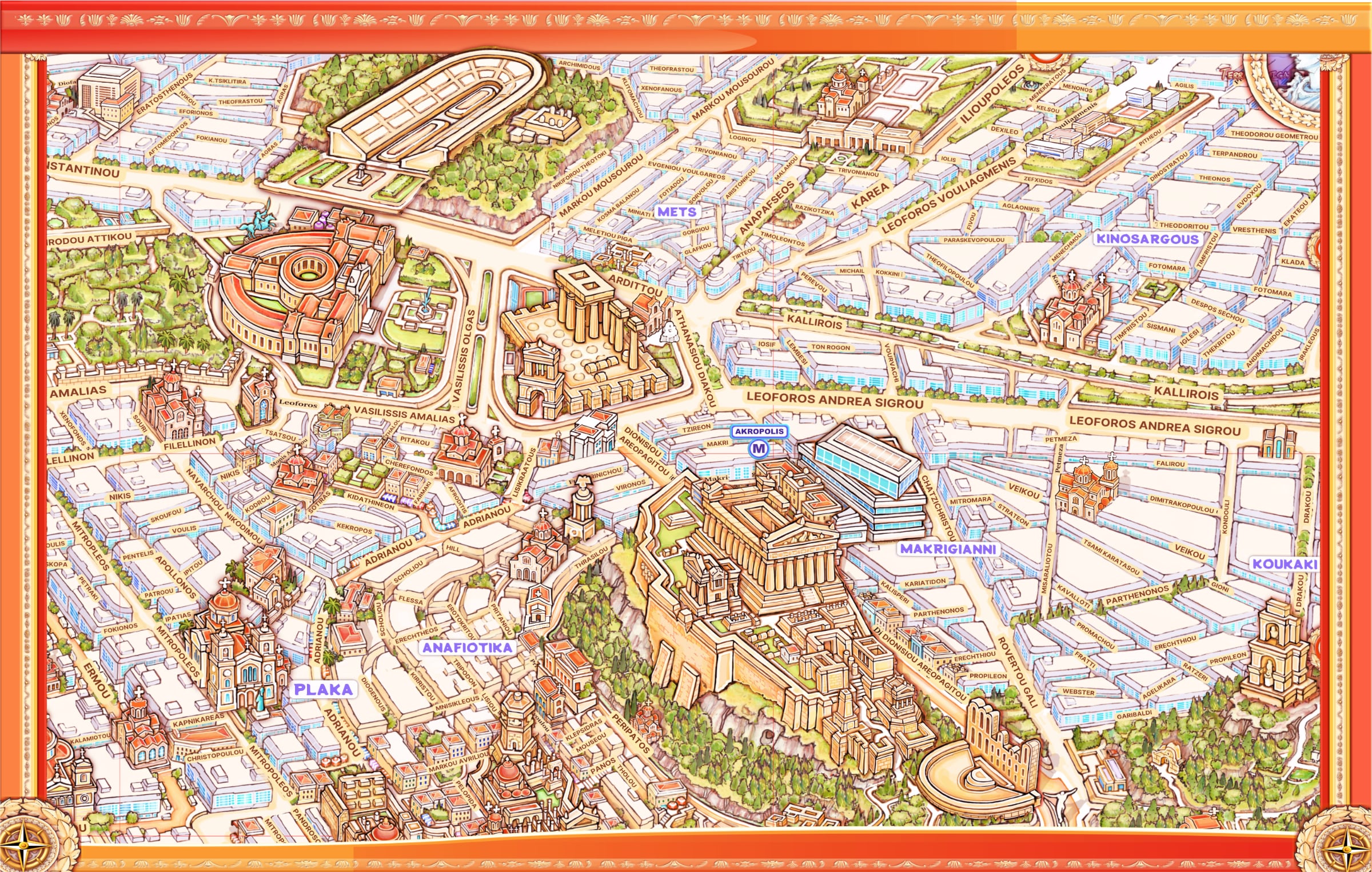
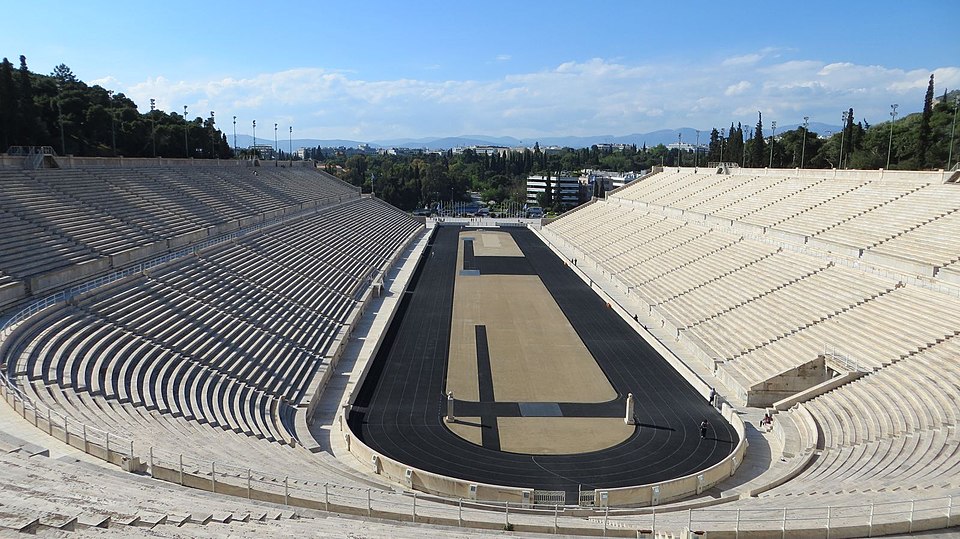
The Kalimarmaro Stadium (also known as the Panathenaic Stadium) was originally built in the 4th century BCE to host the Panathenaic Games, a major athletic and cultural festival held in honor of the goddess Athena. The stadium was reconstructed in 1896 for the first modern Olympic Games and is the only stadium in the world built entirely of white marble. It can hold around 45,000 spectators and is one of the most iconic structures in Athens. The Kalimarmaro Stadium is particularly notable for hosting the marathon finish line during the 1896 Olympics and has since remained a symbol of the city's athletic heritage.
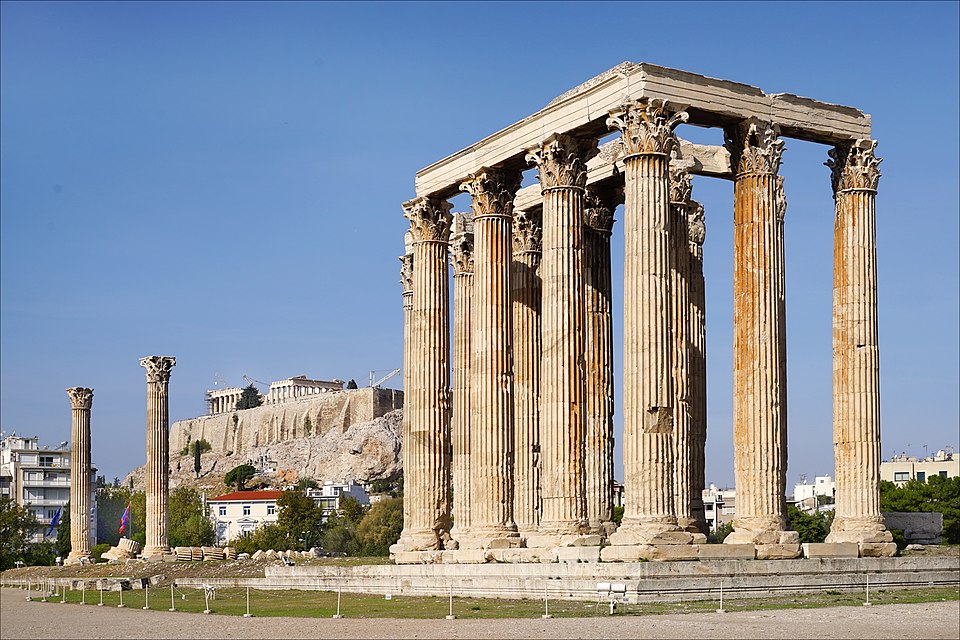
The Temple of Olympian Zeus (also known as the Olympeion) is an ancient temple located southeast of the Acropolis in Athens. It was dedicated to Zeus, the king of the Greek gods, and was one of the largest temples in the ancient world. Construction began in the 6th century BCE under the tyrant Peisistratus, but it was not completed until the reign of the Roman Emperor Hadrian in the 2nd century CE, over 600 years later.
The temple was designed in the Corinthian order and originally featured 104 columns, of which 15 remain standing today.
The Temple of Artemis Agrotera was an ancient Greek temple dedicated to Artemis, the goddess of the hunt, wilderness, and childbirth. It was located near the northern slopes of the Acropolis in Athens, at a site known as the Agrotera. The temple was originally constructed in the 6th century BCE and was rebuilt in the 4th century BCE after it was destroyed by the Persians in 480 BCE during the invasion of Greece.
The Temple of Fortuna in Athens was an ancient Roman temple dedicated to Fortuna, the Roman goddess of luck and fate. It was constructed during the Roman period, likely in the 2nd century CE, when Roman influence was at its peak in Athens.The structure of the temple, though largely in ruins today, would have been a typical example of Roman temple architecture, with columns and a podium supporting a roof, following the Corinthian style.
Unfortunately, not much remains of the temple itself, and its precise design is not well documented.
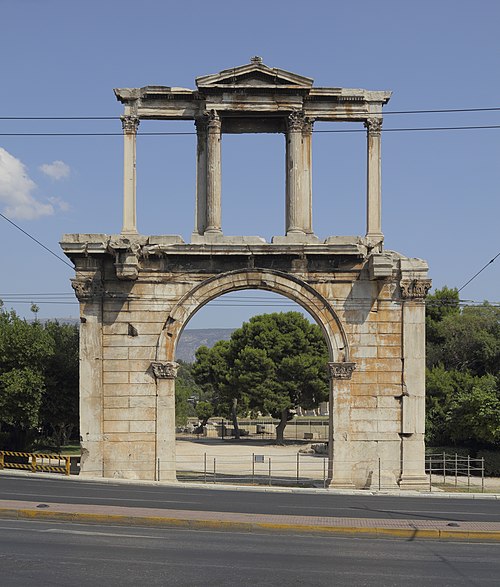
Hadrian's Gate is an ancient monumental gateway located in Athens, built in 132 CE by the Emperor Hadrian to celebrate his contributions to the city. The gate marked the boundary between the ancient Greek city and the Roman quarter of Athens, symbolising the city’s transition under Roman rule. Hadrian's Gate is located near the Temple of Olympian Zeus and remains an important historical landmark, symbolising the relationship between Athens and Rome during the Roman Empire.
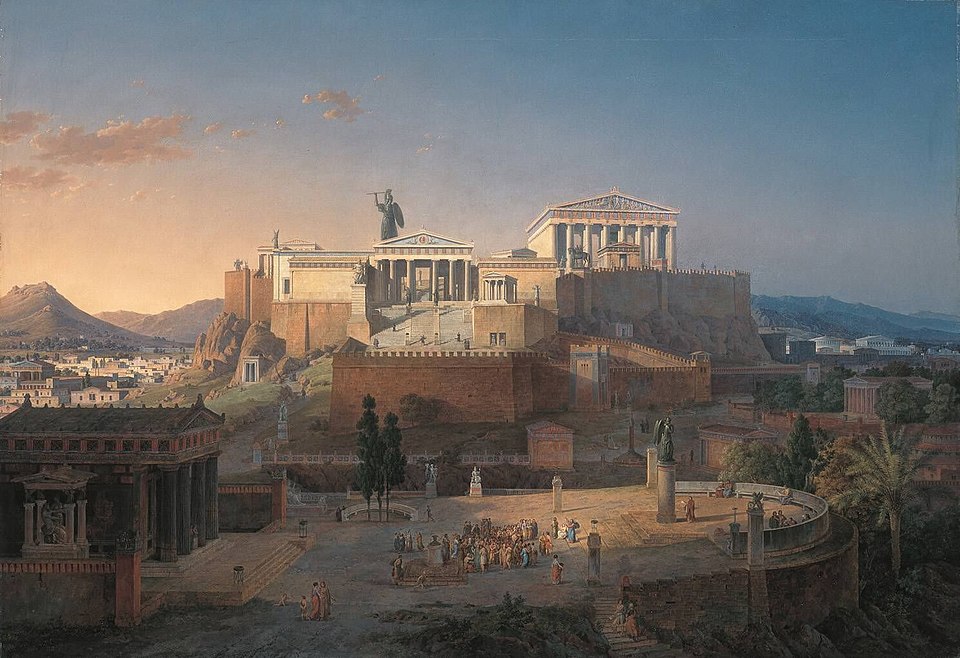
The Acropolis of Athens, Located on a rocky outcrop above the city of Athens, has been a center of political, religious, and cultural life for millennia. Its ancient structures, many of which are still standing, embody the architectural and artistic achievements of the 5th century BCE, a period known as the "Golden Age of Athens.”
The Acropolis has been inhabited since the Neolithic period, but it was during the 5th century BCE, under the leadership of the Athenian statesman Pericles, that the site was transformed into a monumental complex of temples, statues, and other structures.
This era coincided with Athens' rise to political and cultural dominance in the ancient Greek world, following their victory over the Persians in the Battle of Marathon (490 BCE) and the Battle of Salamis (480 BCE). The Acropolis served as both a religious sanctuary dedicated to the city’s patron goddess, Athena, and a symbol of Athenian power and pride.
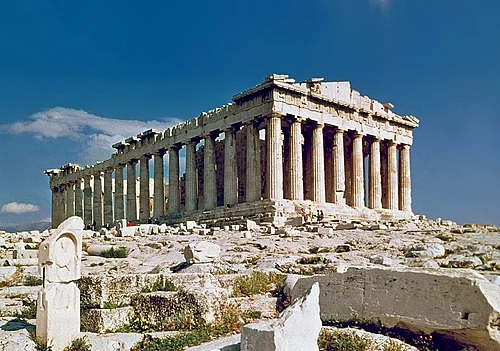
The Parthenon is a magnificent temple located on the Acropolis of Athens, dedicated to Athena, the city's patron goddess. Built between 447 and 438 BCE during the height of Athens' Golden Age, it is considered one of the most iconic symbols of ancient Greek architecture. Designed by the architects Iktinos and Kallikrates, and adorned with sculptural masterpieces by Phidias, the Parthenon exemplifies classical Greek ideals of beauty, proportion, and harmony. Today, it stands as a symbol of the cultural achievements of ancient Greece and continues to inspire awe around the world
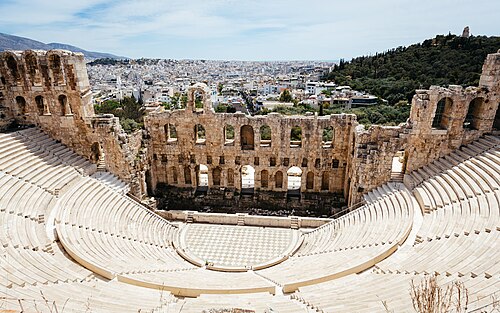
The Odeon of Herodes Atticus (or Odeon of Herodes Atticus) is a grand ancient theatre located at the foot of the Acropolis in Athens. Built in 161 CE by the Roman aristocrat Herodes Atticus in memory of his wife, Regilla, the Odeon is an exceptional example of Roman architecture in Athens. It was originally a wooden-roofed structure designed for musical performances and theatrical events. With a seating capacity of around 5,000 spectators, the Odeon was used for concerts, poetry readings, and other cultural events during the Roman period. Today, it stands as a stunning venue for modern performances, including concerts and theatre, as part of the Athens Festival.
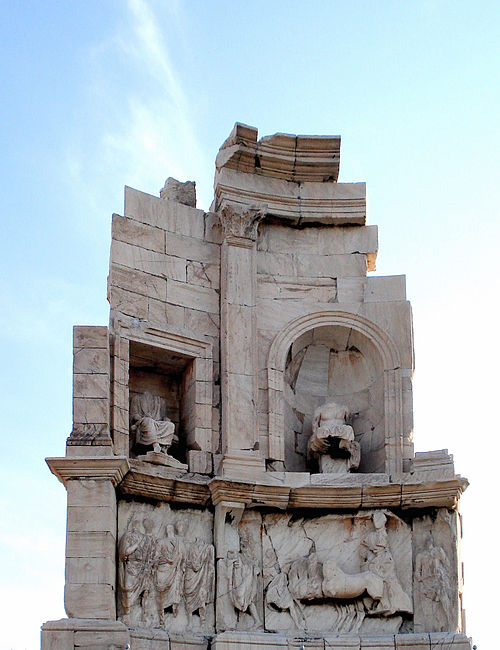
The Filopappos Monument is an ancient Greek monument located on Filopappou Hill in Athens, overlooking the Acropolis. It was built in the early 2nd century CE to honor Gaius Julius Antiochus Epiphanes, also known as Filopappos, a prince from the Kingdom of Commagene who became a Roman consul and friend of Emperor Trajan.The monument is a large funerary structure, built in the form of a tomb and a columned structure, with a prominent inscription commemorating Filopappos' life and accomplishments. It offers stunning panoramic views of Athens, the Acropolis, and the surrounding landscape.
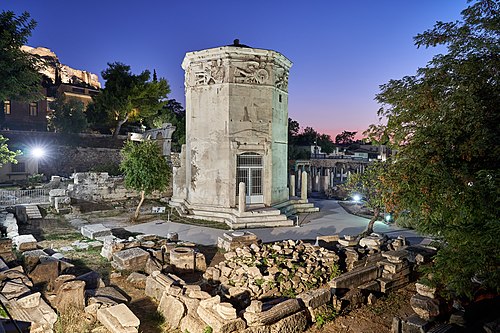
The Tower of the Winds is an ancient octagonal structure located in the Roman Agora of Athens, built around the 1st century BCE. This remarkable building served as both a weather vane and a water clock (known as an hydraulic clock), and was used to measure time during the day and night. Each of the eight sides of the Tower of the Winds depicts a wind god, representing different directions from which the winds blew. The tower's upper portion contained a bronze vane that spun in the wind, signalling the direction of the breeze, while the lower section housed a sophisticated water clock to measure time.
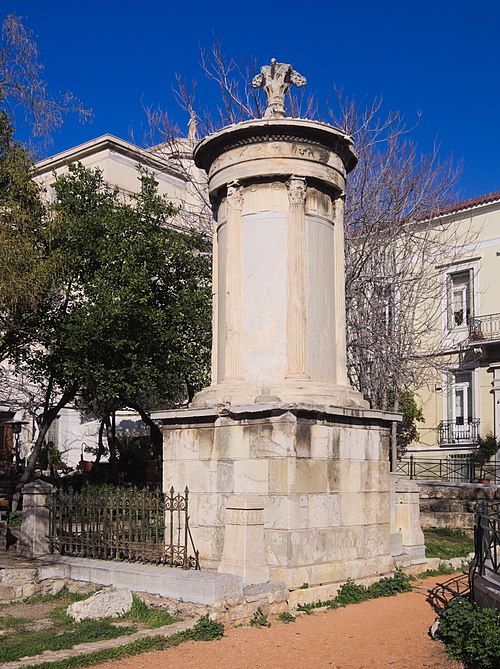
The Monument of Lysicrates is a well-preserved ancient Greek monument located in Athens, near the foot of the Acropolis. Built in 334 BCE, it was erected by Lysicrates, a wealthy patron of the arts, to commemorate his victory in the Dionysian festival's theatrical competition. Lysicrates, who was a choregos (a wealthy sponsor of theatrical performances), funded the production of a play that won first prize at the festival.

 Maps © 2026 TerraNaviga.com
 Development © 2026 imb.gr