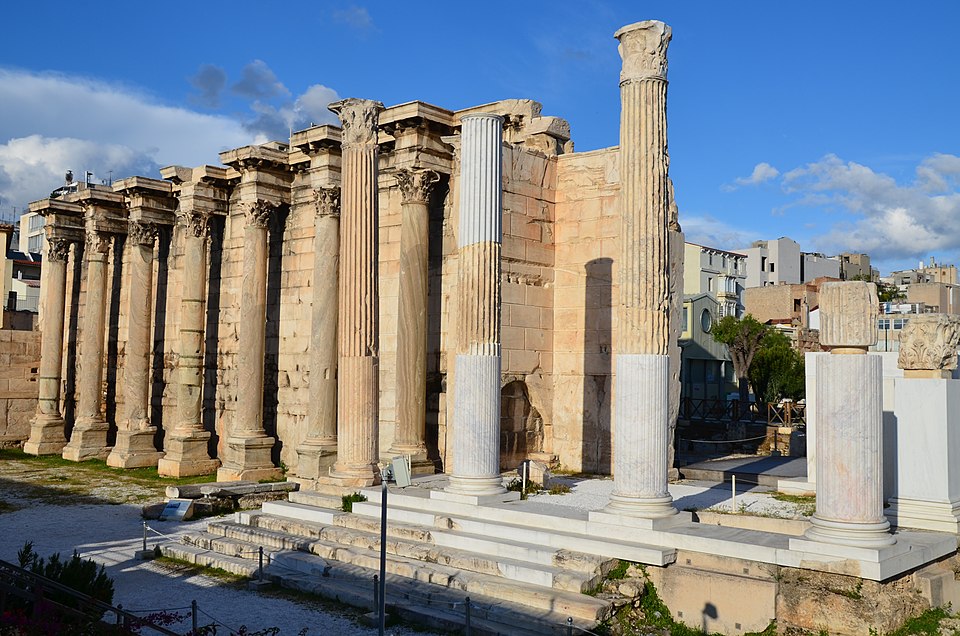
Hadrian's Library is an ancient structure located in the heart of Athens, near the Roman Agora. It was built by the Roman Emperor Hadrian in 132 CE to serve as both a library and a cultural center. The library housed a vast collection of scrolls and books, making it an important intellectual hub of the time. The library was not only a place for the storage of books but also for philosophical discussions and intellectual pursuits. Hadrian's Library is known for its magnificent architectural style, combining Roman and Greek influences.
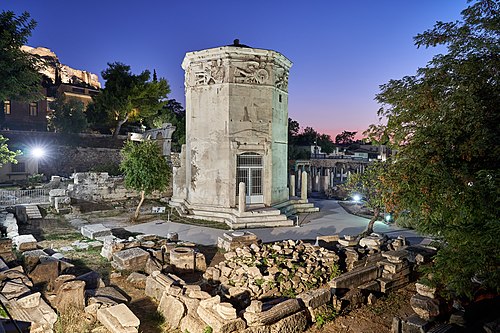

The Tower of the Winds is an ancient octagonal structure located in the Roman Agora of Athens, built around the 1st century BCE. This remarkable building served as both a weather vane and a water clock (known as an hydraulic clock), and was used to measure time during the day and night. Each of the eight sides of the Tower of the Winds depicts a wind god, representing different directions from which the winds blew. The tower's upper portion contained a bronze vane that spun in the wind, signalling the direction of the breeze, while the lower section housed a sophisticated water clock to measure time.
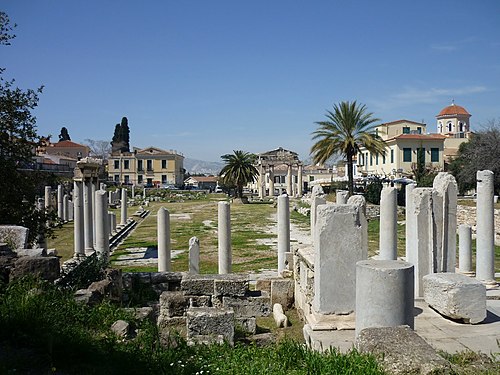

The Roman Agora in Athens is an important archaeological site built during the 1st century BCE, under Roman rule, and located to the north of the Ancient Agora. It served as a marketplace and a public space, much like its Greek predecessor, but with distinct Roman architectural influences. The Roman Agora is known for its Gate of Athena Archegetis, a monumental entrance built to honor the city's founder, Athena, and for the Tower of the Winds, an ancient octagonal structure used as a clock and weather station.
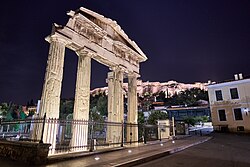

The Pyle Archigētidos (also known as the Archigetes Gate) is an ancient structure located in Athens. It was one of the main entrances to the Acropolis and served as an important ceremonial gateway. The gate was built in honor of the legendary founder of the city, Theseus, and it was also associated with the mythical origin of the Athenian people.Though little remains of the structure today, historical accounts suggest that the Pyle Archigētidos was a monumental gateway that marked the boundary between the sacred area of the Acropolis and the rest of the city.
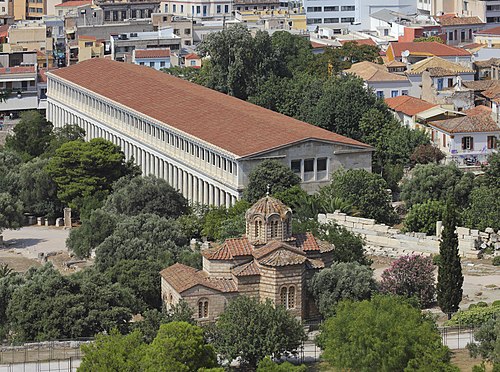

Originally built in the 2nd century BCE by King Attalos II of Pergamon, it was a covered portico or colonnade that provided space for shopping, socialising, and public activities. The Stoa was an important part of Athenian civic life, serving as a marketplace and a gathering place for intellectual discussions. The structure consists of two stories of columns in the Ionic style, and it was rebuilt in the 1950s by the American School of Classical Studies, using the original stones. Today, the Stoa houses the Museum of the Ancient Agora, displaying artefacts and providing insight into the history of Athens and the Agora itself.
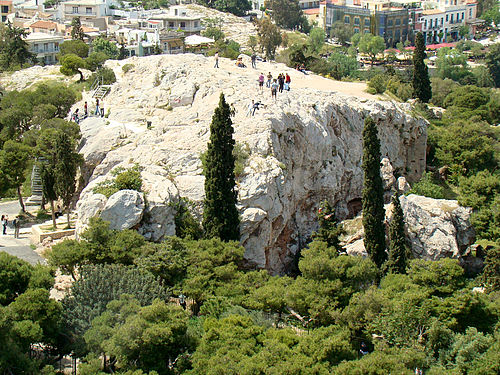

Areopagus (or Arios Pagos) is a prominent rock outcrop located just west of the Acropolis of Athens. In ancient times, it was the site of a council, known as the Areopagus Council, which was composed of former magistrates and served as a key judicial and legislative body in Athens. The Areopagus is also famously associated with the apostle Paul, who, according to the New Testament, delivered his famous sermon on the hill to the Athenians about the "unknown god" (Acts 17:22-31). Today, the Areopagus offers stunning views of the Acropolis and the city of Athens, and it remains a significant historical and cultural landmark.
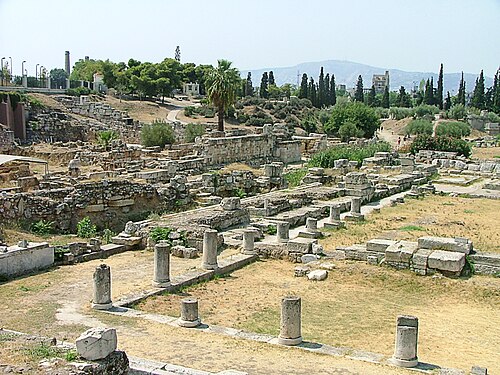

The Ancient Agora of Athens was the heart of public life in ancient Athens, serving as a marketplace, political center, and gathering place from the 6th century BCE. It was home to key structures like the Temple of Hephaestus, the Stoa of Attalos, and the Bouleuterion. Philosophers like Socrates engaged in discussions here, and it played a vital role in the development of Athenian democracy. Today, the site offers a glimpse into ancient Greek daily life and is home to a museum housed in the reconstructed Stoa of Attalos.
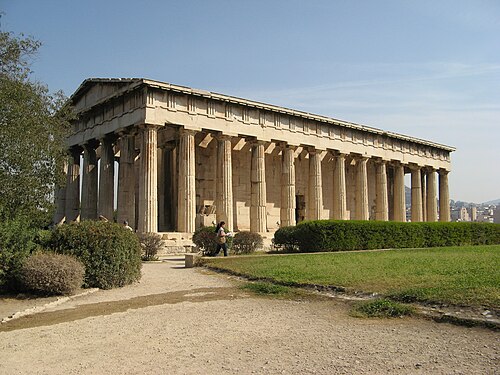

The Temple of Hephaestus, also known as the Theseion, is an ancient Greek temple located in the Agora of Athens, near the western edge of the Acropolis. Dedicated to Hephaestus, the god of metalworking, craftsmanship, and fire, the temple was built around 449 BCE during the height of Athens' Golden Age, likely under the leadership of Pericles.
The Temple of Hephaestus is one of the best-preserved ancient Greek temples, largely due to its continuous use throughout history. It is a Doric temple, characterised by its simple yet elegant design with 34 columns surrounding a rectangular structure. The temple originally housed a statue of Hephaestus and his consort Aphrodite, although the statue has since been lost.
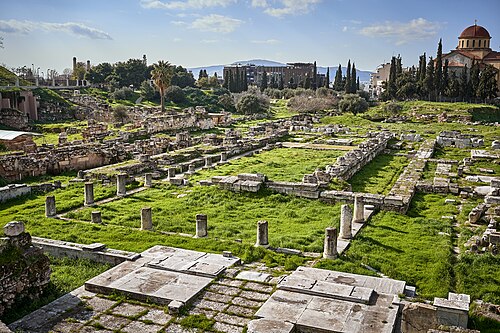

The Kerameikos Archaeological Site is one of the most important ancient sites in Athens, located just northwest of the Acropolis. The area was originally a potter’s district, from which it takes its name ("Kerameikos" meaning "potter's quarter" in Greek), but it later became a major cemetery and the site of various significant public monuments. The site contains both funerary and civic elements, as it was the location of the Ancient Athenian cemetery and the city’s western gate. The Kerameikos Cemetery is especially notable for its well-preserved tombs, including the Socratic tomb, which marks the burial place of famous Athenians.
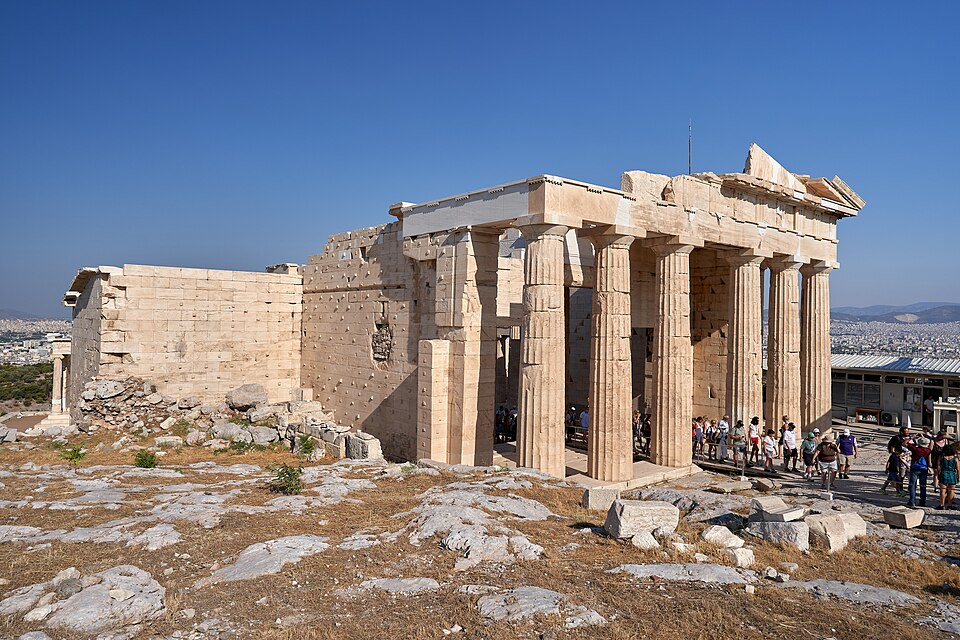

The Propylaea is the grand entrance to the Acropolis of Athens, designed by the architect Mnesicles and constructed between 437 and 432 BCE. This monumental gateway marks the transition from the city to the sacred precinct of the Acropolis. The Propylaea blends both Doric and Ionic architectural styles, with a central building flanked by two wings. Despite suffering damage over the centuries, the Propylaea remains a symbol of the grandeur of ancient Athens and an important example of classical Greek architecture.
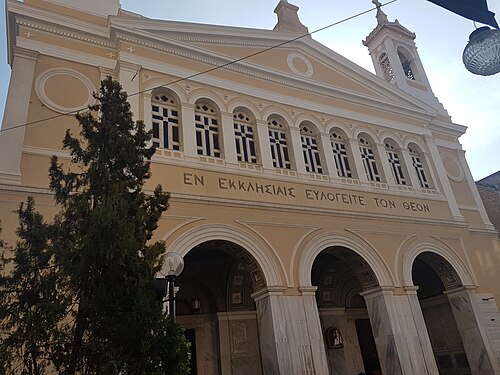
The Kimisi Theotokou church (Dormition of the Virgin Mary) is a significant church also known as Panagia Chryssospiliotissa. Its name originates from the Monastery of Mega Spileo, which contributed to its construction, or from an icon of the Virgin Mary that was a replica of the monastery's icon. The original basilica was built in 1705 but was destroyed during the siege of the Acropolis by Kioutahi Pasha in 1826. Rebuilding commenced in 1832, and completed in 1892. The church is a three-aisled basilica, exemplifying eclecticism by combining neoclassical and Byzantine elements.
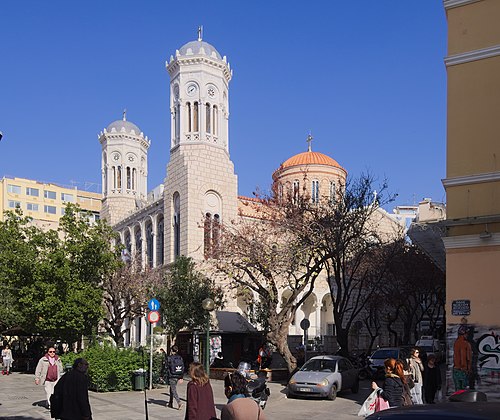
The Church of Agia Irini on Aiolou Street is a beautiful 19th-century church in the heart of Athens, once serving as the city’s main cathedral before the construction of the modern Metropolis. Designed by architect Lysandros Kaftantzoglou, it combines neoclassical and Byzantine elements, featuring a large dome and twin bell towers. Located in the lively Agia Irini Square, surrounded by cafes and shops, it is a peaceful yet central spot that blends Athens' spiritual and urban character.
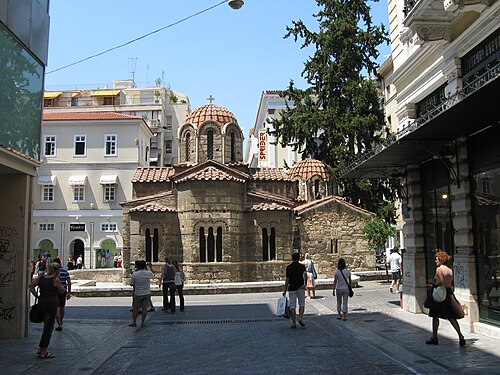
The Church of Panagia Kapnikarea is one of Athens' oldest and most historically significant churches, dating back to the 11th century. Located in the heart of the city on Ermou Street, it was constructed atop an ancient Greek temple, possibly dedicated to Athena or Demeter. The church's name, "Kapnikarea," is believed to derive from the Greek word "kapnismeni," meaning "smoked," referring to the soot marks on its walls.
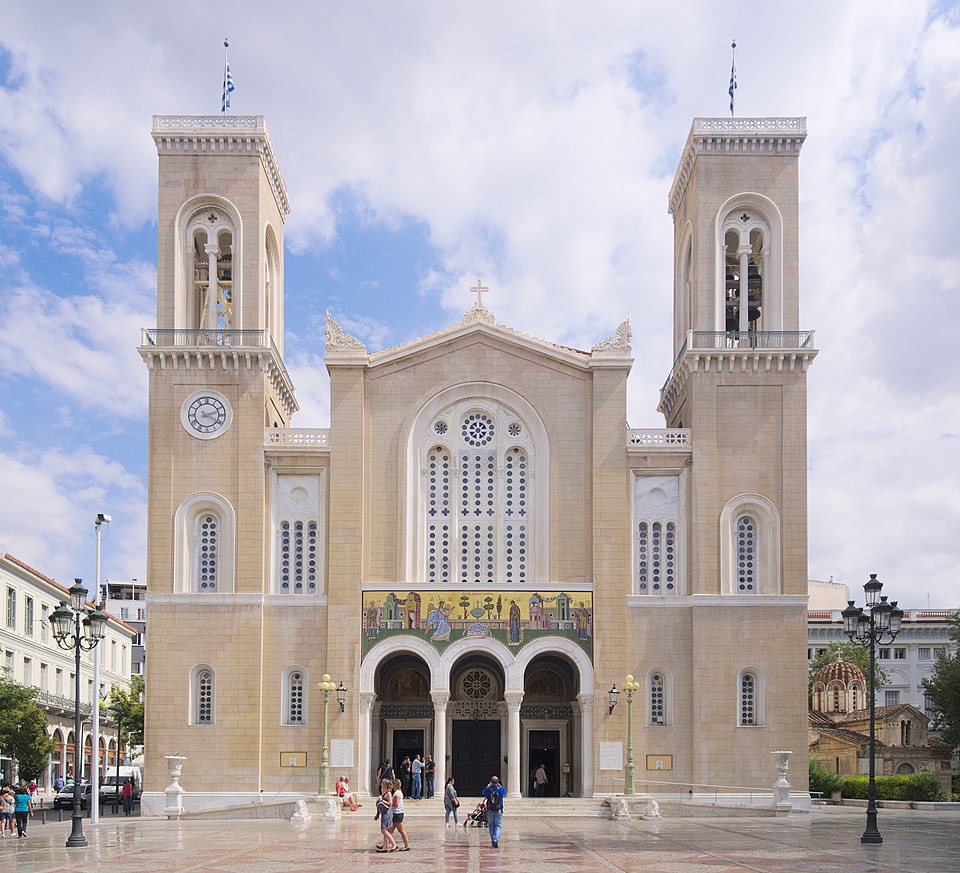
The Metropolitan Cathedral of Athens, also known as the Annunciation of the Theotokos Cathedral, is the largest and most significant church in Athens. Located in the heart of the city, near Syntagma Square, it serves as the seat of the Archbishop of Athens and All Greece. Built in the 19th century on the site of an older church, the cathedral is a fine example of neoclassical architecture, with a blend of Byzantine influences. The cathedral is not only a place of worship but also an important historical and cultural landmark, housing the tombs of several prominent Greek figures, including Patriarch Gregory V and Saint Philothei.
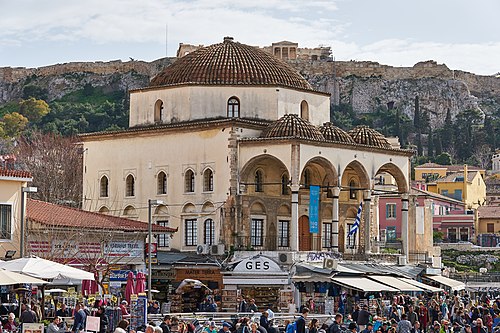
The Tzisdarakis Mosque, located in Monastiraki Square in central Athens, was constructed in 1759 by the Ottoman governor Mustafa Aga Tzisdarakis. It stands as one of the few remaining Ottoman-era structures in the city. The mosque's construction utilised materials from nearby ancient sites, including columns from Hadrian's Library, a practice that led to Tzisdarakis's temporary dismissal due to concerns over desecration. The building features a prayer hall with an elaborately decorated mihrab (prayer niche) and retains its original inscription above the entrance.
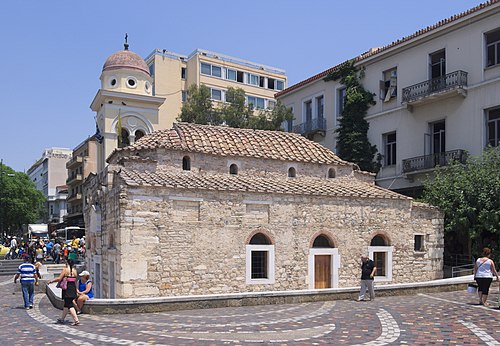
The Church of Panagia Pantanassa, situated in Monastiraki Square at the heart of Athens, is among the city's oldest and most cherished religious sites. Constructed between the 7th and 11th centuries, it has served various roles over the centuries, including a monastery and later a parish church. The church's name, "Pantanassa," meaning "Queen of All," reflects its esteemed status. It is also associated with notable figures like Saint Nektarios of Pentapolis, who served as a deacon there between 1881 and 1885.
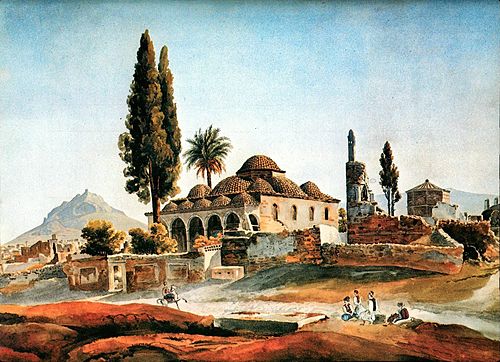
The Fetichie Tzami is an Ottoman-era mosque located in the Roman Agora of Athens, near Monastiraki Square. Built in the early 17th century, it features a distinctive dome and is one of the few surviving Ottoman structures in the city. In recent years, the mosque has been restored and is now used for exhibitions and cultural events. For example, in 2019, it hosted a photographic exhibition titled "Athens Under Occupation," showcasing images of Athens during the German occupation in World War II.
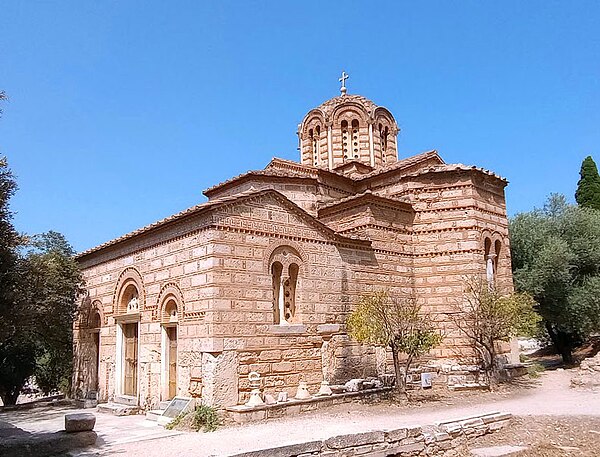
The Church of the Holy Apostles, also known as Agii Apostoli or Holy Apostles of Solaki, is one of Athens' oldest surviving Christian churches. Located in the southeastern corner of the Ancient Agora, it was constructed in the late 10th century, making it over a millennium old. Remarkably, it is the only Byzantine-era structure in the Agora, apart from the Temple of Hephaestus, to have remained intact since its foundation .
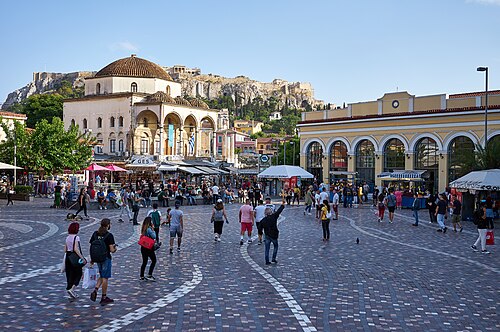
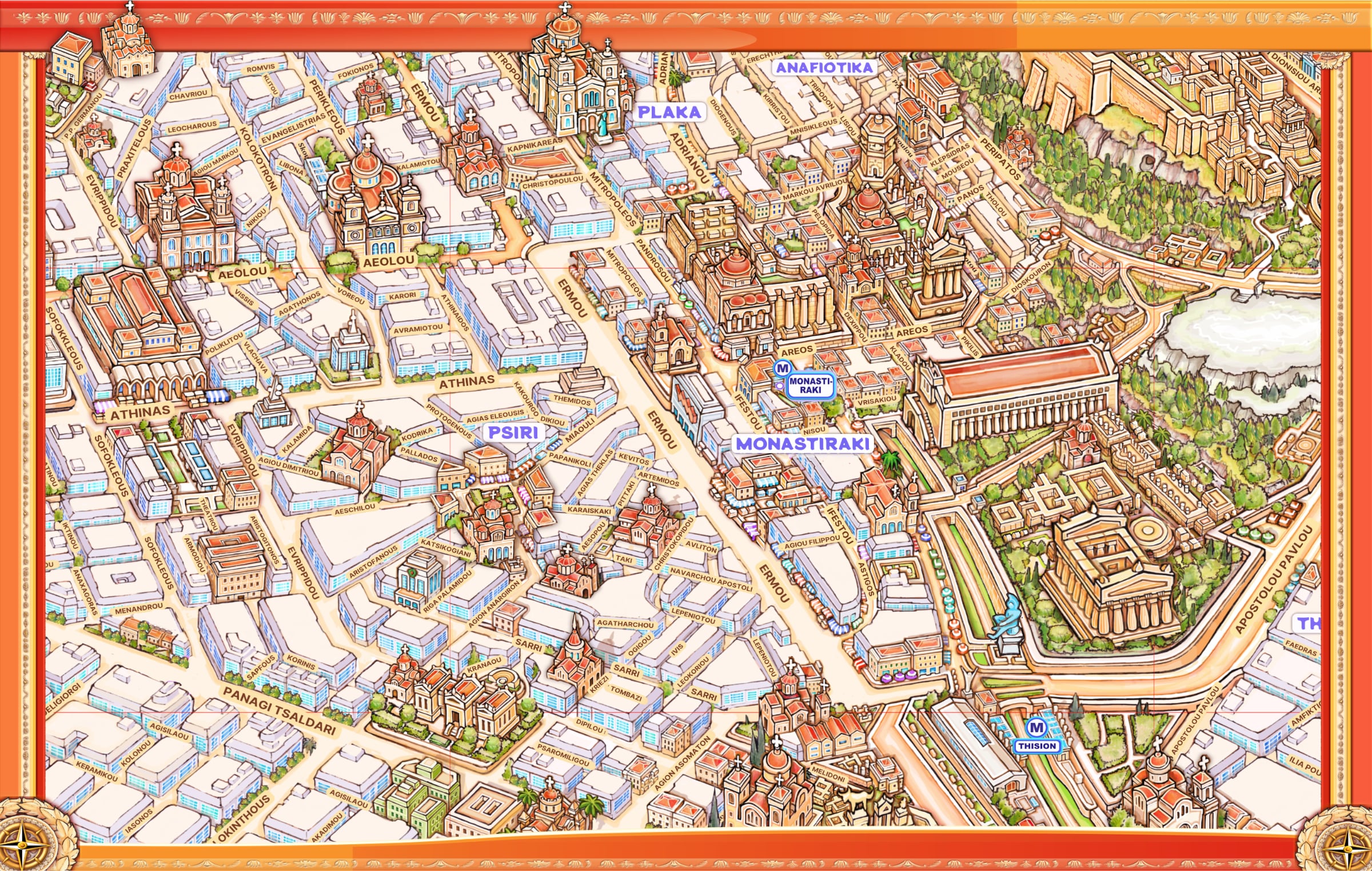
Monastiraki Square is famous for its vibrant market atmosphere and the stunning view of the Acropolis. It is a lively area filled with shops, cafés, and street vendors. The square gets its name from the Monastiraki Mosque, which still stands at the edge of the square. The area is also known for its antique market and is a popular starting point for tourists exploring Athens' ancient sites, including the Ancient Agora.
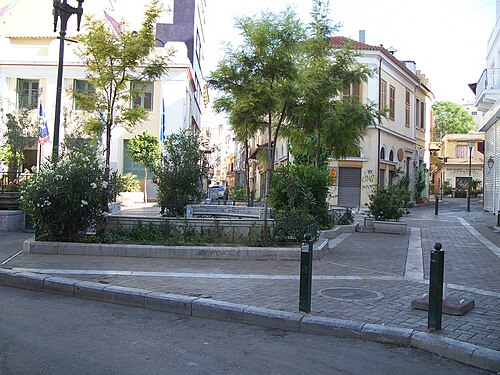
Psiri Square, or Iroon Square, is a vibrant and historically rich public space nestled in the heart of Athens, Greece. Once known for its artisan workshops and working-class roots, Psiri has transformed into a lively neighborhood renowned for its eclectic mix of traditional tavernas, contemporary bars, live music venues, and boutique shops. The area is adorned with murals and graffiti, adding a contemporary flair to its historic charm. In addition to its artistic appeal, Psiri offers a diverse culinary scene. Visitors can enjoy traditional Greek dishes in rustic tavernas or explore modern eateries offering international cuisine.

Renowned as the city's antique hub, it has been hosting a bustling flea market since the late 19th century. Every Sunday, vendors set up stalls offering a diverse array of items, including vintage furniture, old books, musical instruments, and unique bric-a-brac, attracting both locals and tourists alike . The square's name is believed to derive from Ethiopia's former name, Abyssinia, possibly due to the presence of Ethiopian traders in the area during the 19th century. Alternatively, some attribute the name to Emperor Haile Selassie's humanitarian aid to Greek refugees in 1922 .
Mitropoleos Square is a central square in Athens, named after the Metropolitan Cathedral of Athens (Mitropolis). Located between Syntagma and Monastiraki, it is a lively area surrounded by historical landmarks, including the Panagia Gorgoepikoos Church and statues commemorating historical figures like Constantine Palaiologos. The square is known for its ecclesiastical shops selling religious artefacts and icons. It also offers a range of dining options, making it a vibrant spot to experience Athens’ rich culture and history.
Koumoundourou Square, also known as Eleftherias Square, is a historically rich public space located in central Athens, Greece. The square was originally named after King Ludwig I of Bavaria, Otto’s father, and later renamed in honor of Alexandros Koumoundouros, a prominent 19th-century Greek politician who served as Prime Minister multiple times. His residence once faced the square, contributing to its current name. In the late 19th century, the Municipal Nursery was established at the northern end of the square, designed by architect Panagis Kalkos.
The square is named after the Church of Agia Irini, a significant Greek Orthodox church that once served as Athens' main cathedral before the construction of the current Metropolitan Cathedral. In recent years, Agia Irini Square has transformed into a lively urban hub, attracting both locals and visitors. The area is now a hotspot for dining and nightlife, featuring a variety of establishments ranging from traditional tavernas to trendy cocktail bars.
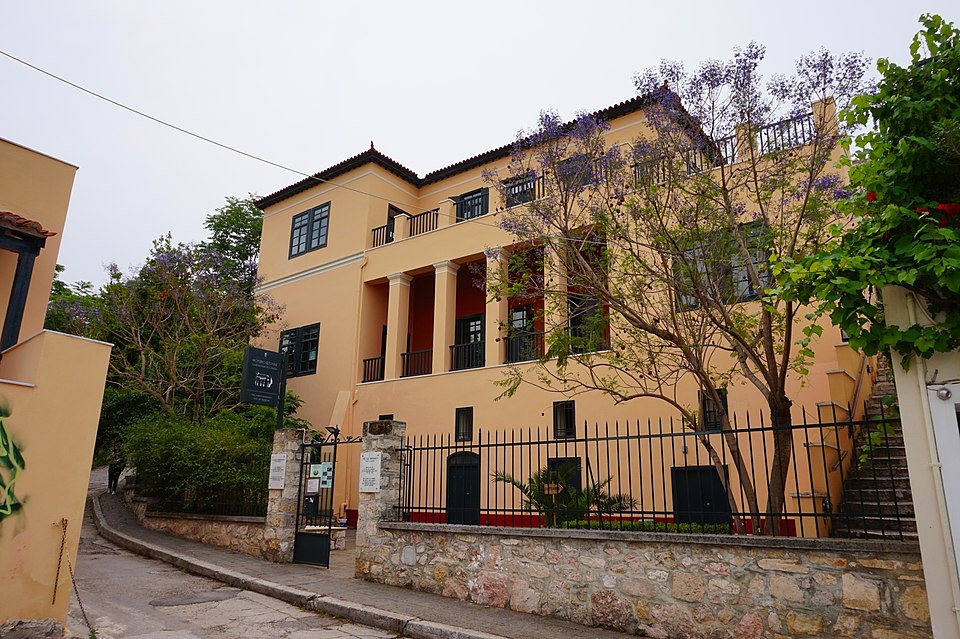
The Athens University History Museum is situated in one of Athens' oldest residential buildings, dating back before the 18th century. Located beneath the Acropolis, the building offers a panoramic view of the Plaka neighbourhood and the ancient city center. Originally the residence of architect Stamatios Kleanthis, it also served as the first University of the independent Greek state from 1837 to 1841.
The Museum of Greek Folk Musical Instruments is dedicated to preserving and showcasing Greece's rich musical heritage. Established in 1991, the museum is housed in the historic Lassanis Mansion, built in 1842, located in the Plaka district near the Roman Agora. The museum's collection of approximately 1,200 instruments.
The Benaki Museum of Islamic Art is renowned for its extensive collection of artefacts spanning from the 7th to the 19th century, offering insights into the rich tapestry of Islamic civilisation. The museum's collection includes over 12,000 items such as ceramics, metalwork, textiles, jewellery, and wood carvings. Notable pieces include 8th-century Mesopotamian door panels, a 16th-century velvet saddle from Bursa, and the marble-faced interior of a 17th-century Cairo mansion's reception room.
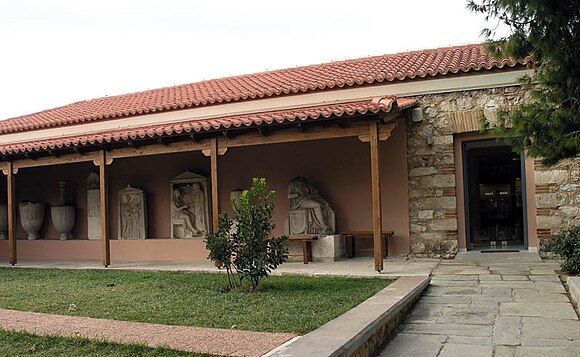
The Archaeological Museum of Kerameikos is situated adjacent to the ancient Kerameikos cemetery in Athens, Greece. Established in 1938, the museum showcases artefacts uncovered during excavations by the German Archaeological Institute, offering insights into ancient Athenian funerary practices.
The Ancient Agora Museum, located within the Stoa of Attalos in Athens, offers a fascinating journey through the everyday life of ancient Athenians. Housed in a beautifully reconstructed colonnade, the museum displays artifacts discovered in the Agora — the heart of political, commercial, and social life in ancient Athens. Visitors can explore sculptures, pottery, coins, and tools that reveal how democracy, philosophy, and daily activities shaped the city’s rich heritage. Surrounded by the ruins of the Agora and with views of the Acropolis, the museum provides a captivating glimpse into classical Athens.
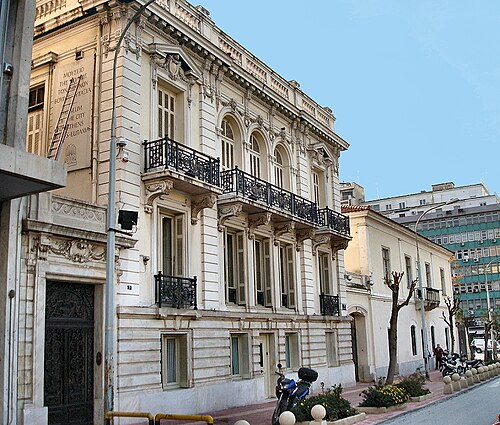
The Athens City Museum, also known as the Vouros-Eutaxias Foundation, offers a captivating glimpse into the evolution of Athens from a modest town to a vibrant metropolis. Housed in two neoclassical buildings, the museum occupies structures dating back to 1833 and 1859 . Notably, number 7 was the first royal residence of King Otto and Queen Amalia, serving as Greece's inaugural royal palace. A standout exhibit is Jacques Carrey’s 1674 oil painting of Athens, the largest known depiction of the city before the Parthenon was damaged in the 1687 siege .

Psiri Square, or Iroon Square, is a vibrant and historically rich public space nestled in the heart of Athens, Greece. Once known for its artisan workshops and working-class roots, Psiri has transformed into a lively neighbourhood renowned for its eclectic mix of traditional tavernas, contemporary bars, live music venues, and boutique shops. The area is adorned with murals and graffiti, adding a contemporary flair to its historic charm. In addition to its artistic appeal, Psiri offers a diverse culinary scene. Visitors can enjoy traditional Greek dishes in rustic tavernas or explore modern eateries offering international cuisine.

ΕΓΓΡΑΦΗ ΣΤΗΝ ΠΛΑΤΦΟΡΜΑ
TN_LOGOTEXT_2023 Maps © 2026 TerraNaviga.com
imb_logo_23 Development © 2026 imb.gr
COPYRIGHT / INTELLECTUAL PROPERTY (IP) NOTICE: All content, including maps, illustrations, designs, and related materials, constitutes the exclusive intellectual property of Epameinondas Kaiafas Terra Naviga and is protected under Greek and international copyright and intellectual property laws. Any unauthorised use, reproduction, distribution, or adaptation of these materials without express written consent is strictly prohibited. Terra Naviga reserves the right to take full legal action against any infringement, including claims for financial compensation and prosecution under applicable laws.
ANCIENT Monuments
MODERN MONUMENTS
MUSEUMS
SQUARES
SELECT CATEGORY
SELECT LOCATION
INFO
SELECT CATEGORY
CHOOSE ITEM
- MUSEUMS
HOVER OVER ICON
LINK TO OFFICIAL WEBSITE