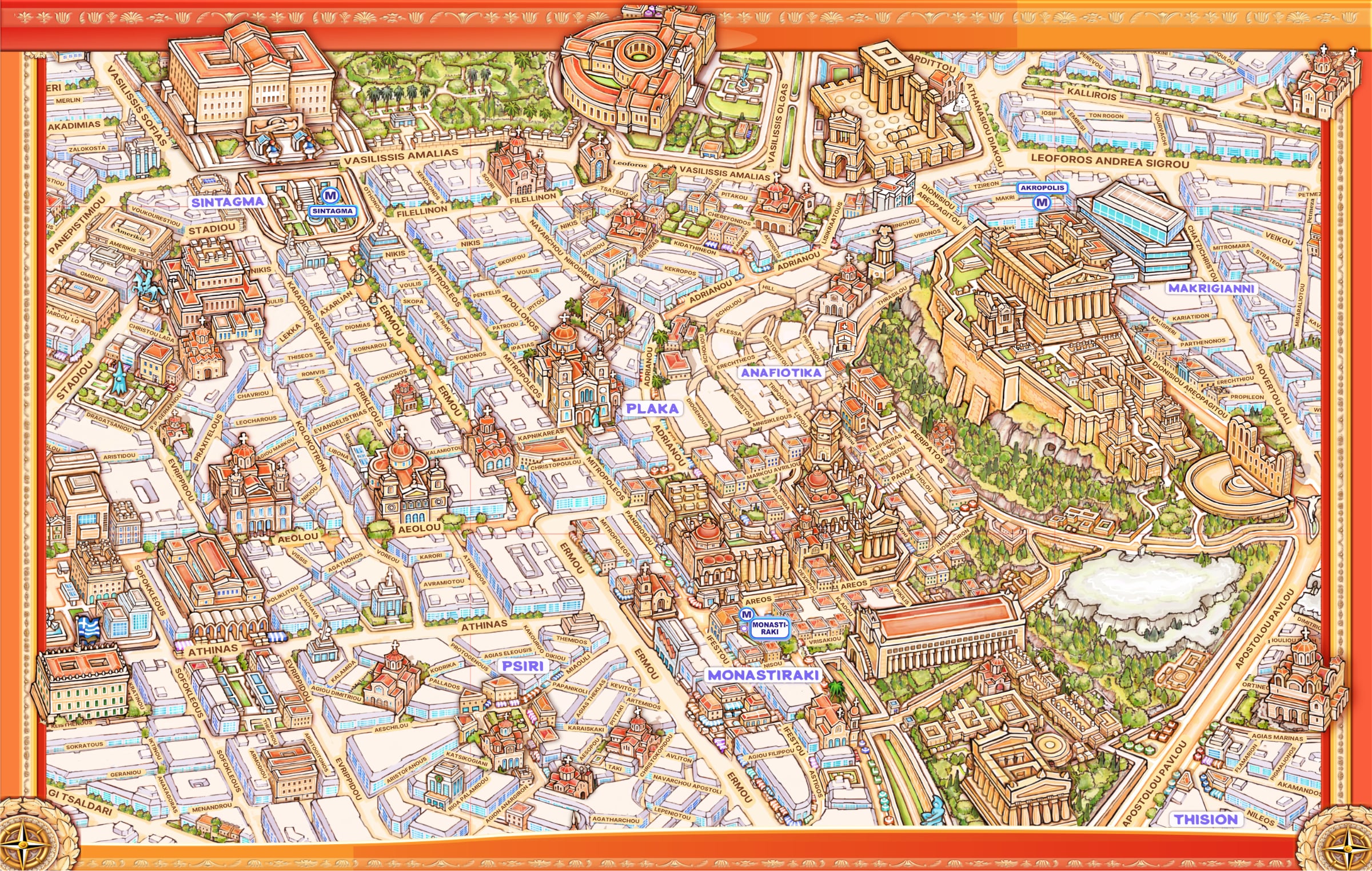
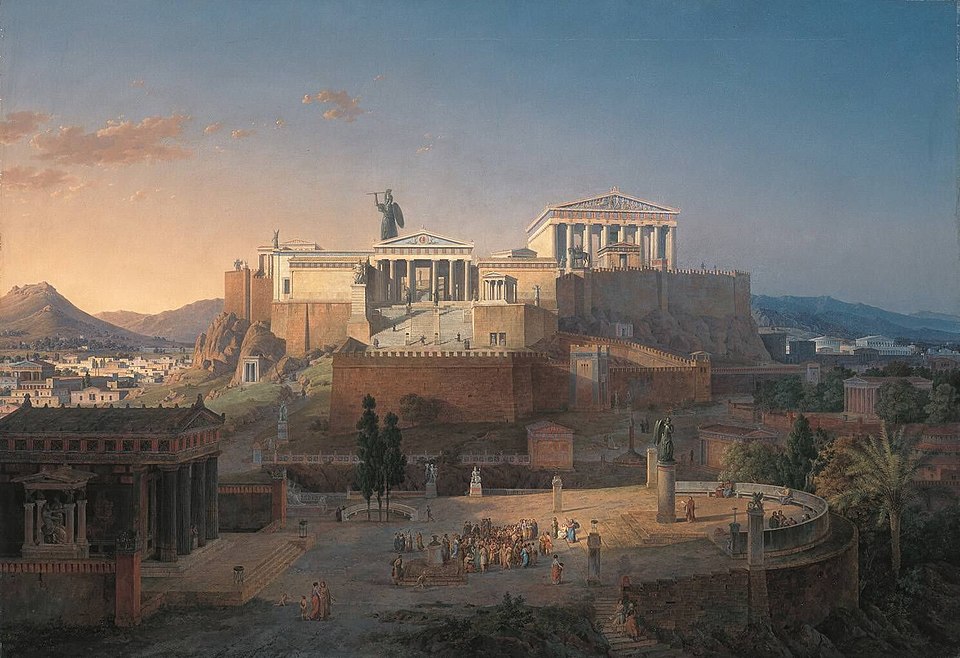
The Acropolis of Athens, Located on a rocky outcrop above the city of Athens, has been a center of political, religious, and cultural life for millennia. Its ancient structures, many of which are still standing, embody the architectural and artistic achievements of the 5th century BCE, a period known as the "Golden Age of Athens.”
The Acropolis has been inhabited since the Neolithic period, but it was during the 5th century BCE, under the leadership of the Athenian statesman Pericles, that the site was transformed into a monumental complex of temples, statues, and other structures. This era coincided with Athens' rise to political and cultural dominance in the ancient Greek world, following their victory over the Persians in the Battle of Marathon (490 BCE) and the Battle of Salamis (480 BCE). The Acropolis served as both a religious sanctuary dedicated to the city’s patron goddess, Athena, and a symbol of Athenian power and pride.
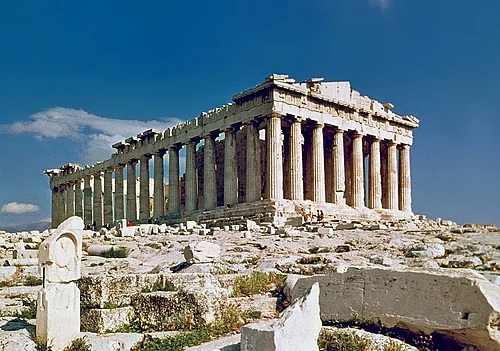

The Parthenon is a magnificent temple located on the Acropolis of Athens, dedicated to Athena, the city's patron goddess. Built between 447 and 438 BCE during the height of Athens' Golden Age, it is considered one of the most iconic symbols of ancient Greek architecture. Designed by the architects Iktinos and Kallikrates, and adorned with sculptural masterpieces by Phidias, the Parthenon exemplifies classical Greek ideals of beauty, proportion, and harmony. Today, it stands as a symbol of the cultural achievements of ancient Greece and continues to inspire awe around the world.
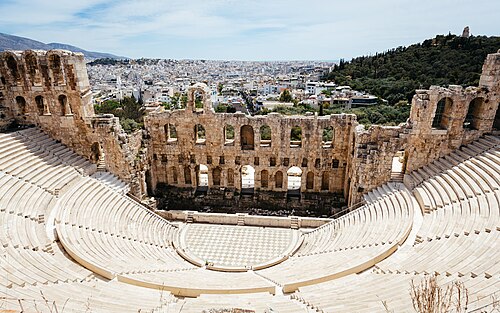

The Odeon of Herodes Atticus (or Odeon of Herodes Atticus) is a grand ancient theatre located at the foot of the Acropolis in Athens. Built in 161 CE by the Roman aristocrat Herodes Atticus in memory of his wife, Regilla, the Odeon is an exceptional example of Roman architecture in Athens. It was originally a wooden-roofed structure designed for musical performances and theatrical events. With a seating capacity of around 5,000 spectators, the Odeon was used for concerts, poetry readings, and other cultural events during the Roman period. Today, it stands as a stunning venue for modern performances, including concerts and theatre, as part of the Athens Festival.
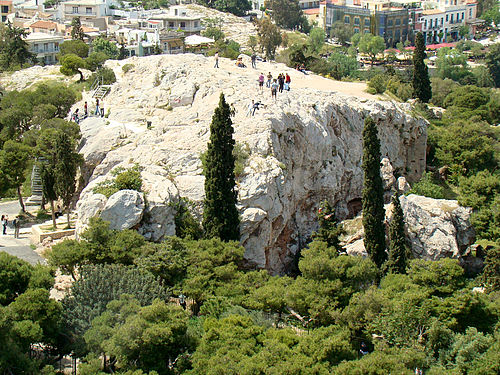

Areopagus (or Arios Pagos) is a prominent rock outcrop located just west of the Acropolis of Athens. In ancient times, it was the site of a council, known as the Areopagus Council, which was composed of former magistrates and served as a key judicial and legislative body in Athens. The Areopagus is also famously associated with the apostle Paul, who, according to the New Testament, delivered his famous sermon on the hill to the Athenians about the "unknown god" (Acts 17:22-31). Today, the Areopagus offers stunning views of the Acropolis and the city of Athens, and it remains a significant historical and cultural landmark.
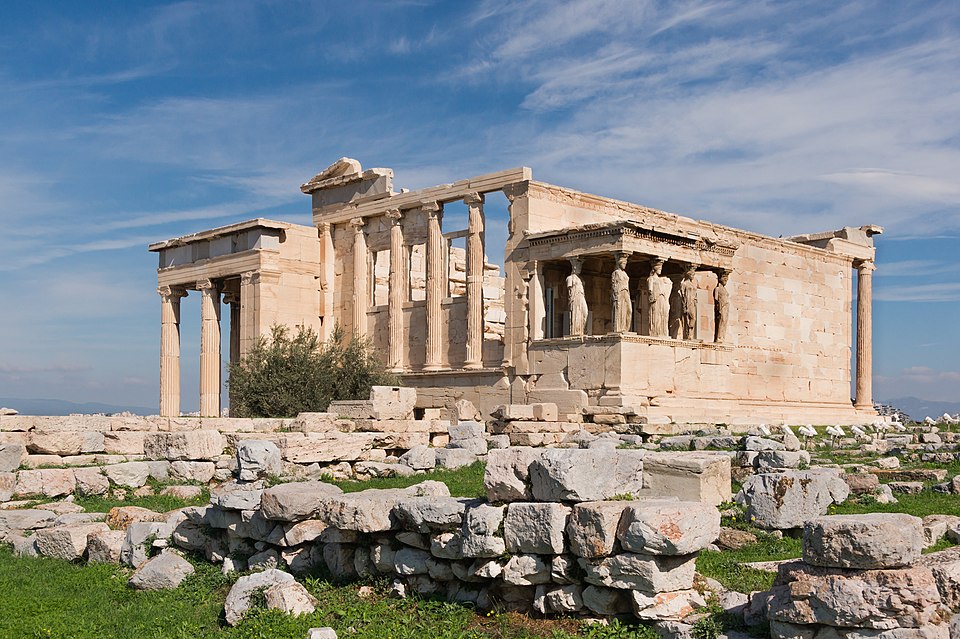

The Erechtheum is an ancient temple on the Acropolis of Athens, built between 421 and 406 BCE. It was dedicated to both Athena and Poseidon, and is renowned for its unique, asymmetrical design, which was adapted to the uneven terrain of the Acropolis. The temple is most famous for its southern porch, supported by the Caryatids, six beautifully sculpted female figures that serve as columns. The Erechtheum is also historically significant for being the mythical site of the contest between Athena and Poseidon for the patronage of Athens, as well as for housing the sacred olive tree said to have been planted by Athena herself.
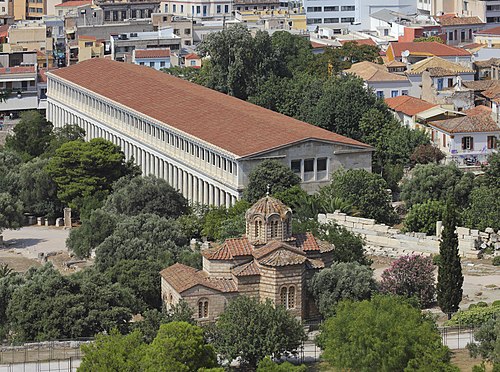

Originally built in the 2nd century BCE by King Attalos II of Pergamon, it was a covered portico or colonnade that provided space for shopping, socialising, and public activities. The Stoa was an important part of Athenian civic life, serving as a marketplace and a gathering place for intellectual discussions. The structure consists of two stories of columns in the Ionic style, and it was rebuilt in the 1950s by the American School of Classical Studies, using the original stones. Today, the Stoa houses the Museum of the Ancient Agora, displaying artefacts and providing insight into the history of Athens and the Agora itself.

https://en.wikipedia.org/wiki/Stoa_of_Attalos
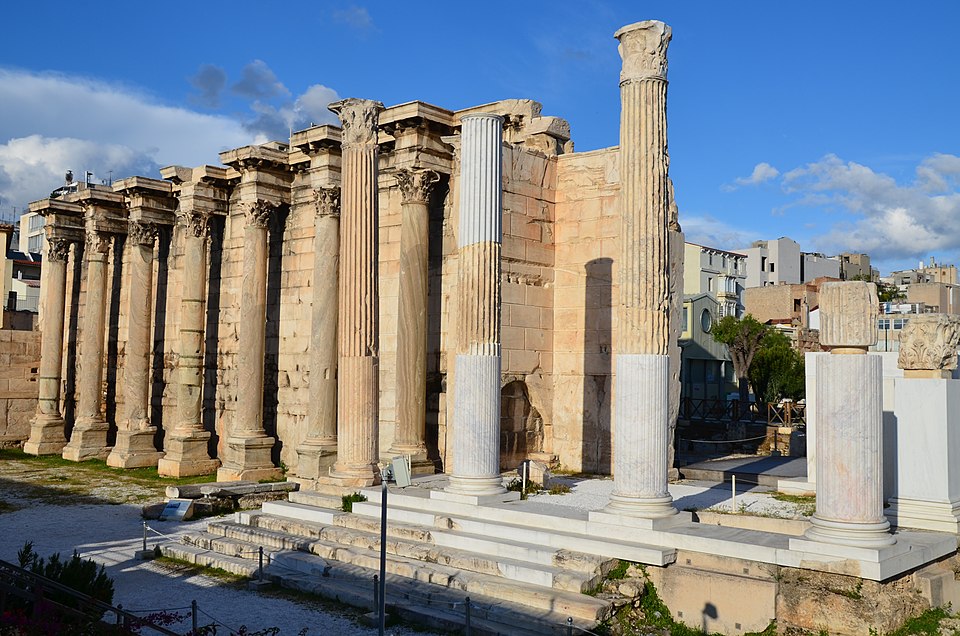

Hadrian's Library is an ancient structure located in the heart of Athens, near the Roman Agora. It was built by the Roman Emperor Hadrian in 132 CE to serve as both a library and a cultural center. The library housed a vast collection of scrolls and books, making it an important intellectual hub of the time. The library was not only a place for the storage of books but also for philosophical discussions and intellectual pursuits. Hadrian's Library is known for its magnificent architectural style, combining Roman and Greek influences.
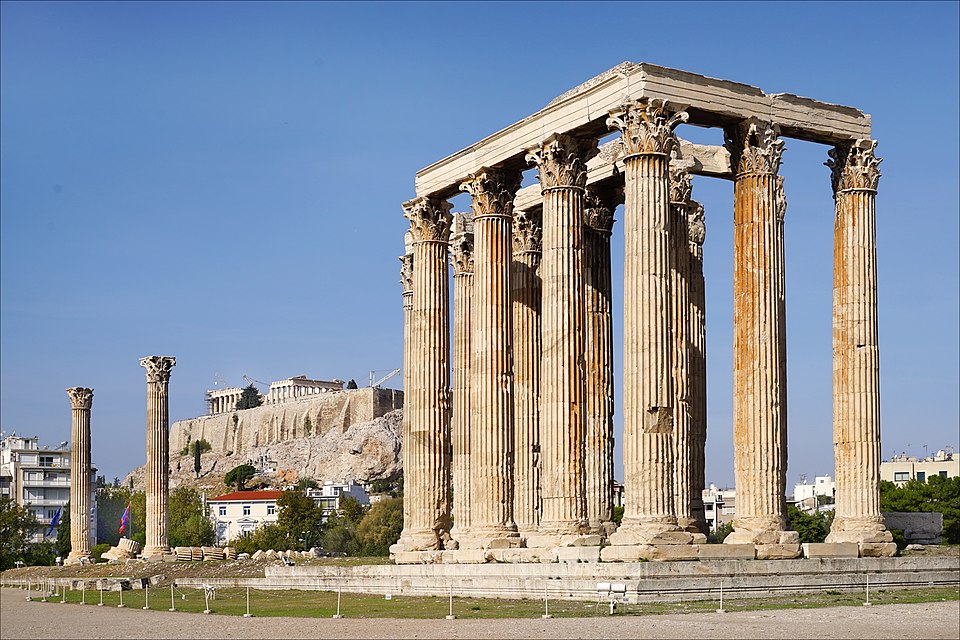

The Temple of Olympian Zeus (also known as the Olympeion) is an ancient temple located southeast of the Acropolis in Athens. It was dedicated to Zeus, the king of the Greek gods, and was one of the largest temples in the ancient world. Construction began in the 6th century BCE under the tyrant Peisistratus, but it was not completed until the reign of the Roman Emperor Hadrian in the 2nd century CE, over 600 years later.
The temple was designed in the Corinthian order and originally featured 104 columns, of which 15 remain standing today.
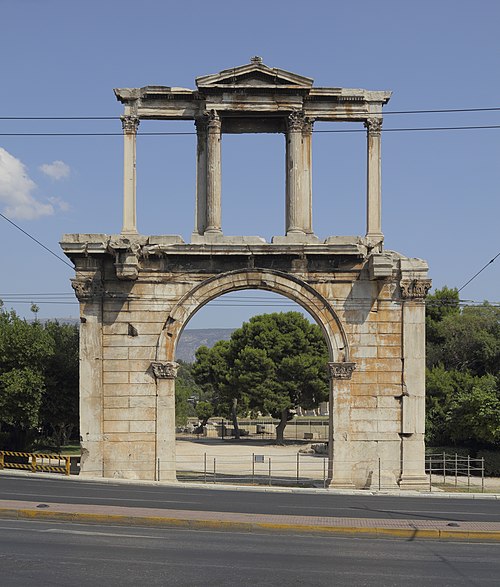

Hadrian's Gate is an ancient monumental gateway located in Athens, built in 132 CE by the Emperor Hadrian to celebrate his contributions to the city. The gate marked the boundary between the ancient Greek city and the Roman quarter of Athens, symbolising the city’s transition under Roman rule. Hadrian's Gate is located near the Temple of Olympian Zeus and remains an important historical landmark, symbolising the relationship between Athens and Rome during the Roman Empire.
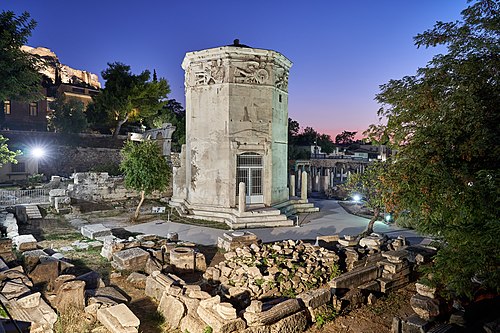

The Tower of the Winds is an ancient octagonal structure located in the Roman Agora of Athens, built around the 1st century BCE. This remarkable building served as both a weather vane and a water clock (known as an hydraulic clock), and was used to measure time during the day and night. Each of the eight sides of the Tower of the Winds depicts a wind god, representing different directions from which the winds blew. The tower's upper portion contained a bronze vane that spun in the wind, signalling the direction of the breeze, while the lower section housed a sophisticated water clock to measure time.
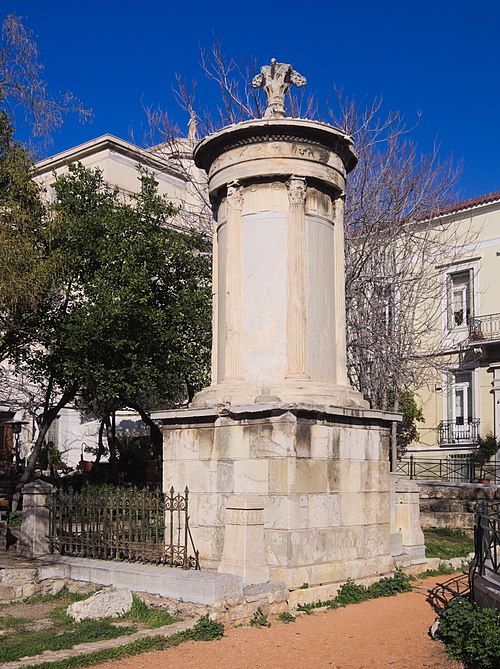

The Monument of Lysicrates is a well-preserved ancient Greek monument located in Athens, near the foot of the Acropolis. Built in 334 BCE, it was erected by Lysicrates, a wealthy patron of the arts, to commemorate his victory in the Dionysian festival's theatrical competition. Lysicrates, who was a choregos (a wealthy sponsor of theatrical performances), funded the production of a play that won first prize at the festival.
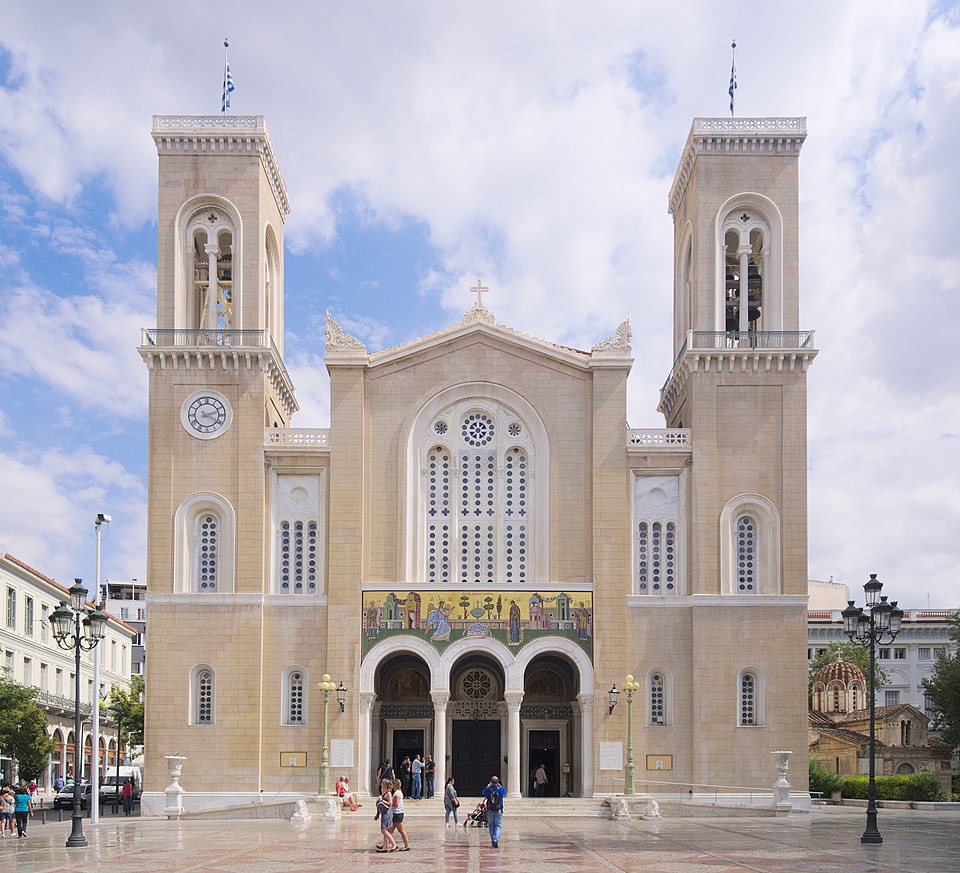
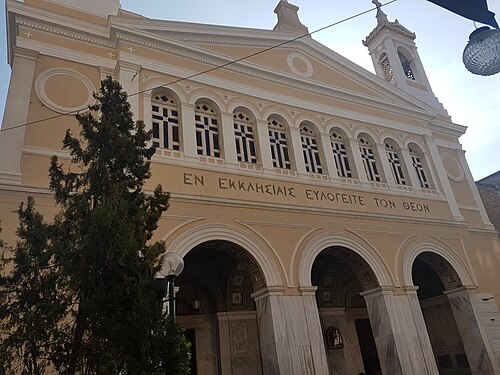
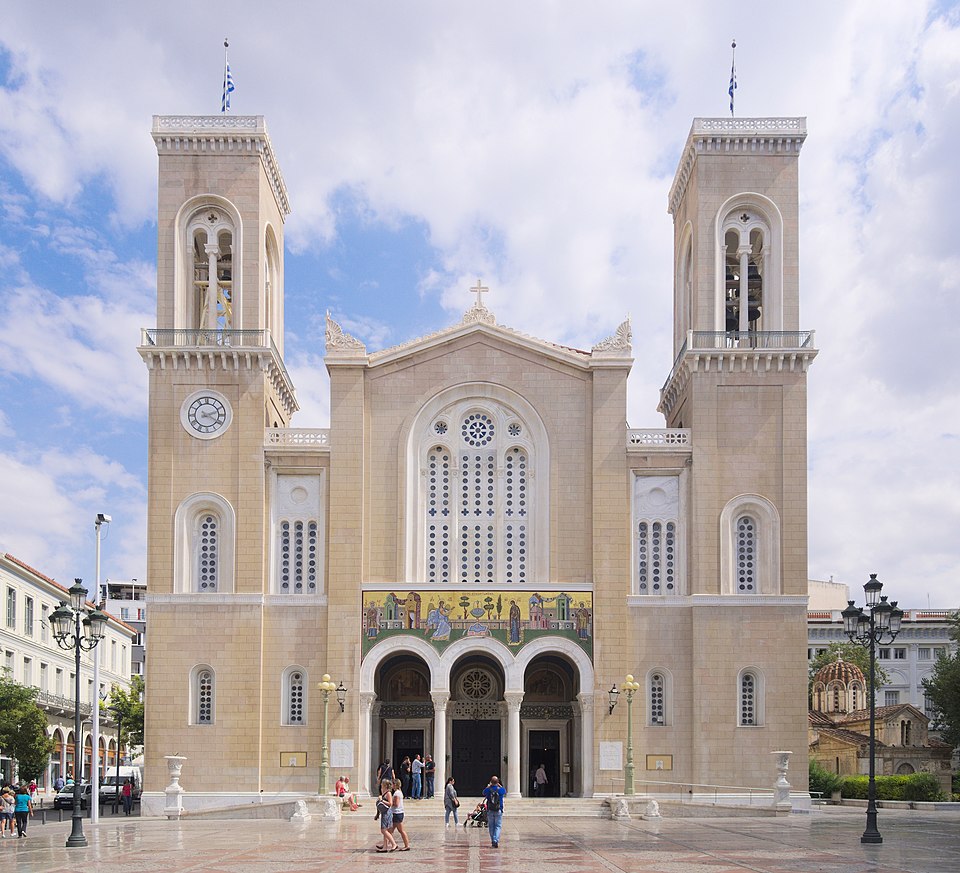
The Metropolitan Cathedral of Athens, also known as the Annunciation of the Theotokos Cathedral, is the largest and most significant church in Athens. Located in the heart of the city, near Syntagma Square, it serves as the seat of the Archbishop of Athens and All Greece. Built in the 19th century on the site of an older church, the cathedral is a fine example of neoclassical architecture, with a blend of Byzantine influences. The cathedral is not only a place of worship but also an important historical and cultural landmark, housing the tombs of several prominent Greek figures, including Patriarch Gregory V and Saint Philothei.
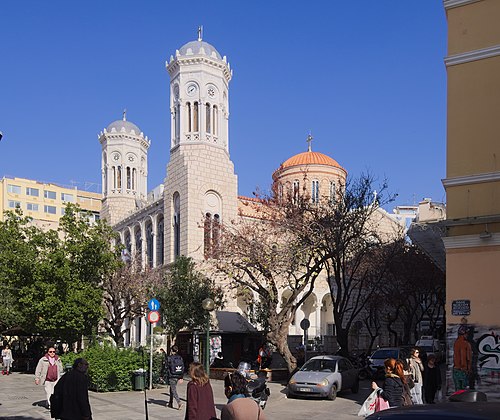
The Kimisi Theotokou church (Dormition of the Virgin Mary) is a significant church also known as Panagia Chryssospiliotissa. Its name originates from the Monastery of Mega Spileo, which contributed to its construction, or from an icon of the Virgin Mary that was a replica of the monastery's icon. The original basilica was built in 1705 but was destroyed during the siege of the Acropolis by Kioutahi Pasha in 1826. Rebuilding commenced in 1832, and completed in 1892. The church is a three-aisled basilica, exemplifying eclecticism by combining neoclassical and Byzantine elements.l
The Church of Agia Irini on Aiolou Street is a beautiful 19th-century church in the heart of Athens, once serving as the city’s main cathedral before the construction of the modern Metropolis. Designed by architect Lysandros Kaftantzoglou, it combines neoclassical and Byzantine elements, featuring a large dome and twin bell towers. Located in the lively Agia Irini Square, surrounded by cafes and shops, it is a peaceful yet central spot that blends Athens' spiritual and urban character.
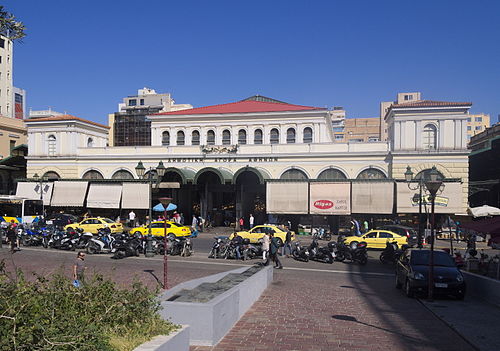
Varvakios Market, located in the heart of Athens near Monastiraki, is the city’s vibrant central market and a true feast for the senses. Bustling with energy from early morning, it offers a colorful mix of fresh produce, spices, meats, fish, and local delicacies. The market has been a hub of Athenian daily life since the 19th century, where locals and visitors alike come to experience authentic Greek flavors and lively street scenes. Wandering through its narrow aisles, you’ll catch the aromas of Mediterranean herbs and hear the cheerful banter of vendors — a perfect snapshot of Athens’ spirited character. https://www.thisisathens.org/shopping/athens-central-food-market
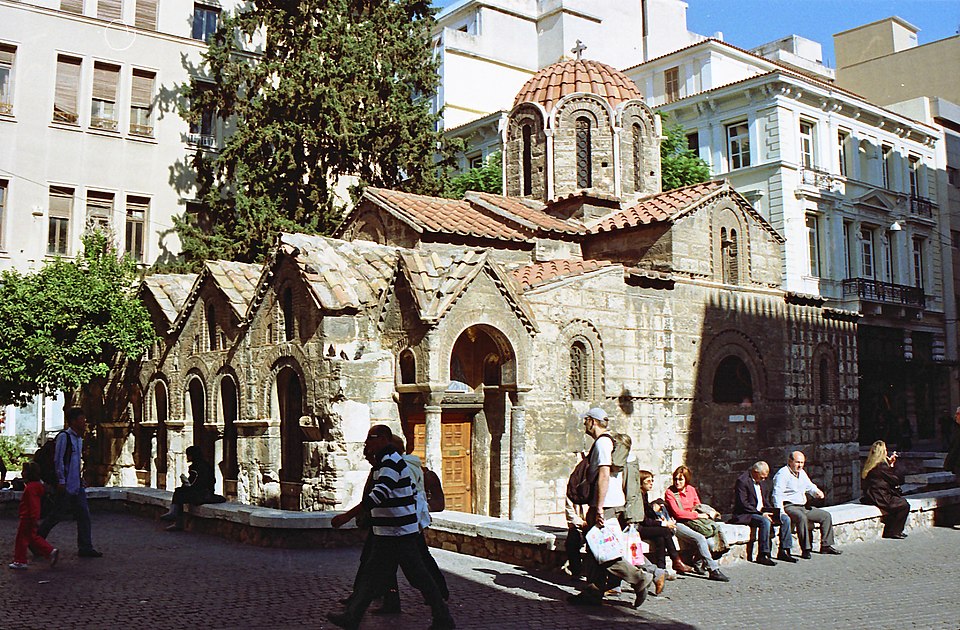
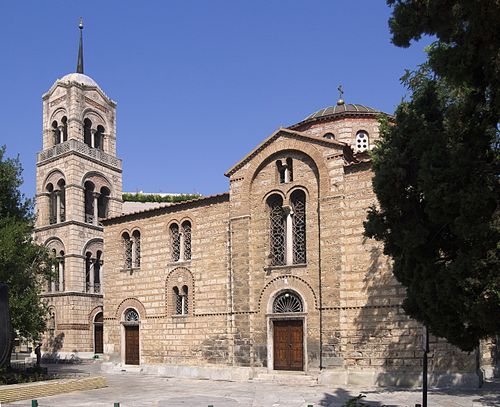
The Church of Panagia Kapnikarea is one of Athens' oldest and most historically significant churches, dating back to the 11th century. Located in the heart of the city on Ermou Street, it was constructed atop an ancient Greek temple, possibly dedicated to Athena or Demeter. The church's name, "Kapnikarea," is believed to derive from the Greek word "kapnismeni," meaning "smoked," referring to the soot marks on its walls.
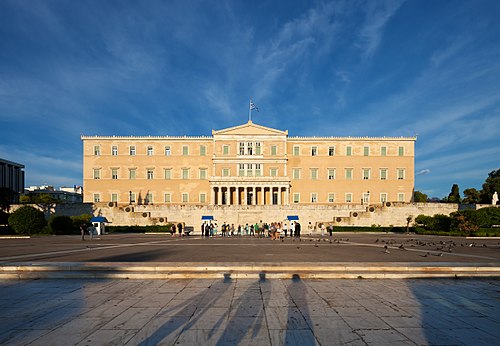
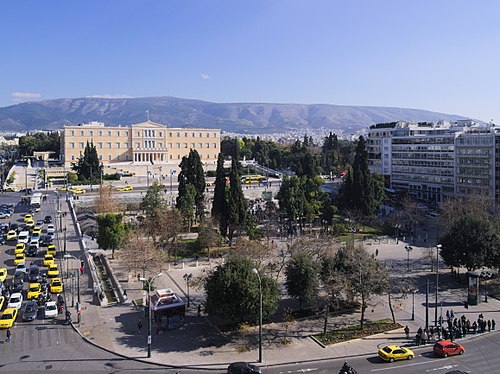
The Greek Parliament building, located on Syntagma Square in central Athens, is one of the city's most iconic landmarks. Originally built between 1836 and 1842 as the Royal Palace for King Otto of Greece, it was designed by Bavarian architect Friedrich von Gärtner in a neoclassical style. Since 1935, it has housed the Hellenic Parliament. In front of the building lies the Tomb of the Unknown Soldier, guarded by the Evzones, the presidential guards in traditional uniform. The Parliament remains a symbol of Greece’s modern democratic life and national identity.
The Zappeion Megaron is a historic building located in the heart of Athens, next to the National Gardens and near Syntagma Square. It was completed in 1888 and was designed by architect Theophil Hansen in a neoclassical style. Originally built to house the Greek Parliament and serve as a venue for the first modern Olympic Games in 1896, the Zappeion has since become a significant multipurpose conference and exhibition center. Todaythe Zappeion is used for various events, including diplomatic functions and cultural activities, and remains an iconic symbol of Athens' heritage.
The Russian Church in Athens, officially known as Holy Trinity Church, is an Eastern Orthodox church located near the Kolonaki district, at the foot of Lycabettus Hill. Built in 1860 by the Russian community in Athens, it was designed in a Byzantine Revival style, featuring a distinctive onion dome typical of Russian Orthodox architecture. The church was constructed to serve as a place of worship for the Russian Orthodox residents and visitors in the city. The church also reflects the long-standing historical and cultural ties between Greece and Russia.
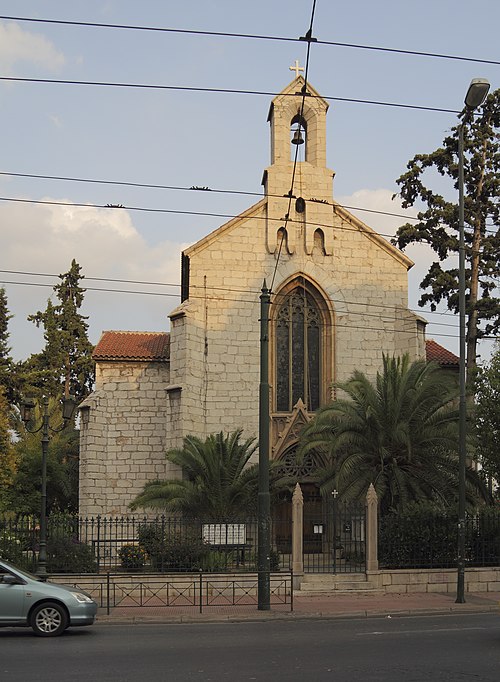
St. Paul's Anglican Church is the oldest foreign church in Athens, consecrated on Palm Sunday in 1843. Located near Syntagma Square, at 27 Philellinon Street, it serves as a place of worship, community, and cultural engagement for English-speaking residents and visitors. The church is renowned for its Neo-Gothic architecture, featuring a prominent bell tower and stained-glass windows depicting various saints. Its pipe organ, installed in 1897, is the oldest working organ in Greece.
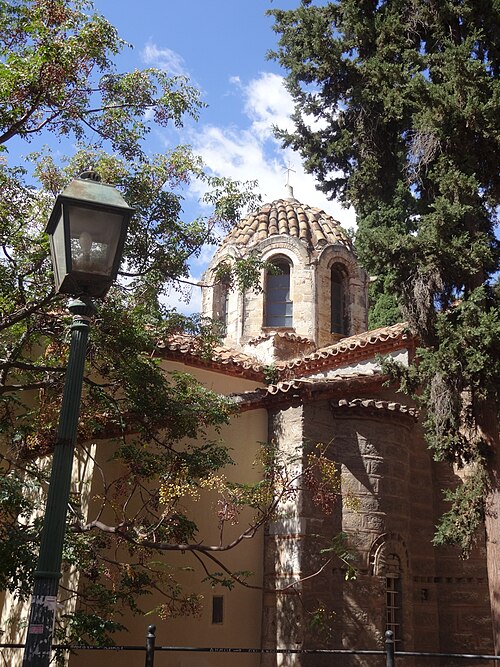
The Church of Agia Sotira Kottaki, also known as the Church of the Transfiguration of the Savior, is a historic Byzantine church located in the Plaka district of Athens. Inside, the church houses 18th and 19th-century frescoes and icons, including a notable 14th-century icon of the Virgin Mary, known as the "New Lady." The church is also historically significant as the site where Nobel laureate poet George Seferis was married in 1941 and where his funeral service was held in 1971.
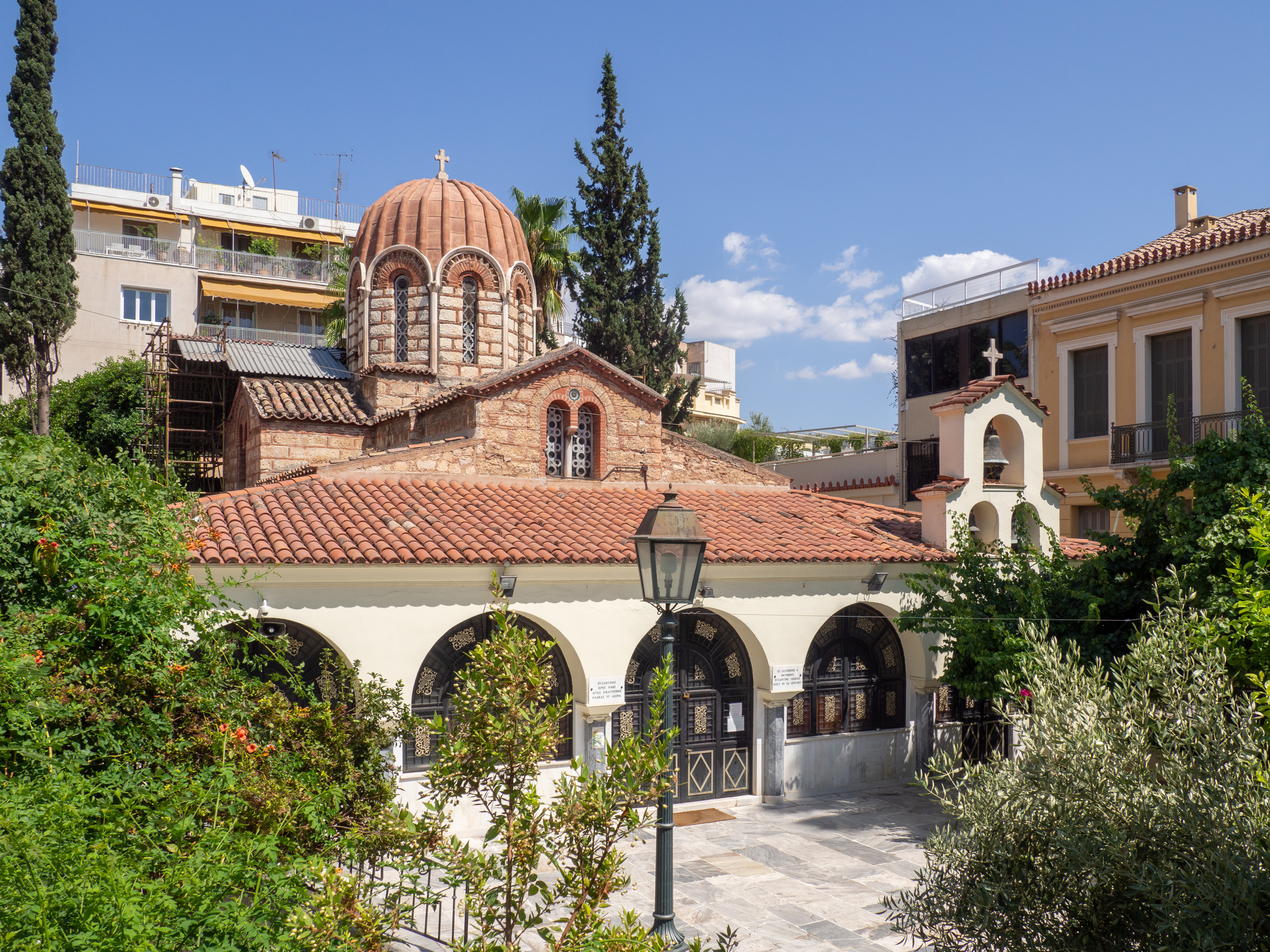
The Church of Agia Ekaterini, located in the charming Plaka district of Athens, dates back to the 11th century and is dedicated to Saint Catherine. Originally built as a Christian basilica, it was rededicated in 1767 after affiliating with the Monastery of Saint Catherine in Sinai, Egypt. The church features a Byzantine cross-in-square design with a central dome, and its interior is adorned with beautiful frescoes and icons, including a notable 15th-century depiction of Saint John the Baptist.
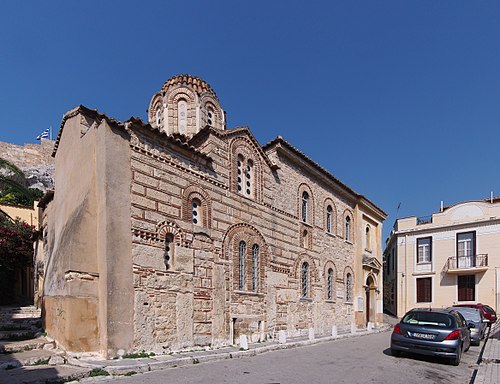
The Church of Agios Nikolaos Ragavas is a historic Byzantine church located in the Plaka district of Athens, near the Acropolis. Built in the 11th century, it is dedicated to Saint Nicholas and is one of the oldest surviving churches in the city. Notably, the church's bell was the first to ring after the liberation of Athens from German occupation on October 12, 1944.
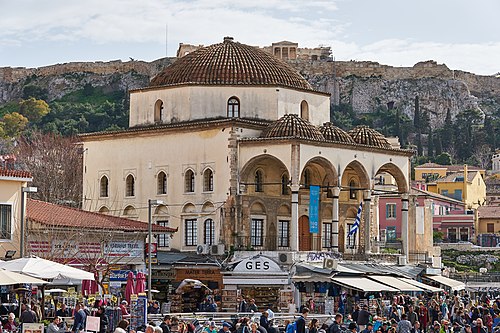
The Tzisdarakis Mosque, located in Monastiraki Square in central Athens, was constructed in 1759 by the Ottoman governor Mustafa Aga Tzisdarakis. It stands as one of the few remaining Ottoman-era structures in the city. The mosque's construction utilised materials from nearby ancient sites, including columns from Hadrian's Library, a practice that led to Tzisdarakis's temporary dismissal due to concerns over desecration. The building features a prayer hall with an elaborately decorated mihrab (prayer niche) and retains its original inscription above the entrance.
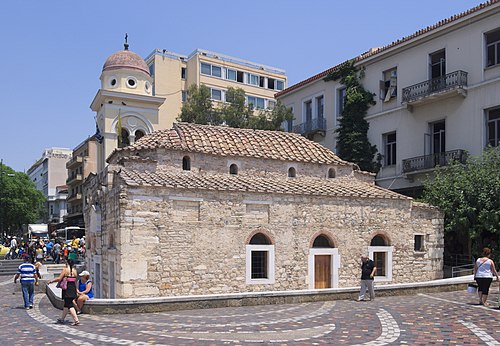
The Church of Panagia Pantanassa, situated in Monastiraki Square at the heart of Athens, is among the city's oldest and most cherished religious sites. Constructed between the 7th and 11th centuries, it has served various roles over the centuries, including a monastery and later a parish church. The church's name, "Pantanassa," meaning "Queen of All," reflects its esteemed status. It is also associated with notable figures like Saint Nektarios of Pentapolis, who served as a deacon there between 1881 and 1885.
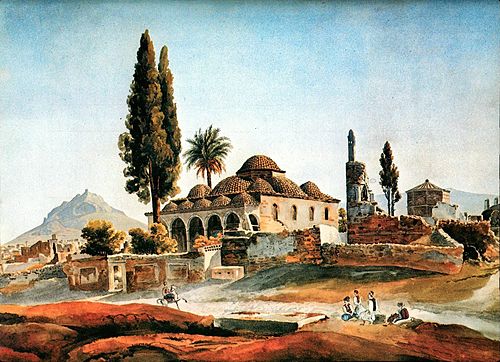
The Fetichie Tzami is an Ottoman-era mosque located in the Roman Agora of Athens, near Monastiraki Square. Built in the early 17th century, it features a distinctive dome and is one of the few surviving Ottoman structures in the city. In recent years, the mosque has been restored and is now used for exhibitions and cultural events.
Syntagma Square is the central square of Athens and is known for being the heart of the city. It is home to the Greek Parliament (Hellenic Parliament), which sits in front of the Old Royal Palace. The square is a popular gathering place and serves as a hub for public protests, celebrations, and events. Visitors can often see the Evzones (Greek Presidential Guard) performing the changing of the guard ceremony at the Parliament building. Together with Monastiraki square, Syntagma square is ideal starting point for extended walk tours.
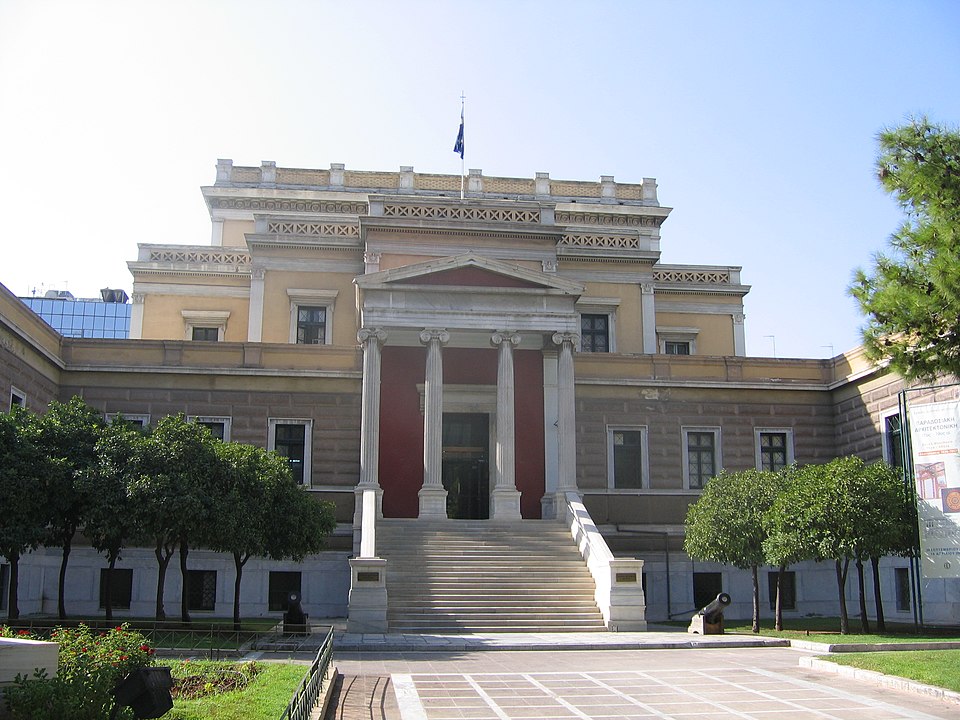
Named after Theodoros Kolokotronis, a revered hero of the Greek War of Independence, the square is situated in front of the National Historical Museum, housed in the former Old Parliament building. The centrepiece of the square is a bronze equestrian statue of Kolokotronis, symbolising his pivotal role in Greece's fight for independence. Historically, the site was the location of the first Greek Parliament, established in 1843. Kolokotroni Square is also the starting point of Kolokotroni Street, a vibrant thoroughfare known for its neoclassical architecture, boutique shops, and eateries.
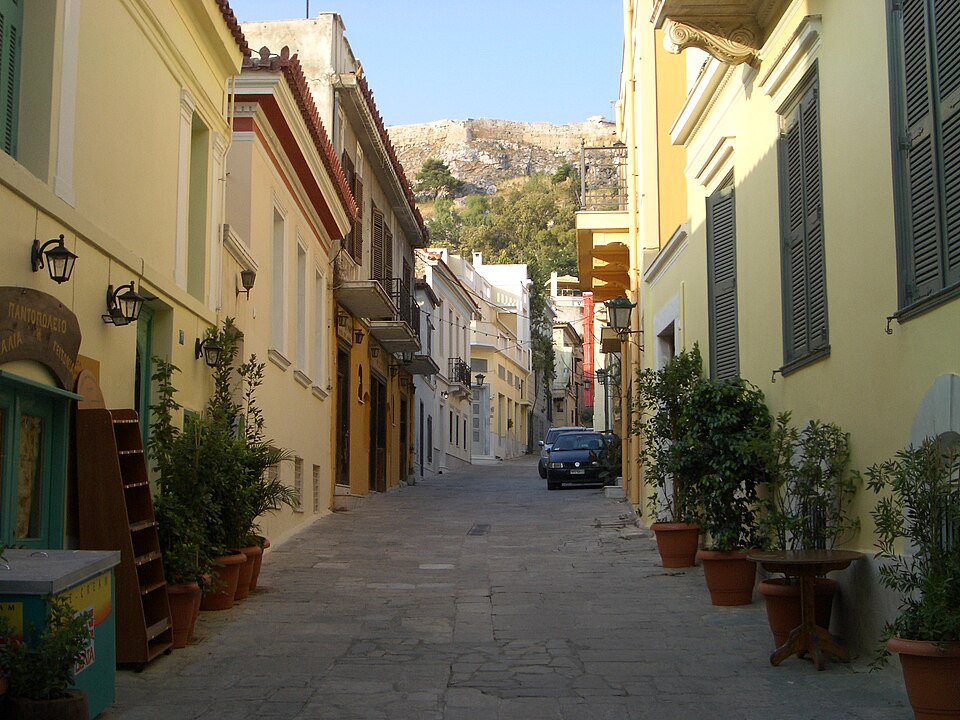
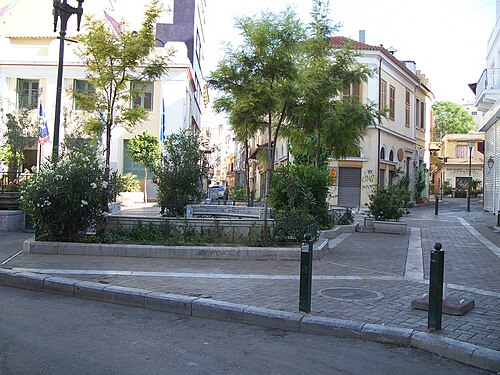
Filomousou Etaireias Square, also known as Plaka Square, is a charming and historic square located in the heart of Athens' Plaka district. Named after the Philomousos Society, founded in 1813 to promote education during the Ottoman era, the square now serves as a lively hub surrounded by cafés, restaurants, and traditional tavernas.
The National Garden of Athens is a serene 15.5-hectare park nestled in the heart of Athens, Greece. Originally commissioned by Queen Amalia in 1838 and completed by 1840, the garden was designed by German agronomist Friedrich Schmidt in an English-style "picturesque" manner. It was initially a private royal garden and was opened to the public in the afternoons. In 1927, it was officially declared a public space and renamed the National Garden. Today, it remains a tranquil oasis amidst the city's hustle and bustle .The garden boasts over 7,000 trees and 40,000 shrubs, representing 519 plant species from around the world.
Zappeion Garden is a serene and historically rich park located in the heart of Athens, Greece. Situated adjacent to the National Garden and the iconic Zappeion Hall, the garden spans approximately 31.23 acres. The garden's origins date back to 1857 when the first trees were planted, including around 200 plane trees and several eucalyptus trees. The design of the garden was initially in a French geometric style but was later redesigned into the free-flowing curves characteristic of English gardens.
Mitropoleos Square is a central square in Athens, named after the Metropolitan Cathedral of Athens (Mitropolis). Located between Syntagma and Monastiraki, it is a lively area surrounded by historical landmarks, including the Panagia Gorgoepikoos Church and statues commemorating historical figures like Constantine Palaiologos. The square is known for its ecclesiastical shops selling religious artefacts and icons. It also offers a range of dining options, making it a vibrant spot to experience Athens’ rich culture and history.
The square is named after the Church of Agia Irini, a significant Greek Orthodox church that once served as Athens' main cathedral before the construction of the current Metropolitan Cathedral. In recent years, Agia Irini Square has transformed into a lively urban hub, attracting both locals and visitors. The area is now a hotspot for dining and nightlife, featuring a variety of establishments ranging from traditional tavernas to trendy cocktail bars.
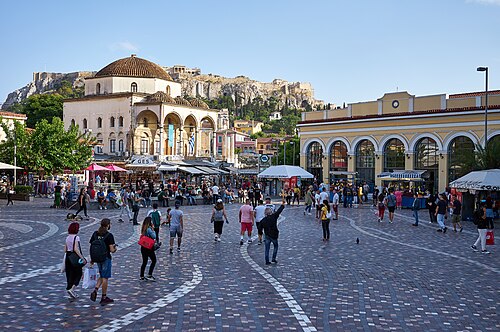
Monastiraki Square is famous for its vibrant market atmosphere and the stunning view of the Acropolis. It is a lively area filled with shops, cafés, and street vendors. The square gets its name from the Monastiraki Mosque, which still stands at the edge of the square. The area is also known for its antique market and is a popular starting point for tourists exploring Athens' ancient sites, including the Ancient Agora.
Renowned as the city's antique hub, it has been hosting a bustling flea market since the late 19th century. Every Sunday, vendors set up stalls offering a diverse array of items, including vintage furniture, old books, musical instruments, and unique bric-a-brac, attracting both locals and tourists alike . The square's name is believed to derive from Ethiopia's former name, Abyssinia, possibly due to the presence of Ethiopian traders in the area during the 19th century. Alternatively, some attribute the name to Emperor Haile Selassie's humanitarian aid to Greek refugees in 1922 .
Established in 1882 by the Historical and Ethnological Society of Greece, the museum is housed in the former Old Parliament Building on Stadiou Street. The museum's extensive collection spans from the fall of Constantinople in 1453 to the Second World War, emphasising the Greek War of Independence and the establishment of the modern Greek state. Highlights include weapons, personal belongings of historical figures, paintings, traditional costumes, and items related to significant events such as the Greco-Turkish War and the Balkan Wars.
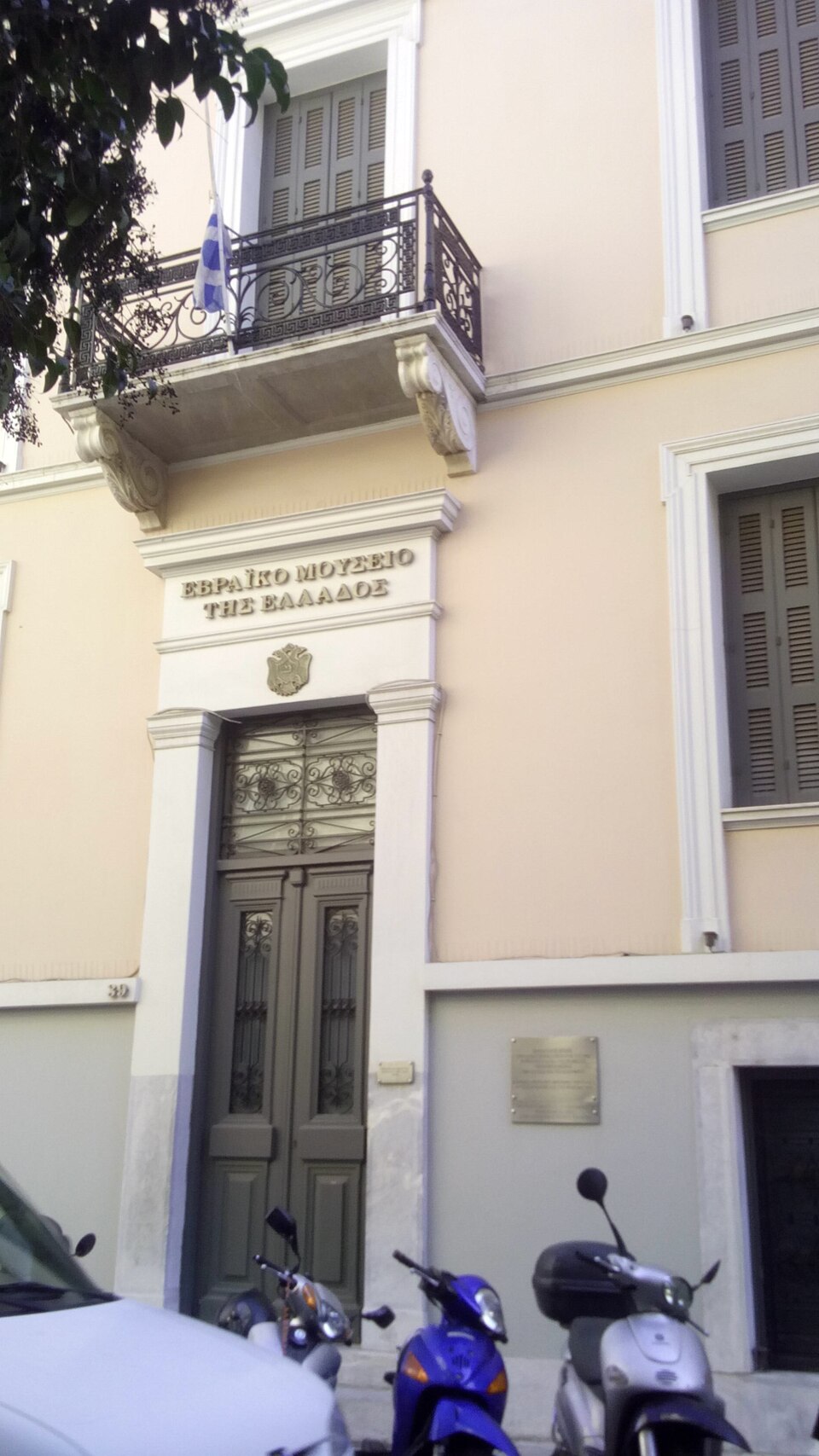
The Jewish Museum of Greece is dedicated to preserving and showcasing the rich history and culture of the Jewish community in Greece, spanning over 2,300 years. Established in 1977, the museum offers visitors a comprehensive insight into the traditions, customs, and experiences of Greek Jews. The museum's extensive collection comprises over 10,000 artefacts, including personal items, jewellery, domestic objects, and religious artefacts. These items trace the history and contributions of Jewish communities across various regions of Greece.
The Museum of Greek Folk Musical Instruments is dedicated to preserving and showcasing Greece's rich musical heritage. Established in 1991, the museum is housed in the historic Lassanis Mansion, built in 1842, located in the Plaka district near the Roman Agora. The museum's collection of approximately 1,200 instruments.
The Ancient Agora Museum, located within the Stoa of Attalos in Athens, offers a fascinating journey through the everyday life of ancient Athenians. Housed in a beautifully reconstructed colonnade, the museum displays artifacts discovered in the Agora — the heart of political, commercial, and social life in ancient Athens. Visitors can explore sculptures, pottery, coins, and tools that reveal how democracy, philosophy, and daily activities shaped the city’s rich heritage. Surrounded by the ruins of the Agora and with views of the Acropolis, the museum provides a captivating glimpse into classical Athens.
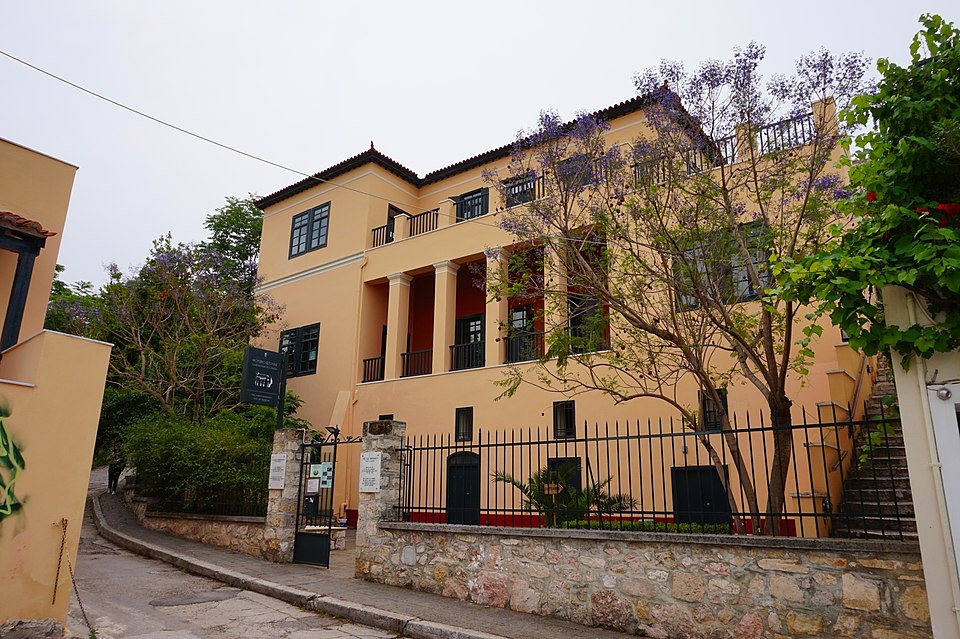
The Athens University History Museum is situated in one of Athens' oldest residential buildings, dating back before the 18th century. Located beneath the Acropolis, the building offers a panoramic view of the Plaka neighbourhood and the ancient city center. Originally the residence of architect Stamatios Kleanthis, it also served as the first University of the independent Greek state from 1837 to 1841.
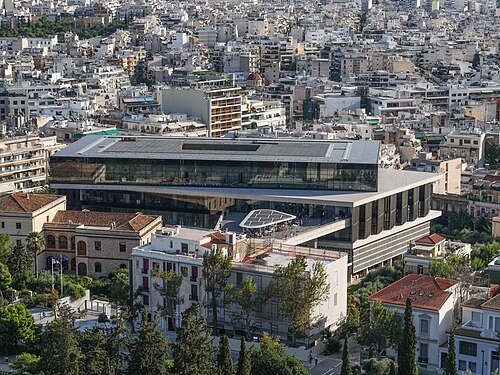
The New Acropolis Museum is a modern architectural marvel located just southeast of the Acropolis, offering a comprehensive and immersive experience of ancient Greek civilisation. Designed by Bernard Tschumi Architects, the museum opened its doors in 2009 and has since become one of the most visited cultural institutions in Greece. The Parthenon Gallery, located on the top floor, is aligned with the Parthenon and offers panoramic views of the ancient temple.The museum houses over 4,000 artefacts spanning from the Archaic to the Roman period.

Ermou Street is one of the main commercial avenues in Athens, stretching from Syntagma Square to Monastiraki. Lined with shops, cafés, and historic buildings, it is a lively destination for both shopping and leisure. The street blends modern retail with cultural landmarks, including the small but notable Kapnikarea Church. Always busy with locals and visitors, Ermou Street captures the vibrant everyday rhythm of the city. Together with nearby squares, it serves as a key route for exploring central Athens.

ΕΓΓΡΑΦΗ ΣΤΗΝ ΠΛΑΤΦΟΡΜΑ
TN_LOGOTEXT_2023 Maps © 2026 TerraNaviga.com
imb_logo_23 Development © 2026 imb.gr
COPYRIGHT / INTELLECTUAL PROPERTY (IP) NOTICE: All content, including maps, illustrations, designs, and related materials, constitutes the exclusive intellectual property of Epameinondas Kaiafas Terra Naviga and is protected under Greek and international copyright and intellectual property laws. Any unauthorised use, reproduction, distribution, or adaptation of these materials without express written consent is strictly prohibited. Terra Naviga reserves the right to take full legal action against any infringement, including claims for financial compensation and prosecution under applicable laws.
ANCIENT Monuments
MODERN MONUMENTS
MUSEUMS
SQUARES
SELECT CATEGORY
SELECT LOCATION
INFO
SELECT CATEGORY
CHOOSE ITEM
- MUSEUMS
HOVER OVER ICON
LINK TO OFFICIAL WEBSITE