
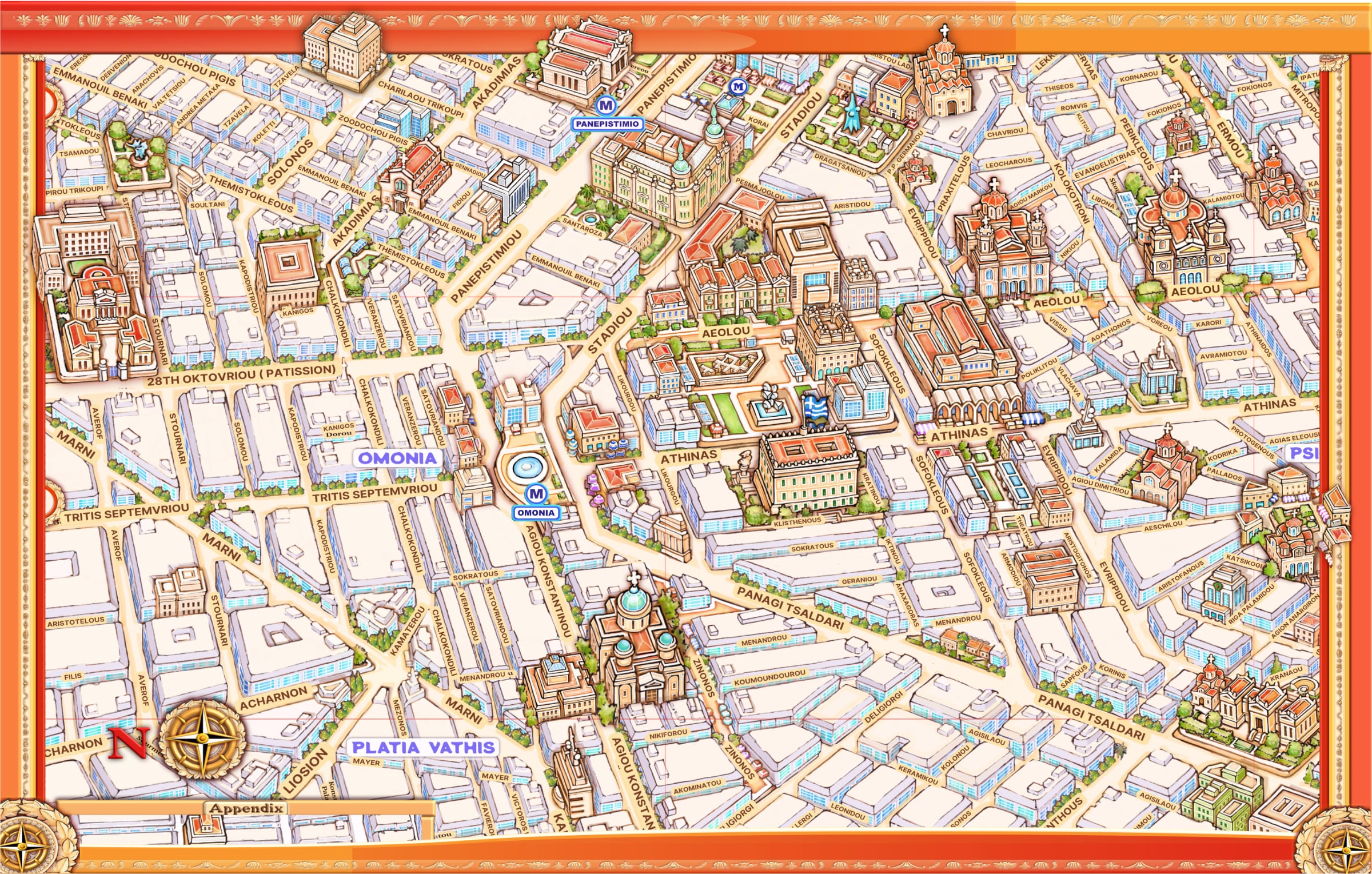
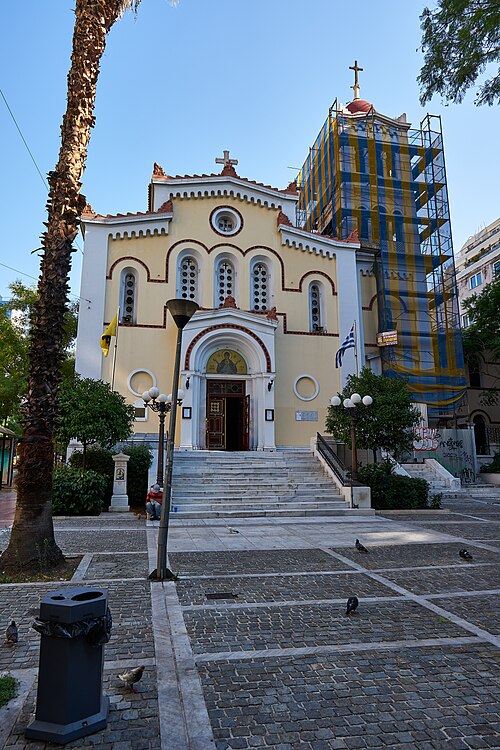
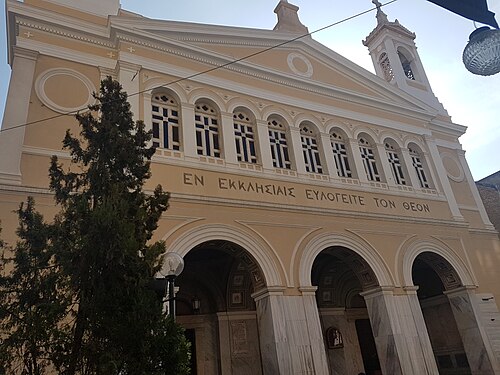
The Church of Zoodochos Pigi in Athens is a significant Greek Orthodox cathedral located in the Neapoli district. Dedicated to the Virgin Mary as the "Life-Giving Spring”, the church was constructed between 1846 and 1852, following plans by architect Dimitrios Zezos. The church's exterior is adorned with decorative elements such as tiled roofs and cornices, while the interior boasts eight marble columns and murals by notable artists like Anastasios Loukidis. A mosaic of the Virgin Mary with Christ is prominently displayed at the main entrance.
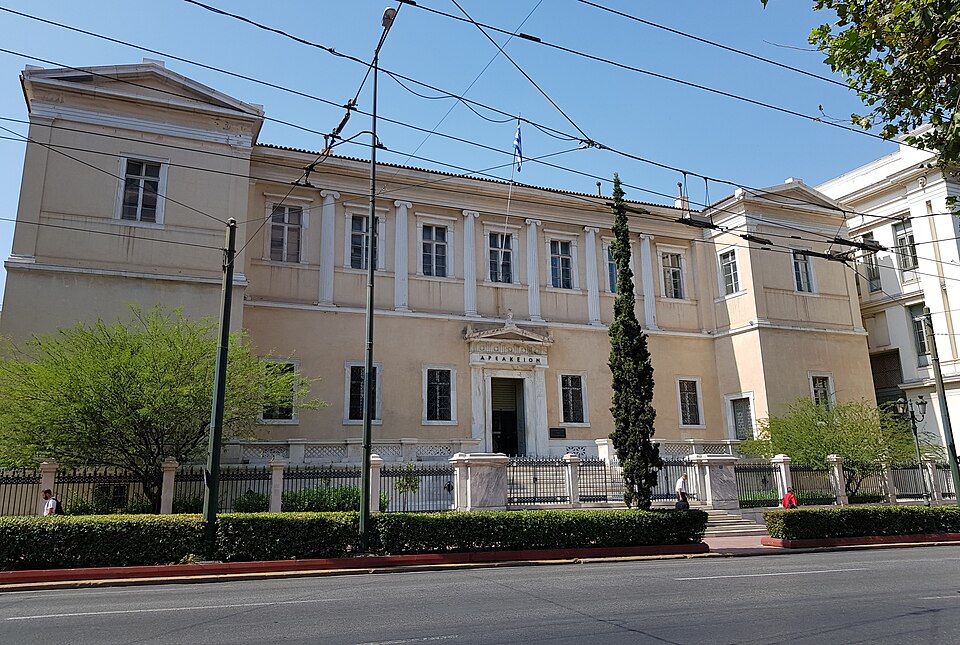
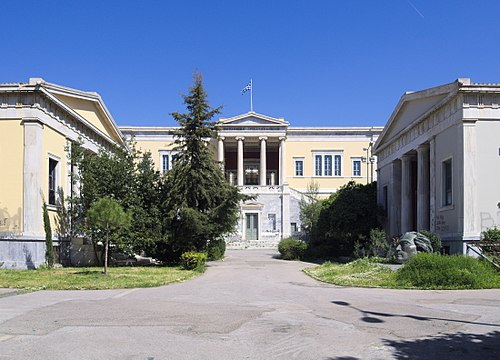
The Arsakion Megaron is a historic neoclassical building located in the heart of Athens, at the intersection of Panepistimiou and Pesmazoglou streets. It was constructed between 1846 and 1852, funded by Apostolos Arsakis, to house the Girls’ School of the Philological Society (now the Educational Society of Athens). Designed by architect Lysandros Kaftantzoglou, the building is a prime example of Hellenic Neoclassicism. A major restoration project is currently underway, with funding from Greece’s Recovery and Resilience Fund, and is expected to be completed by 2026, aiming to preserve and enhance this important cultural landmark.
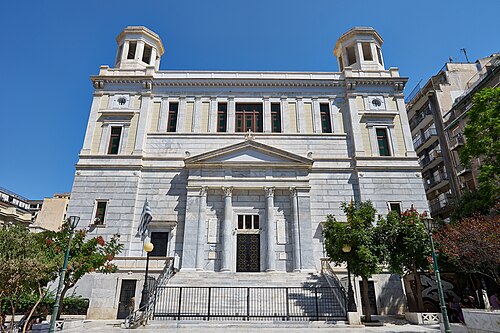
Constructed between 1871 and 1905 under the direction of architect Lyssandros Kaftantzoglou, the church was originally dedicated to Prince Konstantinos, son of King George I and Queen Olga, to celebrate his birth in 1868. The interior boasts elaborate frescoes by renowned hagiographers Anastasios Loukidis and Fotis Kontoglou.
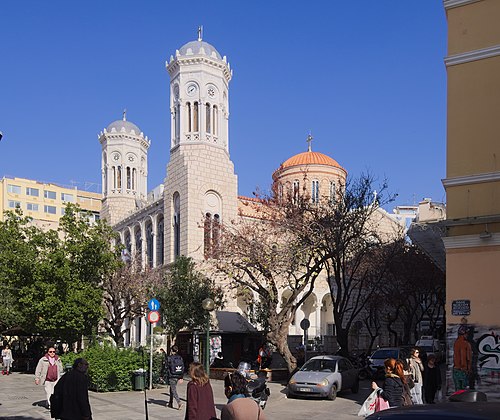
The Church of Agia Irini on Aiolou Street is a beautiful 19th-century church in the heart of Athens, once serving as the city’s main cathedral before the construction of the modern Metropolis. Designed by architect Lysandros Kaftantzoglou, it combines neoclassical and Byzantine elements, featuring a large dome and twin bell towers. Located in the lively Agia Irini Square, surrounded by cafes and shops, it is a peaceful yet central spot that blends Athens' spiritual and urban character.
The Kimisi Theotokou church (Dormition of the Virgin Mary) is a significant church also known as Panagia Chryssospiliotissa. Its name originates from the Monastery of Mega Spileo, which contributed to its construction, or from an icon of the Virgin Mary that was a replica of the monastery's icon. The original basilica was built in 1705 but was destroyed during the siege of the Acropolis by Kioutahi Pasha in 1826. Rebuilding commenced in 1832, and completed in 1892. The church is a three-aisled basilica, exemplifying eclecticism by combining neoclassical and Byzantine elements.
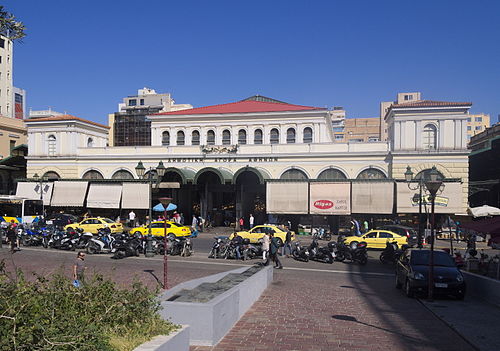
Varvakios Market, located in the heart of Athens near Monastiraki, is the city’s vibrant central market and a true feast for the senses. Bustling with energy from early morning, it offers a colorful mix of fresh produce, spices, meats, fish, and local delicacies. The market has been a hub of Athenian daily life since the 19th century, where locals and visitors alike come to experience authentic Greek flavors and lively street scenes. Wandering through its narrow aisles, you’ll catch the aromas of Mediterranean herbs and hear the cheerful banter of vendors — a perfect snapshot of Athens’ spirited character.
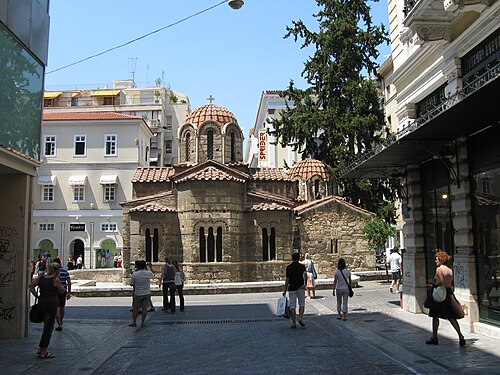
The Church of Panagia Kapnikarea is one of Athens' oldest and most historically significant churches, dating back to the 11th century. Located in the heart of the city on Ermou Street, it was constructed atop an ancient Greek temple, possibly dedicated to Athena or Demeter. The church's name, "Kapnikarea," is believed to derive from the Greek word "kapnismeni," meaning "smoked," referring to the soot marks on its walls.
The National Technical University of Athens, often called the Polytechnic, is one of Greece’s most historic and respected institutions of higher education. Located in the lively Exarchia neighborhood, it has long been a center of intellectual and political life. The university is especially known for its role in modern Greek history — most notably the 1973 student uprising against the military dictatorship, which became a symbol of resistance and freedom. Today, the campus remains a landmark of both academic excellence and social activism, surrounded by Exarchia’s creative energy, street art, and vibrant café culture.
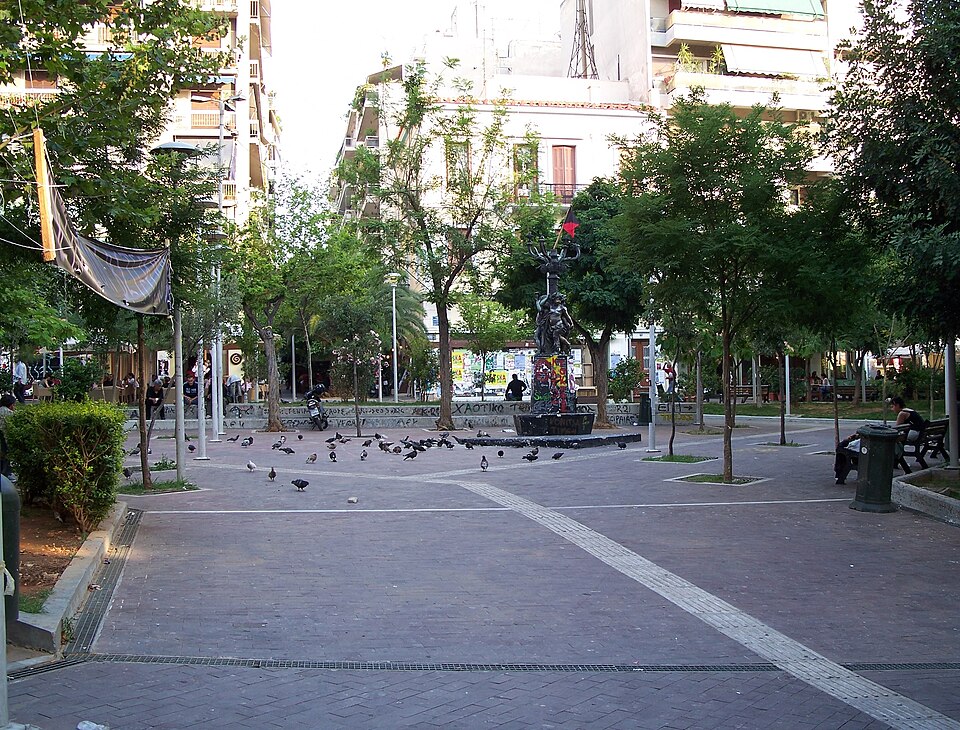
Exarchia is a vibrant and eclectic neighborhood in central Athens, known for its bohemian atmosphere, political activism, and rich cultural heritage. Historically significant for its role in the 1973 student uprising, the area is a haven for artists, students, and intellectuals, with a mix of independent bookstores, alternative cafés, and colorful street art. Exarchia's streets are filled with lively markets, unique dining spots, and a thriving music scene, making it a cultural hub for both locals and visitors.
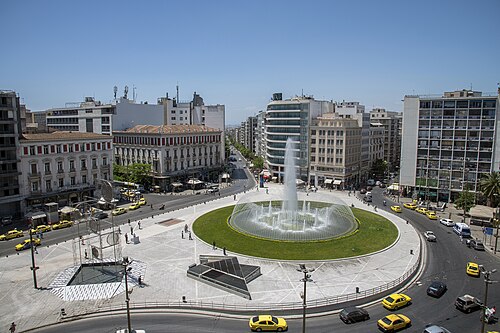
Omonia Square is another major square in Athens, known for its central location and historical significance. It is a key transportation hub, connecting various parts of the city through multiple metro lines and bus routes. Over the years, the square has seen numerous transformations and is a blend of modern and old architecture. While it used to be a symbol of grandeur, Omonia Square has recently undergone urban regeneration efforts to restore its vibrancy.

Kaniggos Square is a bustling urban square located in central Athens, named after George Canning, the 19th-century British Prime Minister and philhellene who supported Greece's independence movement. The square is distinguished by a statue of Canning, which remains a prominent feature today.
Klafthmonos Square is a central public square in Athens, situated along Stadiou Street between Syntagma and Omonia Squares. Its name, meaning "Weeping Square," was coined in 1878 by Greek writer Dimitrios Kambouroglou. This name reflects the historical practice where, after each election, newly elected governments would dismiss civil servants appointed by the previous administration. These dismissed employees would gather in the square to protest their unemployment, often lamenting their fate.
Korai Square is a bustling urban space in central Athens, named after the 19th-century Greek scholar Adamantios Korais. The square is characterised by its modern design, featuring a glass pyramid skylight that leads to the metro station below. Surrounding Korai Square are several notable buildings, including the university's main building and various commercial establishments. The area is a hub for students, professionals, and tourists, offering a range of cafés, shops, and eateries.
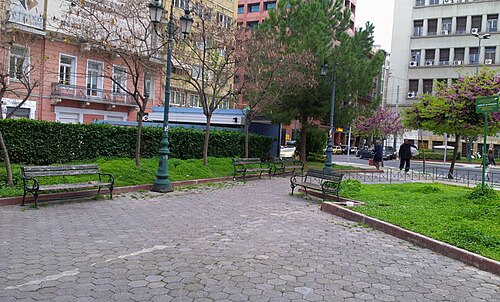
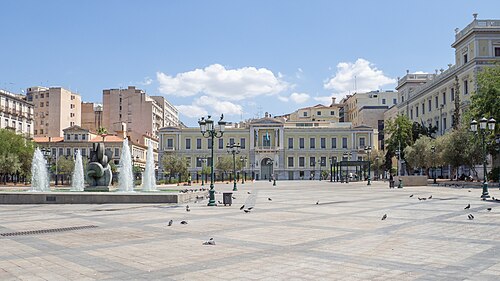
Kotzia Square is located near the City Hall of Athens and is often overlooked by tourists but is a beautiful, quiet square surrounded by neoclassical buildings. It is named after the famous politician and mayor Giannis Kotzia and features sculptures, green spaces, and a peaceful environment away from the hustle and bustle of the city. It’s a lovely spot to relax, with many cafes and shops nearby.
Psiri Square, or Iroon Square, is a vibrant and historically rich public space nestled in the heart of Athens, Greece. Once known for its artisan workshops and working-class roots, Psiri has transformed into a lively neighborhood renowned for its eclectic mix of traditional tavernas, contemporary bars, live music venues, and boutique shops. The area is adorned with murals and graffiti, adding a contemporary flair to its historic charm. In addition to its artistic appeal, Psiri offers a diverse culinary scene. Visitors can enjoy traditional Greek dishes in rustic tavernas or explore modern eateries offering international cuisine.
Koumoundourou Square, also known as Eleftherias Square, is a historically rich public space located in central Athens, Greece. The square was originally named after King Ludwig I of Bavaria, Otto’s father, and later renamed in honor of Alexandros Koumoundouros, a prominent 19th-century Greek politician who served as Prime Minister multiple times. His residence once faced the square, contributing to its current name. In the late 19th century, the Municipal Nursery was established at the northern end of the square, designed by architect Panagis Kalkos.
The square is named after the Church of Agia Irini, a significant Greek Orthodox church that once served as Athens' main cathedral before the construction of the current Metropolitan Cathedral. In recent years, Agia Irini Square has transformed into a lively urban hub, attracting both locals and visitors. The area is now a hotspot for dining and nightlife, featuring a variety of establishments ranging from traditional tavernas to trendy cocktail bars.
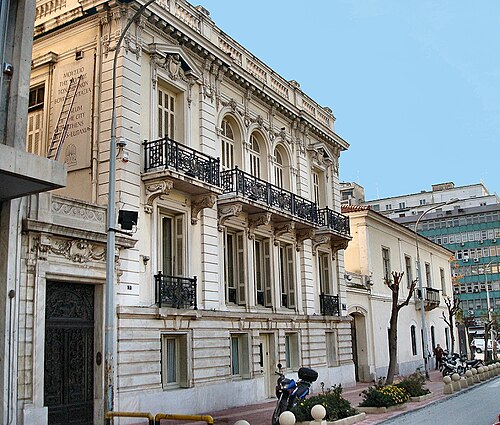
The Athens City Museum, also known as the Vouros-Eutaxias Foundation, offers a captivating glimpse into the evolution of Athens from a modest town to a vibrant metropolis. Housed in two neoclassical buildings, the museum occupies structures dating back to 1833 and 1859 . Notably, number 7 was the first royal residence of King Otto and Queen Amalia, serving as Greece's inaugural royal palace. A standout exhibit is Jacques Carrey’s 1674 oil painting of Athens, the largest known depiction of the city before the Parthenon was damaged in the 1687 siege .
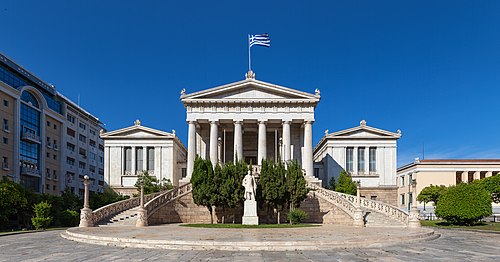
The Museum of the Bank of Greece is dedicated to preserving and showcasing the country's monetary and economic history. Established in 1927, it highlights the Bank's role and activities, as well as its contribution to the development of the Greek economy. The museum presents the monetary and economic history of modern Greece from the design and introduction of the first modern Greek monetary system in 1828 to the creation of the euro area and Greece’s participation in the single currency.

Omonia Square is another major square in Athens, known for its central location and historical significance. It is a key transportation hub, connecting various parts of the city through multiple metro lines and bus routes. Over the years, the square has seen numerous transformations and is a blend of modern and old architecture. While it used to be a symbol of grandeur, Omonia Square has recently undergone urban regeneration efforts to restore its vibrancy.

ΕΓΓΡΑΦΗ ΣΤΗΝ ΠΛΑΤΦΟΡΜΑ
TN_LOGOTEXT_2023 Maps © 2026 TerraNaviga.com
imb_logo_23 Development © 2026 imb.gr
COPYRIGHT / INTELLECTUAL PROPERTY (IP) NOTICE: All content, including maps, illustrations, designs, and related materials, constitutes the exclusive intellectual property of Epameinondas Kaiafas Terra Naviga and is protected under Greek and international copyright and intellectual property laws. Any unauthorised use, reproduction, distribution, or adaptation of these materials without express written consent is strictly prohibited. Terra Naviga reserves the right to take full legal action against any infringement, including claims for financial compensation and prosecution under applicable laws.
MODERN MONUMENTS
MUSEUMS
SQUARES
SELECT CATEGORY
SELECT LOCATION
INFO
SELECT CATEGORY
CHOOSE ITEM
- MUSEUMS
HOVER OVER ICON
LINK TO OFFICIAL WEBSITE