

 WAR MUSEUM
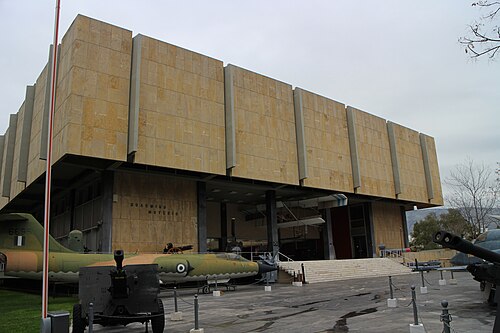
The War Museum of Athens, located near the Evangelismos metro station, is dedicated to preserving the military history of Greece through the centuries. Opened in 1975, the museum showcases a vast collection of weapons, uniforms, maps, photographs, and artefacts from ancient times to the modern era, including the Balkan Wars, World Wars, and the Greek War of Independence. Outside the building, visitors are greeted by impressive aircraft, cannons, and military vehicles, while inside, each floor tells a different chapter of Greece’s long and storied struggle for freedom and sovereignty.
 BYZANTINE MUSEUM
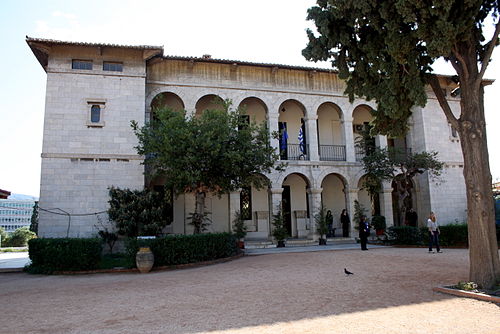
The Byzantine and Christian Museum in Athens offers a captivating journey through Greece's Christian heritage, spanning from the 3rd century AD to the 20th century. Housed in the elegant 19th-century Villa Ilissia on Vasilissis Sofias Avenue, the museum boasts a collection of over 30,000 artefacts, including icons, mosaics, manuscripts, textiles, and ceramics.
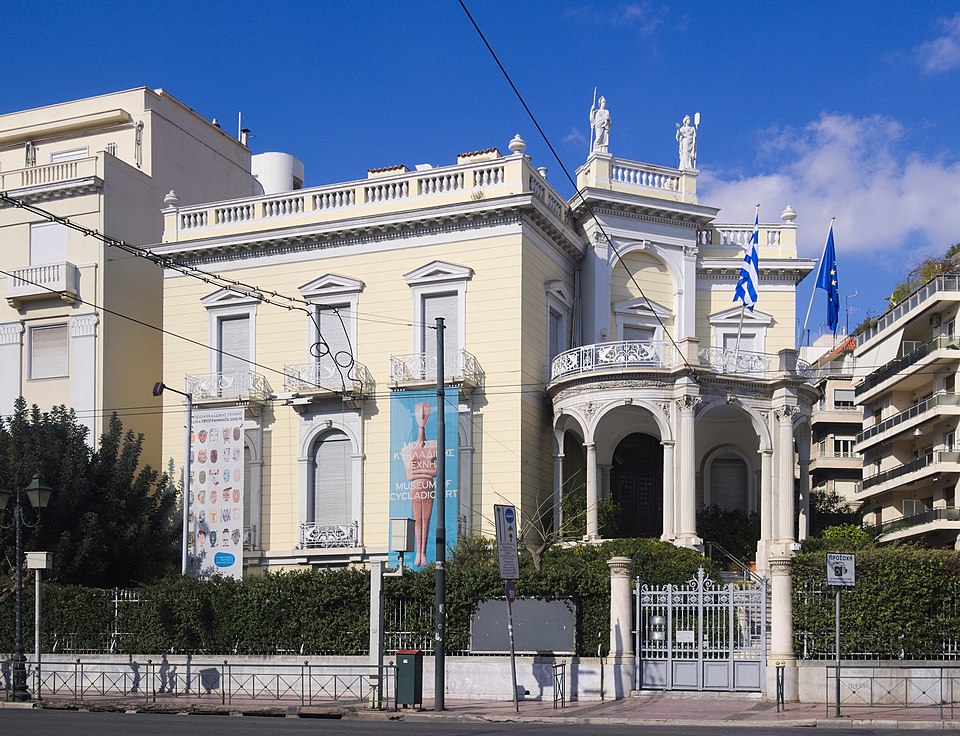 CYCLADIC ART MUSEUM
The Museum of Cycladic Art in Athens is a cultural gem dedicated to the ancient civilisations of the Aegean Sea, with a special focus on the unique art of the Cycladic islands. Founded in 1986, the museum houses one of the world’s most important collections of Cycladic figurines — minimalist marble sculptures dating back to 3200–2000 BC, which inspired many modern artists like Picasso and Modigliani. Alongside these iconic pieces, the museum also features ancient Greek and Cypriot artefacts, offering visitors a glimpse into the everyday life, rituals, and aesthetics of early Mediterranean societies.
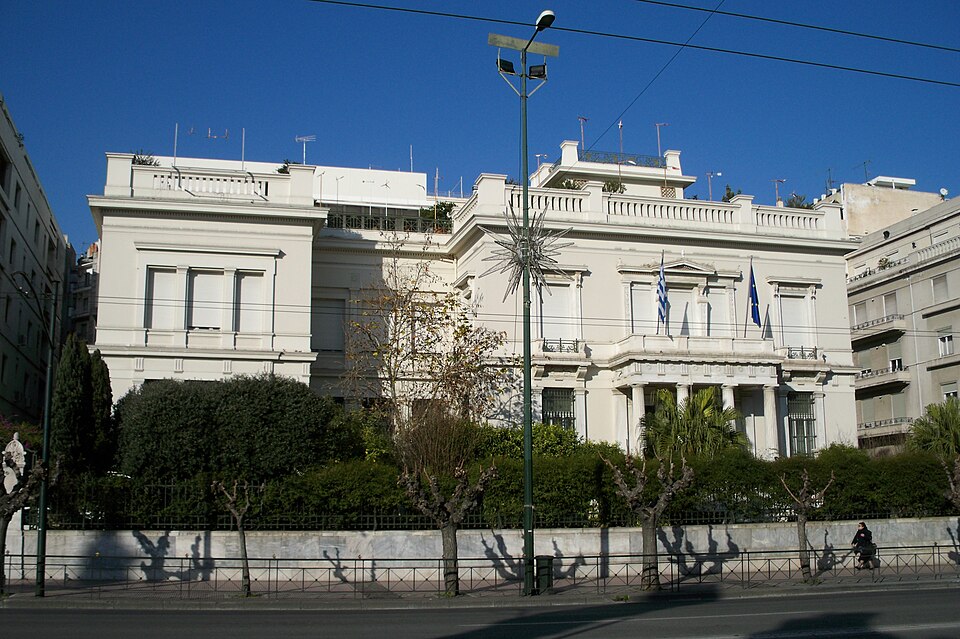 BENAKI MUSEUM
The Benaki Museum of Greek Culture, established in 1930 by Antonis Benakis, is housed in a neoclassical mansion located near Syntagma Square, opposite the National Garden. The museum's extensive collection spans from prehistoric times to the modern era, offering a comprehensive overview of Greek history and culture. Highlights include Mycenaean jewellery, Byzantine artefacts, and personal belongings of notable figures such as Eleftherios Venizelos .
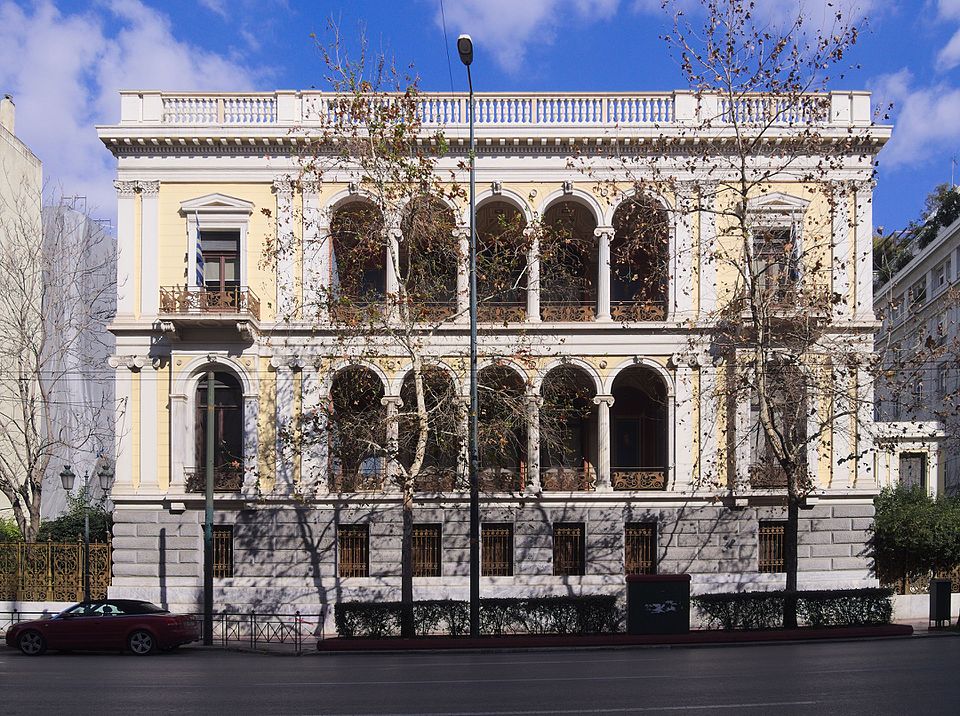 NUMISMATIC MUSEUM
The Numismatic Museum of Athens is one of the oldest and most distinguished museums in Greece, specialising in the collection and exhibition of coins and related artefacts. Housed in the Iliou Melathron, a neoclassical mansion designed by architect Ernst Ziller between 1878 and 1879, the museum offers a unique glimpse into the history of currency and its impact on civilisation. The museum boasts a collection of approximately 500,000 coins, lead seals, weights, medals, and seal rings, spanning from ancient times to the present day.
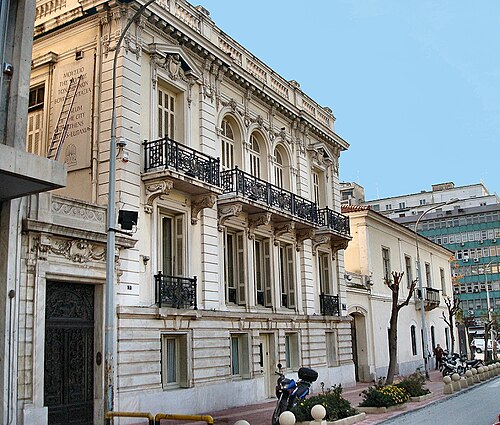 ATHENS CITY MUSEUM
The Athens City Museum, also known as the Vouros-Eutaxias Foundation, offers a captivating glimpse into the evolution of Athens from a modest town to a vibrant metropolis. Housed in two neoclassical buildings, the museum occupies structures dating back to 1833 and 1859 . Notably, number 7 was the first royal residence of King Otto and Queen Amalia, serving as Greece's inaugural royal palace. A standout exhibit is Jacques Carrey’s 1674 oil painting of Athens, the largest known depiction of the city before the Parthenon was damaged in the 1687 siege .
The Museum of the Bank of Greece is dedicated to preserving and showcasing the country's monetary and economic history. Established in 1927, it highlights the Bank's role and activities, as well as its contribution to the development of the Greek economy. The museum presents the monetary and economic history of modern Greece from the design and introduction of the first modern Greek monetary system in 1828 to the creation of the euro area and Greece’s participation in the single currency.
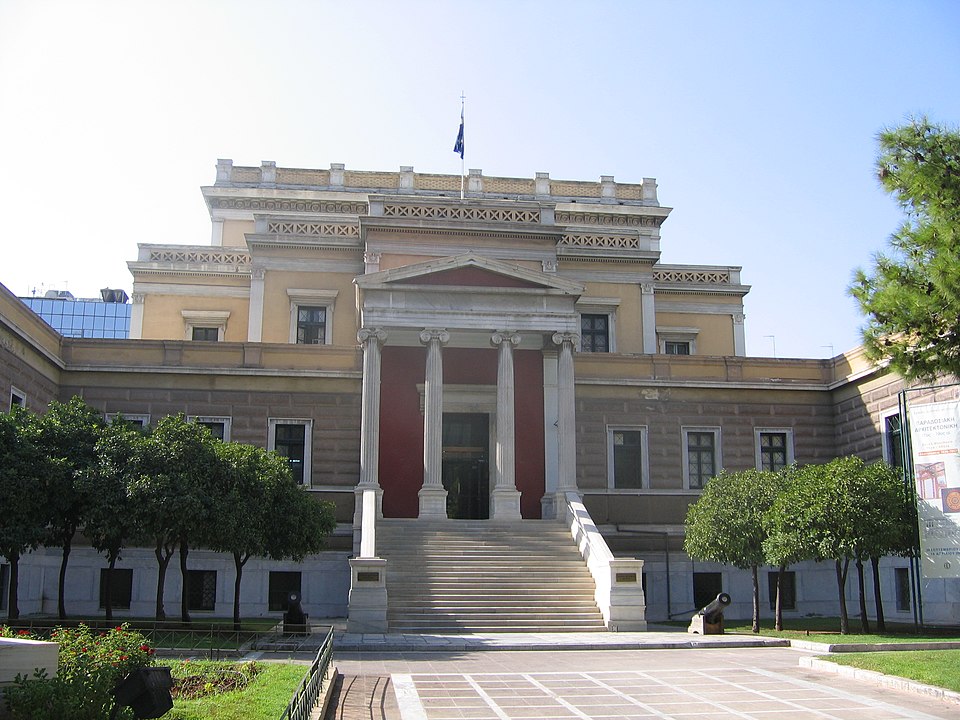 NATIONAL HISTORICAL MUSEUM
Established in 1882 by the Historical and Ethnological Society of Greece, the museum is housed in the former Old Parliament Building on Stadiou Street. The museum's extensive collection spans from the fall of Constantinople in 1453 to the Second World War, emphasising the Greek War of Independence and the establishment of the modern Greek state. Highlights include weapons, personal belongings of historical figures, paintings, traditional costumes, and items related to significant events such as the Greco-Turkish War and the Balkan Wars.
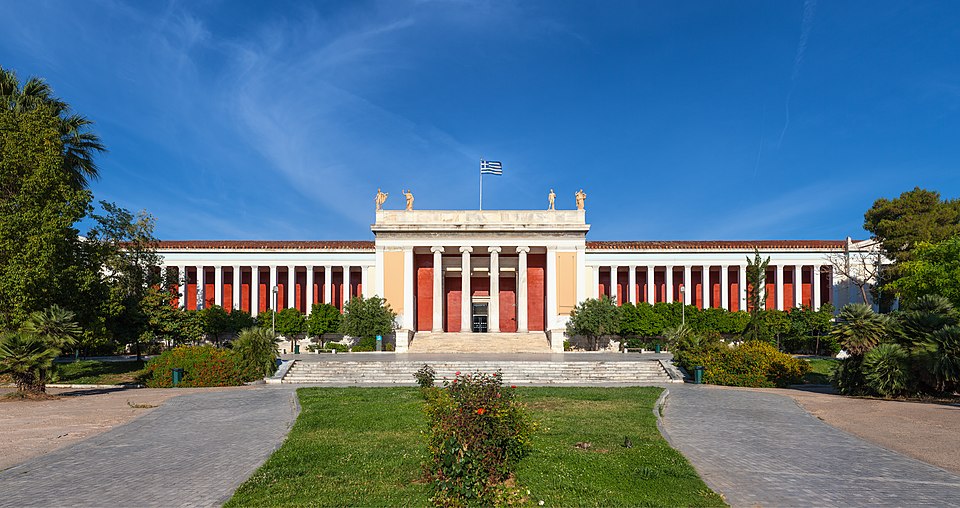 NATIONAL ARCHAEOLOGICAL MUSEUM
The National Archaeological Museum in Athens is Greece’s largest and one of the world’s most significant museums dedicated to ancient Greek civilisation. Founded in 1893 and housed in a neoclassical building constructed between 1866 and 1889, the museum boasts a collection of over 11,000 exhibits spanning from the Neolithic period to Late Antiquity. The Museum displays artefacts from the Neolithic, Cycladic, and Mycenaean civilisations, including the famous Mask of Agamemnon, as well as a vast array of Greek sculptures from the 7th century BC to the 5th century AD, showcasing the evolution of Greek artistry.
SEE APPENDIX IN LOWER LEFT PART OF THE MAP.
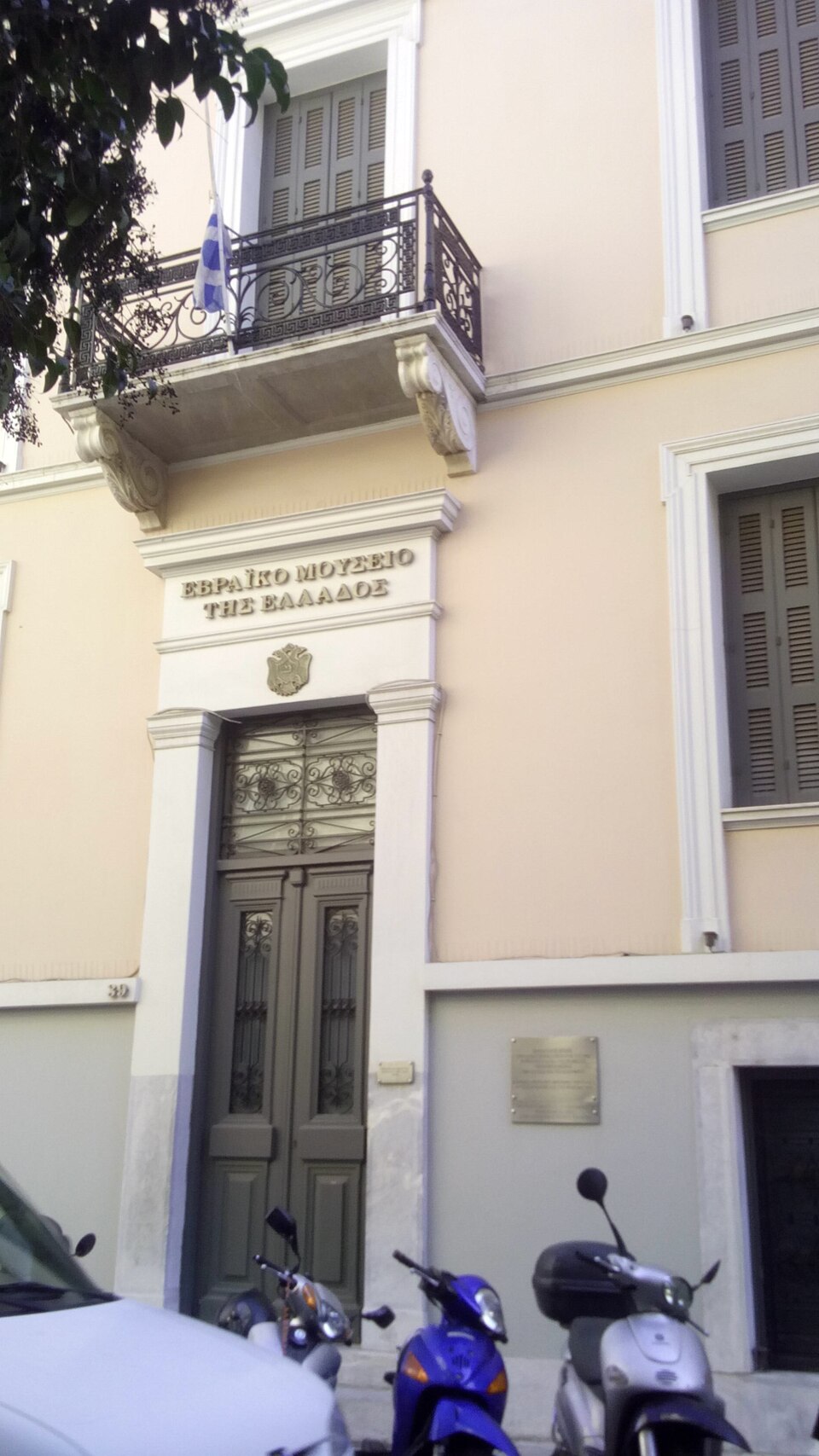 JEWISH MUSEUM
The Jewish Museum of Greece is dedicated to preserving and showcasing the rich history and culture of the Jewish community in Greece, spanning over 2,300 years. Established in 1977, the museum offers visitors a comprehensive insight into the traditions, customs, and experiences of Greek Jews. The museum's extensive collection comprises over 10,000 artefacts, including personal items, jewellery, domestic objects, and religious artefacts. These items trace the history and contributions of Jewish communities across various regions of Greece.
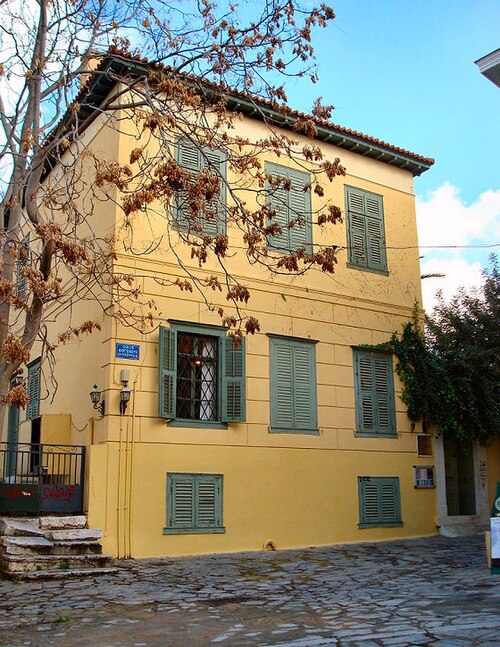 GREEK MUSIC INSTRUMENT MUSEUM
The Museum of Greek Folk Musical Instruments is dedicated to preserving and showcasing Greece's rich musical heritage. Established in 1991, the museum is housed in the historic Lassanis Mansion, built in 1842, located in the Plaka district near the Roman Agora. The museum's collection of approximately 1,200 instruments.
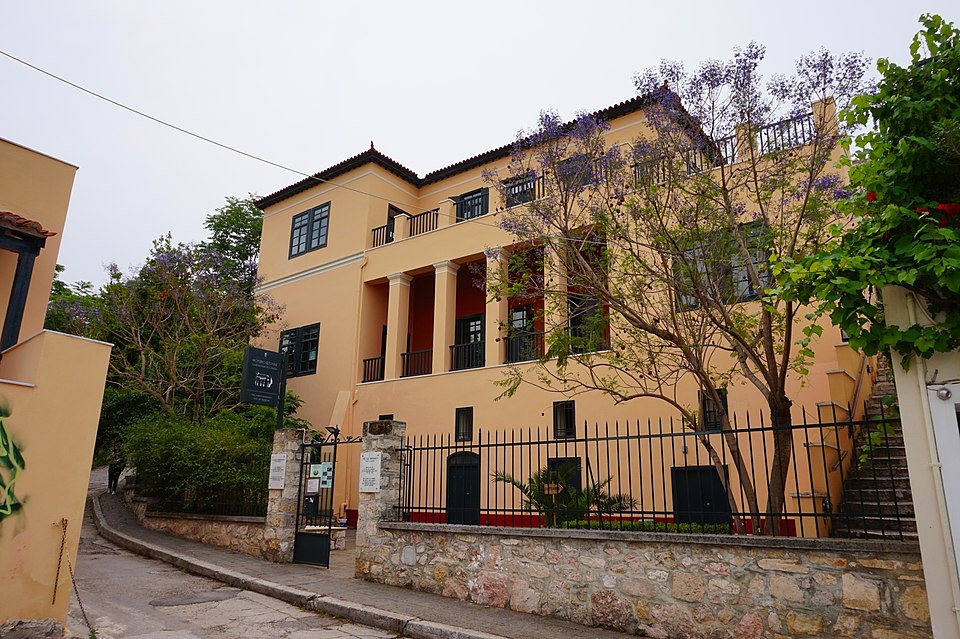 ATHENS UNIVERSITY HISTORY MUSEUM
The Athens University History Museum is situated in one of Athens' oldest residential buildings, dating back before the 18th century. Located beneath the Acropolis, the building offers a panoramic view of the Plaka neighbourhood and the ancient city center. Originally the residence of architect Stamatios Kleanthis, it also served as the first University of the independent Greek state from 1837 to 1841.
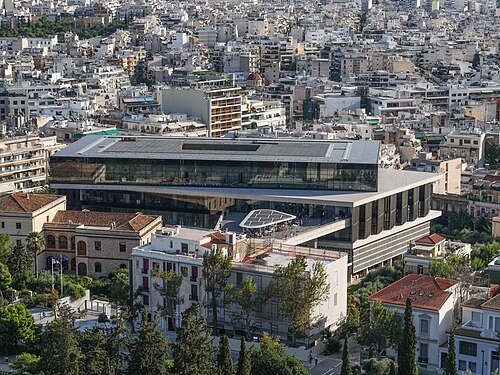 NEW ACROPOLIS MUSEUM
The New Acropolis Museum is a modern architectural marvel located just southeast of the Acropolis, offering a comprehensive and immersive experience of ancient Greek civilisation. Designed by Bernard Tschumi Architects, the museum opened its doors in 2009 and has since become one of the most visited cultural institutions in Greece.
The Parthenon Gallery, located on the top floor, is aligned with the Parthenon and offers panoramic views of the ancient temple.The museum houses over 4,000 artefacts spanning from the Archaic to the Roman period.The Benaki Museum of Islamic Art is renowned for its extensive collection of artefacts spanning from the 7th to the 19th century, offering insights into the rich tapestry of Islamic civilisation. The museum's collection includes over 12,000 items such as ceramics, metalwork, textiles, jewellery, and wood carvings. Notable pieces include 8th-century Mesopotamian door panels, a 16th-century velvet saddle from Bursa, and the marble-faced interior of a 17th-century Cairo mansion's reception room.
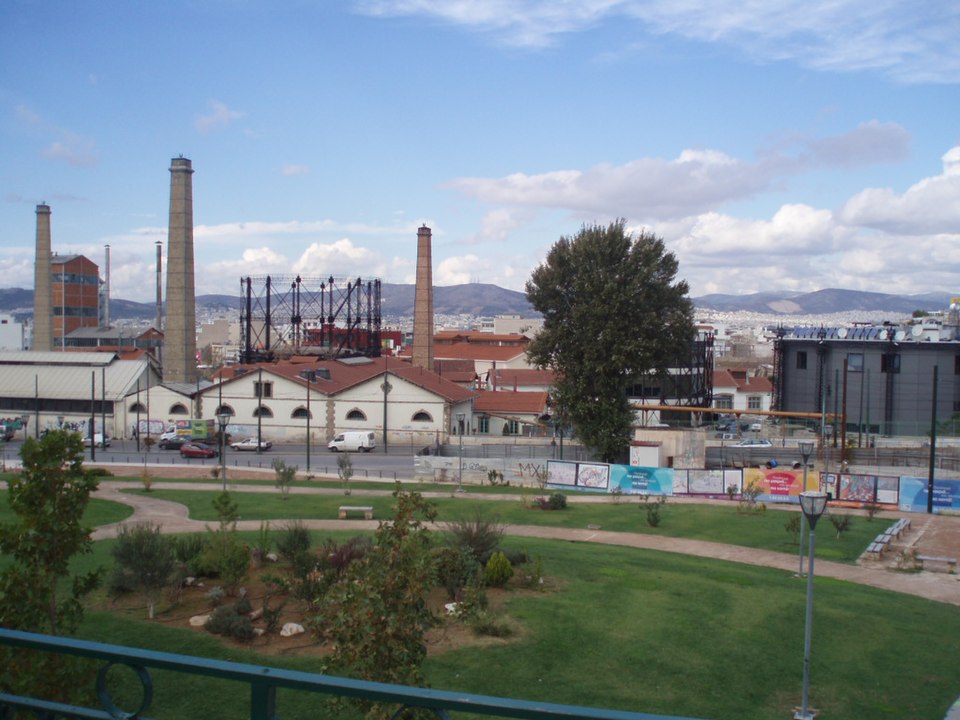 "GAZI" INDUSTRIAL MUSEUM
Located within the Technopolis City of Athens complex in the Gazi district, the Industrial Gas Museum is housed in the city's former gasworks, operational from 1857 to 1984. The museum offers guided tours that provide a deep dive into the gas production process and the site's historical significance.
"TECHNOPOLIS"/ MARIA CALLAS MUSEUMTechnopolis City of Athens is a dynamic cultural hub located in the Gazi district, housed in the city's former gasworks established in 1857. Since its transformation in 1999, it has become one of Athens' most vibrant venues that hosts a diverse array of events, including concerts, art exhibitions, theatre performances, film screenings, and educational programs. A highlight of Technopolis is the Athens Technopolis Jazz Festival, one of Greece's premier jazz events, featuring international and local artists each May.
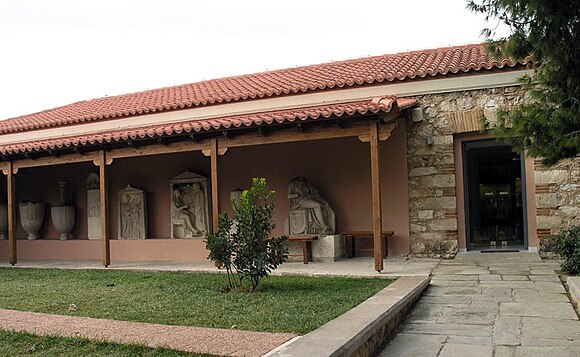 "KERAMEIKOS" ARCHAEOLOGICAL MUSEUM
The Archaeological Museum of Kerameikos is situated adjacent to the ancient Kerameikos cemetery in Athens, Greece. Established in 1938, the museum showcases artefacts uncovered during excavations by the German Archaeological Institute, offering insights into ancient Athenian funerary practices.
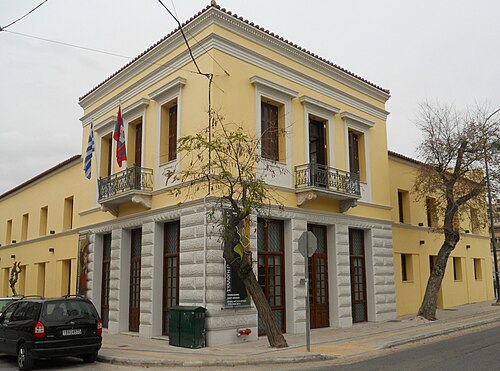 MUNICIPAL GALLERY of ATHENS
The Municipal Gallery of Athens is a prominent art museum located in the Metaxourgio district. Housed in a historic neoclassical building designed by Danish architect Christian Hansen, the gallery boasts a rich collection of nearly 3,000 works by leading 19th- and 20th-century Greek artists. Notable pieces include paintings, prints, and sculptures that reflect the artistic evolution of modern Greece
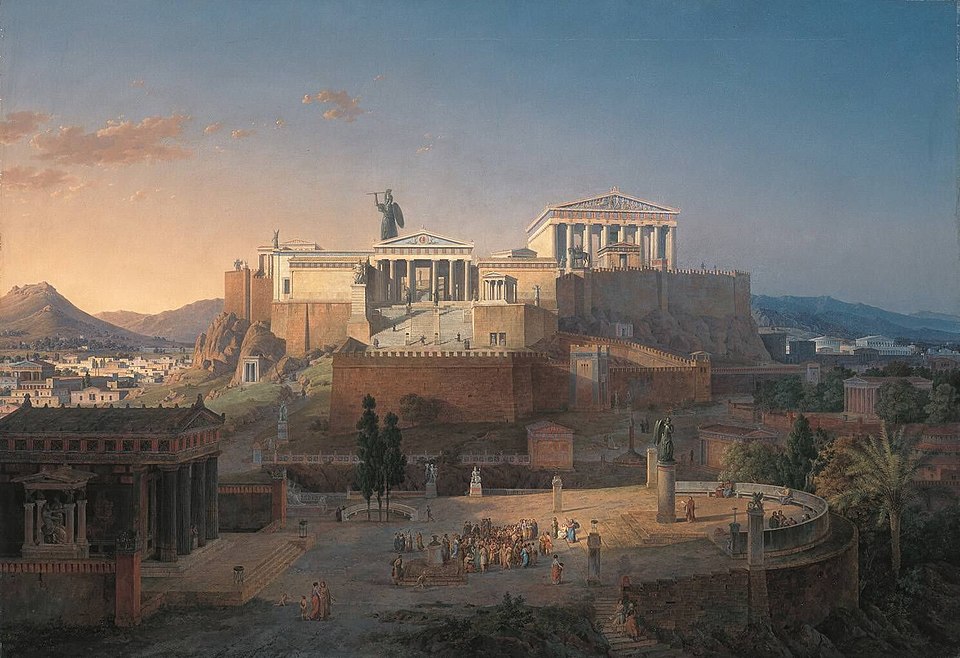 ACROPOLIS
The Acropolis of Athens, Located on a rocky outcrop above the city of Athens, has been a center of political, religious, and cultural life for millennia. The Acropolis has been inhabited since the Neolithic period, but it was during the 5th century BCE, under the leadership of the Athenian statesman Pericles, that the site was transformed into a monumental complex of temples, statues, and other structures. This era coincided with Athens' rise to political and cultural dominance in the ancient Greek world, following their victory over the Persians in the Battle of Marathon (490 BCE) and the Battle of Salamis (480 BCE). The Acropolis served as both a religious sanctuary dedicated to the city’s patron goddess, Athena, and a symbol of Athenian power and pride.
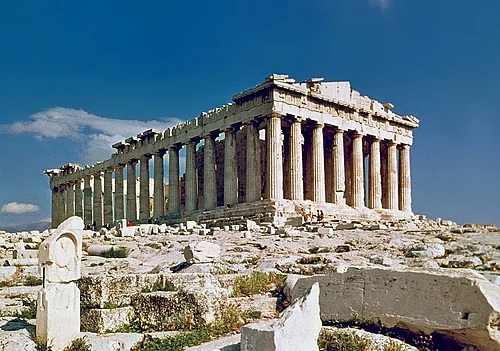 PARTHENON
The Parthenon is a magnificent temple located on the Acropolis of Athens, dedicated to Athena, the city's patron goddess. Built between 447 and 438 BCE during the height of Athens' Golden Age, it is considered one of the most iconic symbols of ancient Greek architecture. Designed by the architects Iktinos and Kallikrates, and adorned with sculptural masterpieces by Phidias, the Parthenon exemplifies classical Greek ideals of beauty, proportion, and harmony. Today, it stands as a symbol of the cultural achievements of ancient Greece and continues to inspire awe around the world.
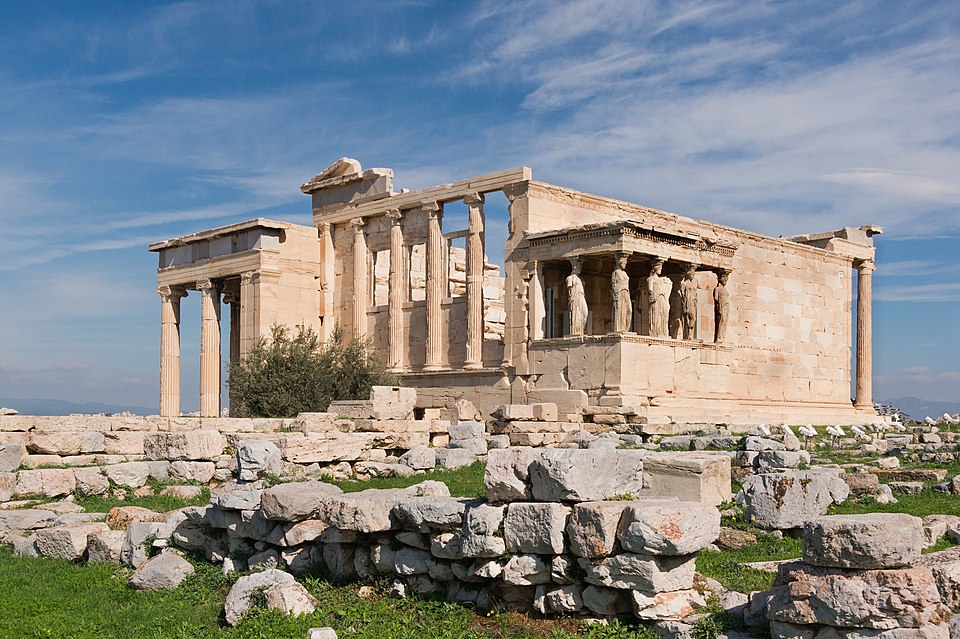 ERECHTHEUM
The Erechtheum is an ancient temple on the Acropolis of Athens, built between 421 and 406 BCE. It was dedicated to both Athena and Poseidon, and is renowned for its unique, asymmetrical design, which was adapted to the uneven terrain of the Acropolis. The temple is most famous for its southern porch, supported by the Caryatids, six beautifully sculpted female figures that serve as columns. The Erechtheum is also historically significant for being the mythical site of the contest between Athena and Poseidon for the patronage of Athens, as well as for housing the sacred olive tree said to have been planted by Athena herself.
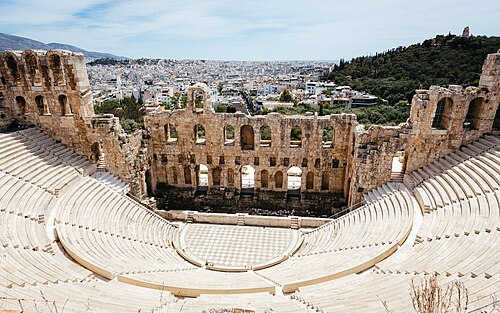 ODEON of HERODES ATTICUS
The Odeon of Herodes Atticus (or Odeon of Herodes Atticus) is a grand ancient theatre located at the foot of the Acropolis in Athens. Built in 161 CE by the Roman aristocrat Herodes Atticus in memory of his wife, Regilla, the Odeon is an exceptional example of Roman architecture in Athens. It was originally a wooden-roofed structure designed for musical performances and theatrical events. With a seating capacity of around 5,000 spectators, the Odeon was used for concerts, poetry readings, and other cultural events during the Roman period. Today, it stands as a stunning venue for modern performances, including concerts and theatre, as part of the Athens Festival.
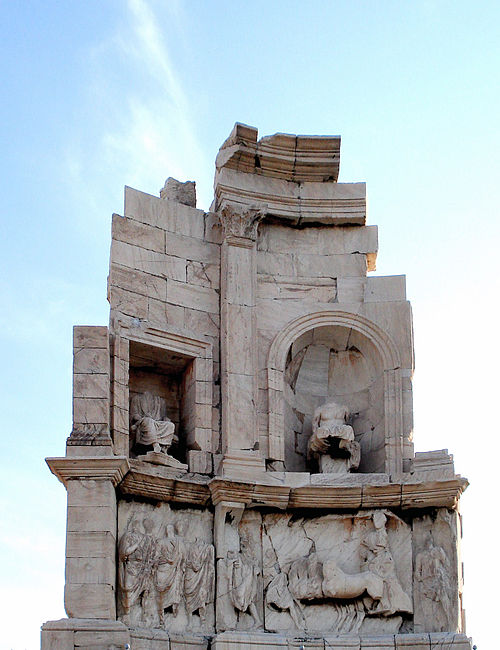 FILOPAPPOS MONUMENT
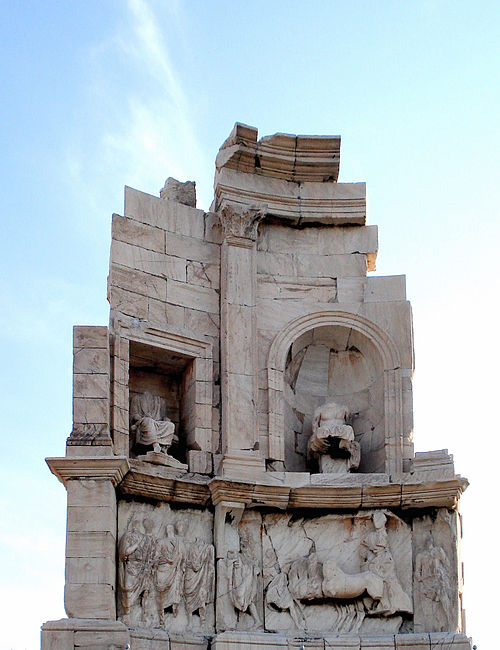
The Filopappos Monument is an ancient Greek monument located on Filopappou Hill in Athens, overlooking the Acropolis. It was built in the early 2nd century CE to honor Gaius Julius Antiochus Epiphanes, also known as Filopappos, a prince from the Kingdom of Commagene who became a Roman consul and friend of Emperor Trajan.The monument is a large funerary structure, built in the form of a tomb and a columned structure, with a prominent inscription commemorating Filopappos' life and accomplishments. It offers stunning panoramic views of Athens, the Acropolis, and the surrounding landscape.
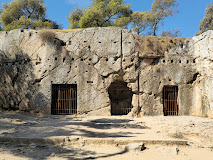
The Prison of Socrates is a historical site in Athens, located near the Acropolis, where the philosopher Socrates is said to have been imprisoned before his trial and execution in 399 BCE. The prison, a small and simple building, was part of the ancient Athenian prison complex. According to historical accounts, including those of his student Plato, Socrates was sentenced to death for corrupting the youth and impiety. While imprisoned, he reportedly spent his final days discussing philosophy with his followers.
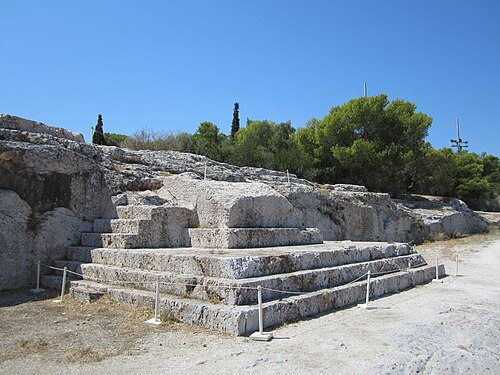 ANCIENT PNYX
The Pnyx is a historic hill in Athens, located to the west of the Acropolis. It is one of the most significant sites in the history of Athenian democracy, as it was the meeting place of the Athenian Assembly (Ekklesia). This is where male citizens of Athens gathered to discuss and vote on important issues, including laws, war, and the selection of public officials. The Assembly met here from the 5th century BCE until the 4th century BCE, making the Pnyx a central symbol of Athenian democratic governance.
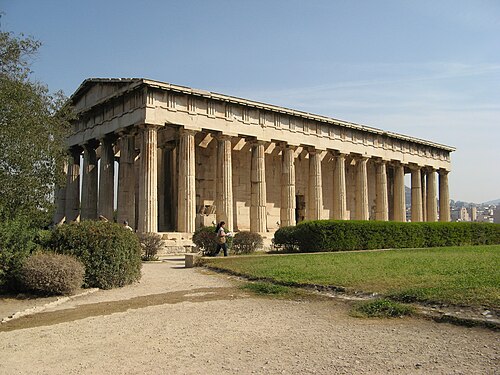 TEMPLE of HEPHAESTUS
The Temple of Hephaestus, also known as the Theseion, was dedicated to Hephaestus, the god of metalworking, craftsmanship, and fire, the temple was built around 449 BCE during the height of Athens' Golden Age, likely under the leadership of Pericles.
The Temple of Hephaestus is one of the best-preserved ancient Greek temples, largely due to its continuous use throughout history. It is a Doric temple, characterised by its simple yet elegant design with 34 columns surrounding a rectangular structure. The temple originally housed a statue of Hephaestus and his consort Aphrodite, although the statue has since been lost.
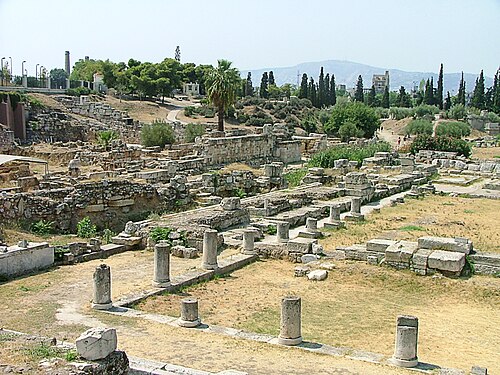 ANCIENT AGORA
The Ancient Agora of Athens was the heart of public life in ancient Athens, serving as a marketplace, political center, and gathering place from the 6th century BCE. It was home to key structures like the Temple of Hephaestus, the Stoa of Attalos, and the Bouleuterion. Philosophers like Socrates engaged in discussions here, and it played a vital role in the development of Athenian democracy. Today, the site offers a glimpse into ancient Greek daily life and is home to a museum housed in the reconstructed Stoa of Attalos.
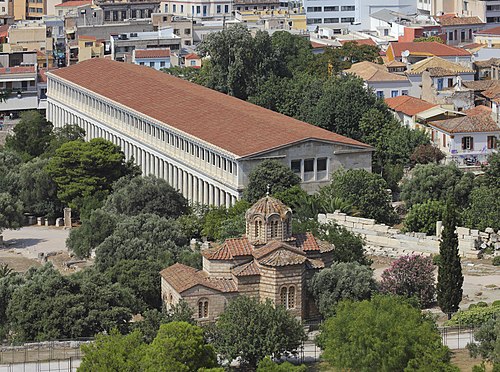 STOA of ATTALOS
Originally built in the 2nd century BCE by King Attalos II of Pergamon, it was a covered portico or colonnade that provided space for shopping, socialising, and public activities. The Stoa was an important part of Athenian civic life, serving as a marketplace and a gathering place for intellectual discussions. The structure consists of two stories of columns in the Ionic style, and it was rebuilt in the 1950s by the American School of Classical Studies, using the original stones. Today, the Stoa houses the Museum of the Ancient Agora, displaying artefacts and providing insight into the history of Athens and the Agora itself.
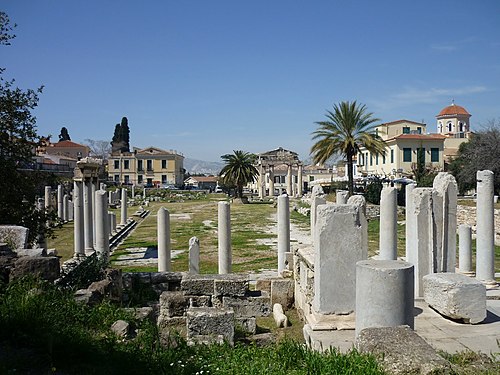 ROMAN AGORA
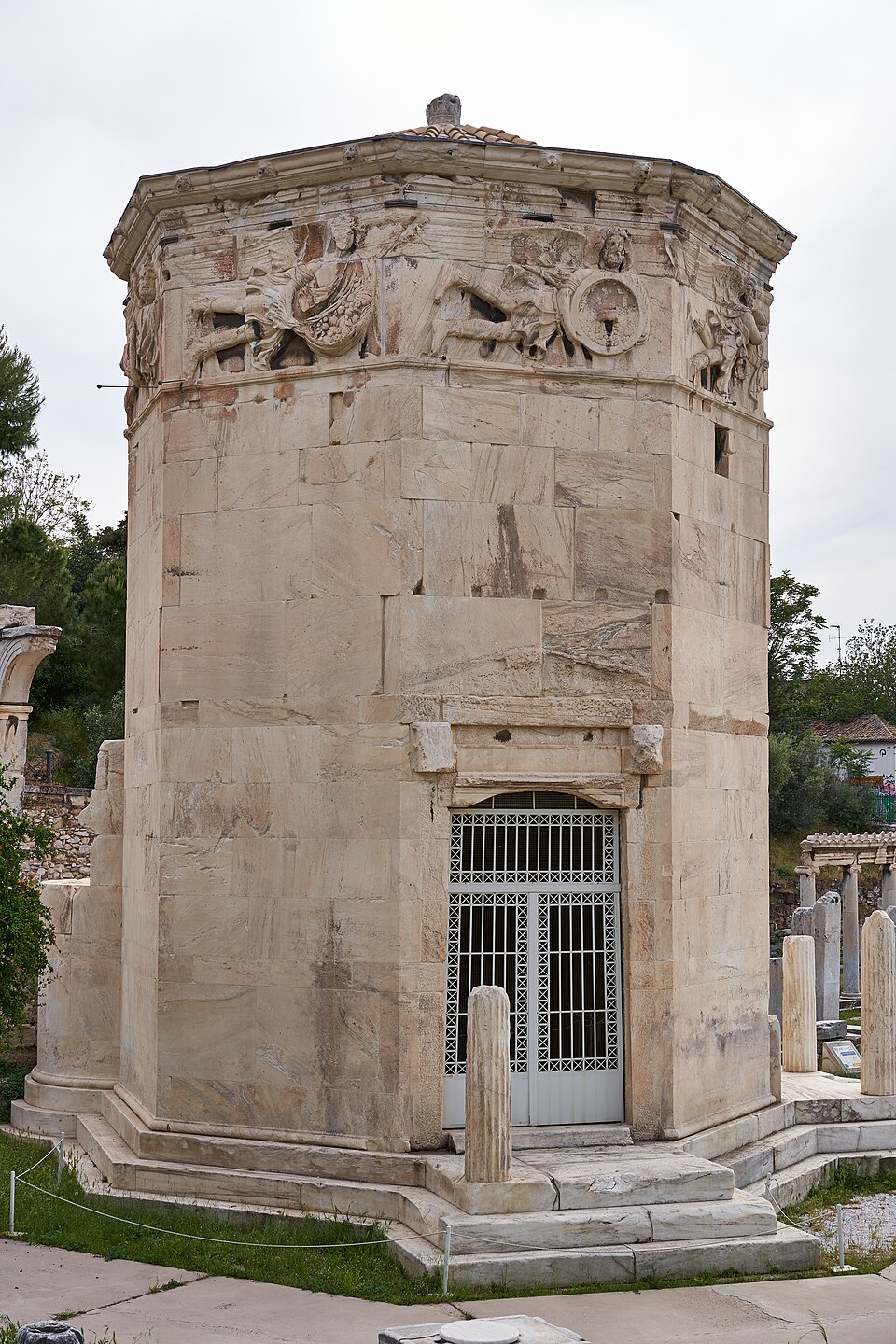
The Roman Agora in Athens is an important archaeological site built during the 1st century BCE, under Roman rule, and located to the north of the Ancient Agora. It served as a marketplace and a public space, much like its Greek predecessor, but with distinct Roman architectural influences. The Roman Agora is known for its Gate of Athena Archegetis, a monumental entrance built to honor the city's founder, Athena, and for the Tower of the Winds, an ancient octagonal structure used as a clock and weather station.
 TOWER of WINDS
The Tower of the Winds is an ancient octagonal structure located in the Roman Agora of Athens, built around the 1st century BCE. This remarkable building served as both a weather vane and a water clock (known as an hydraulic clock), and was used to measure time during the day and night. Each of the eight sides of the Tower of the Winds depicts a wind god, representing different directions from which the winds blew. The tower's upper portion contained a bronze vane that spun in the wind, signalling the direction of the breeze, while the lower section housed a sophisticated water clock to measure time.
 HADRIAN'S LIBRARY
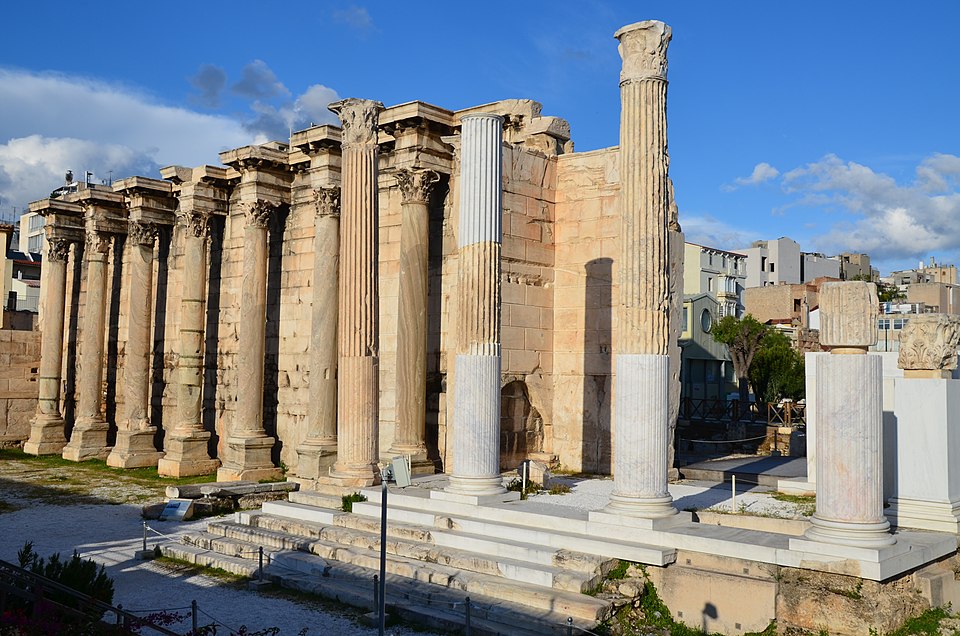
Hadrian's Library is an ancient structure located in the heart of Athens, near the Roman Agora. It was built by the Roman Emperor Hadrian in 132 CE to serve as both a library and a cultural center. The library housed a vast collection of scrolls and books, making it an important intellectual hub of the time. The library was not only a place for the storage of books but also for philosophical discussions and intellectual pursuits. Hadrian's Library is known for its magnificent architectural style, combining Roman and Greek influences.
 KERAMEIKOS ARCHAEOLOGICAL SITE
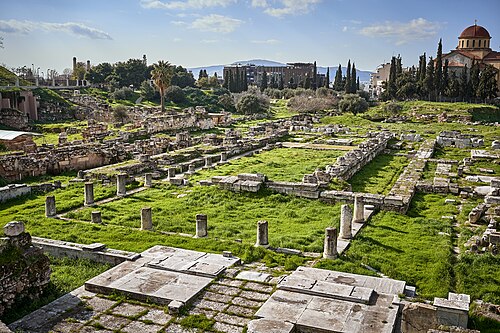
The Kerameikos Archaeological Site is one of the most important ancient sites in Athens, located just northwest of the Acropolis. The area was originally a potter’s district, from which it takes its name ("Kerameikos" meaning "potter's quarter" in Greek), but it later became a major cemetery and the site of various significant public monuments. The site contains both funerary and civic elements, as it was the location of the Ancient Athenian cemetery and the city’s western gate. The Kerameikos Cemetery is especially notable for its well-preserved tombs, including the Socratic tomb, which marks the burial place of famous Athenians.
 ARCHIGETES ATHENA GATE
The Pyle Archigētidos (also known as the Archigetes Gate) is an ancient structure located in Athens. It was one of the main entrances to the Acropolis and served as an important ceremonial gateway. The gate was built in honor of the legendary founder of the city, Theseus, and it was also associated with the mythical origin of the Athenian people.Though little remains of the structure today, historical accounts suggest that the Pyle Archigētidos was a monumental gateway that marked the boundary between the sacred area of the Acropolis and the rest of the city.
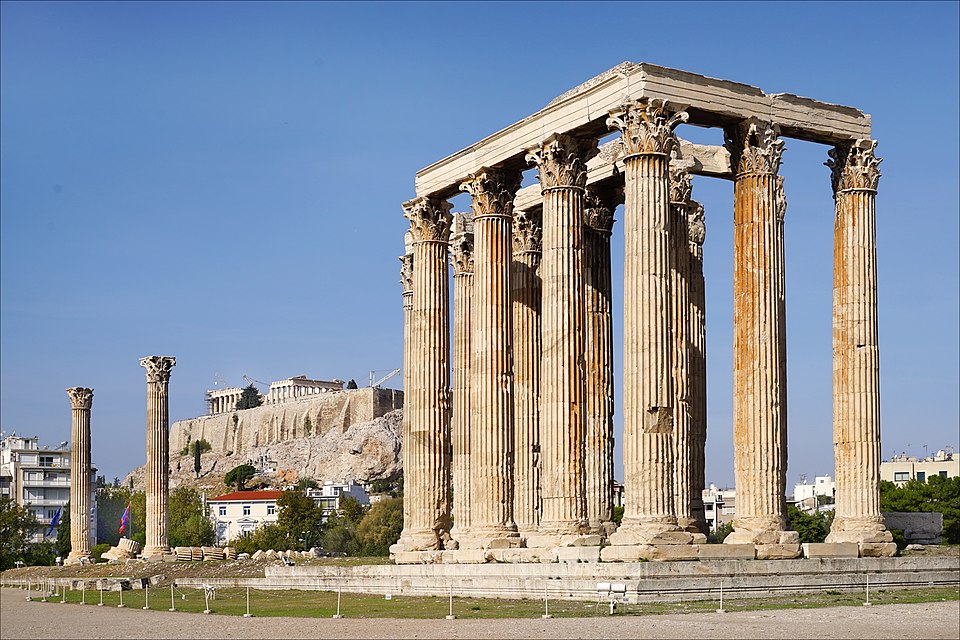 OLYMPIAN ZEUS TEMPLE
The Temple of Olympian Zeus (also known as the Olympeion) is an ancient temple located southeast of the Acropolis in Athens. It was dedicated to Zeus, the king of the Greek gods, and was one of the largest temples in the ancient world. Construction began in the 6th century BCE under the tyrant Peisistratus, but it was not completed until the reign of the Roman Emperor Hadrian in the 2nd century CE, over 600 years later.
The temple was designed in the Corinthian order and originally featured 104 columns, of which 15 remain standing today. At its peak, the temple housed a massive statue of Zeus created by the renowned sculptor Phidias, although the statue has long since been lost.
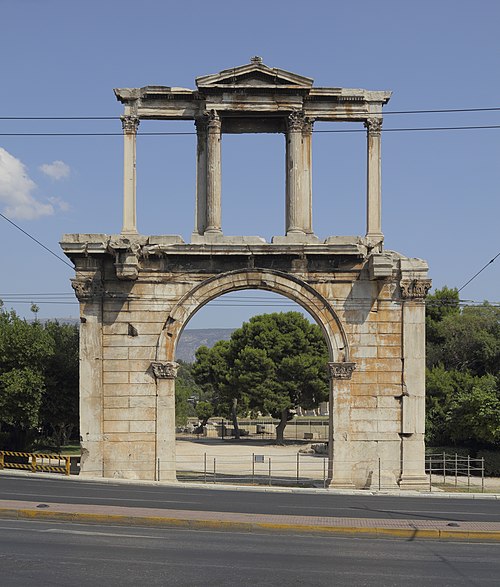 HADRIAN'S GATE
Hadrian's Gate is an ancient monumental gateway located in Athens, built in 132 CE by the Emperor Hadrian to celebrate his contributions to the city. The gate marked the boundary between the ancient Greek city and the Roman quarter of Athens, symbolising the city’s transition under Roman rule. Hadrian's Gate is located near the Temple of Olympian Zeus and remains an important historical landmark, symbolising the relationship between Athens and Rome during the Roman Empire. Today, the ruins of the gate stand as a testament to Hadrian’s legacy in Athens and the lasting influence of Roman architecture in the city.
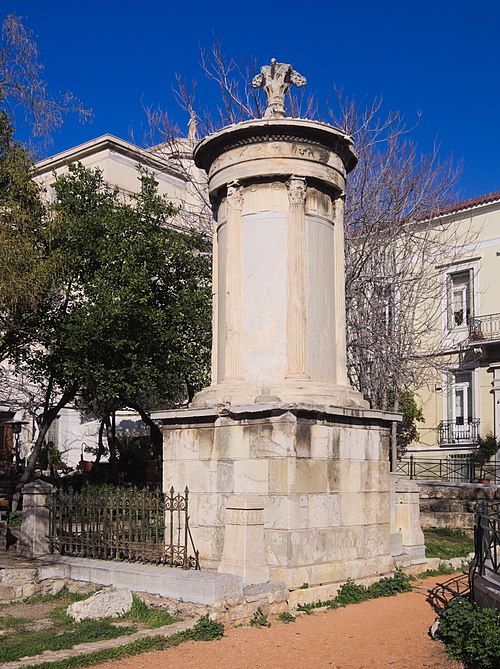 LYSICRATES MONUMENT
The Monument of Lysicrates is a well-preserved ancient Greek monument located in Athens, near the foot of the Acropolis. Built in 334 BCE, it was erected by Lysicrates, a wealthy patron of the arts, to commemorate his victory in the Dionysian festival's theatrical competition. Lysicrates, who was a choregos (a wealthy sponsor of theatrical performances), funded the production of a play that won first prize at the festival.
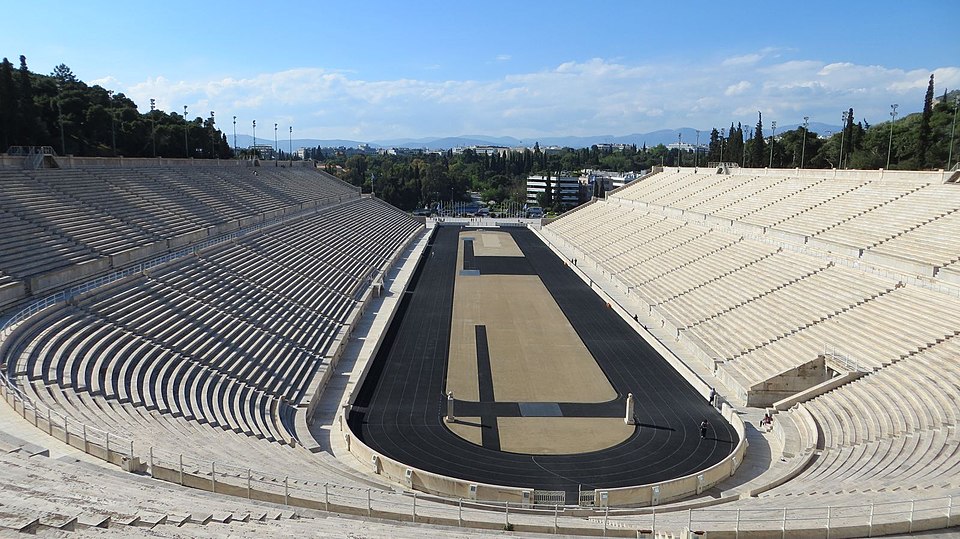 PANATHENAIC STADIUM
The Kalimarmaro Stadium (also known as the Panathenaic Stadium) was originally built in the 4th century BCE to host the Panathenaic Games, a major athletic and cultural festival held in honor of the goddess Athena. The stadium was reconstructed in 1896 for the first modern Olympic Games and is the only stadium in the world built entirely of white marble. It can hold around 45,000 spectators and is one of the most iconic structures in Athens. The Kalimarmaro Stadium is particularly notable for hosting the marathon finish line during the 1896 Olympics and has since remained a symbol of the city's athletic heritage.
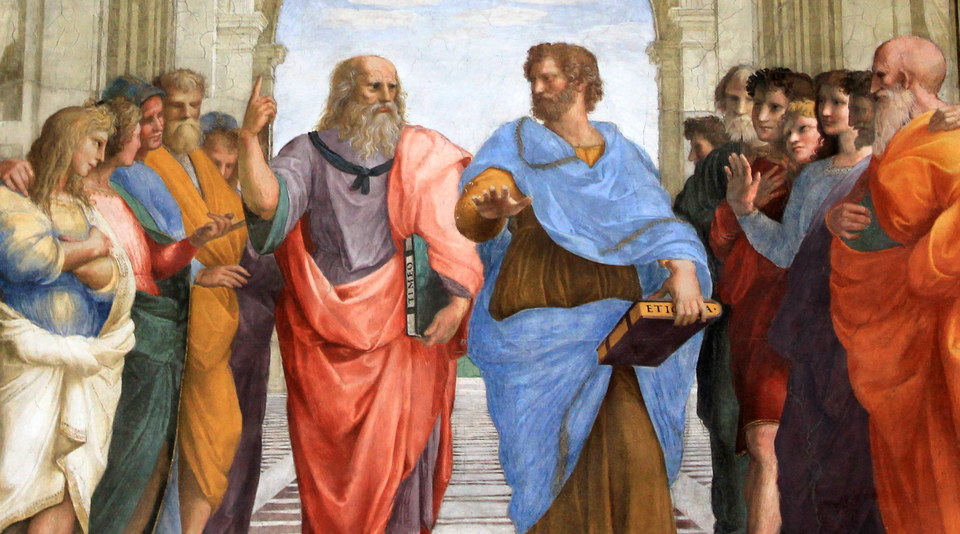
The Aristotle's Lyceum (or Lykeion) was a major philosophical school in ancient Athens, founded by the philosopher Aristotle in 336 BCE. It was located near the river Ilisio, just outside the city center. Aristotle taught there for many years, and it became one of the most influential educational institutions of the ancient world. Over time, the school was succeeded by the Peripatetic school, named after the peripatos (covered walkway) where Aristotle and his students would walk and engage in debate.
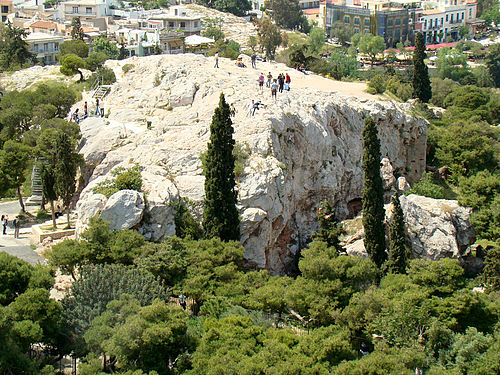 AREOPAGUS
Areopagus (or Arios Pagos) is a prominent rock outcrop located just west of the Acropolis of Athens. In ancient times, it was the site of a council, known as the Areopagus Council, which was composed of former magistrates and served as a key judicial and legislative body in Athens. The Areopagus is also famously associated with the apostle Paul, who, according to the New Testament, delivered his famous sermon on the hill to the Athenians about the "unknown god" (Acts 17:22-31). Today, the Areopagus offers stunning views of the Acropolis and the city of Athens, and it remains a significant historical and cultural landmark.
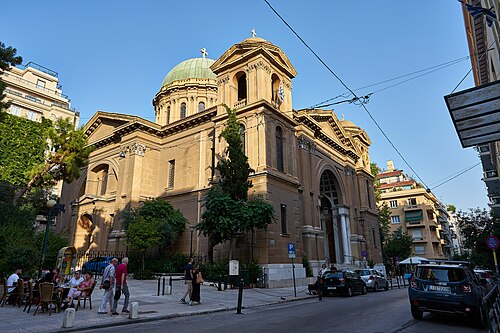 AGIOS DIONYSIOS AREOPAGITIS
The Church of Agios Dionysios Areopagitis is a prominent Greek Orthodox cathedral located in the Kolonaki district of Athens, dedicated to Saint Dionysius the Areopagite, the first bishop of Athens and a disciple of the Apostle Paul. The current structure was constructed between 1925 and 1931, replacing a smaller church that had been built in 1880 and demolished in 1900. Designed by architect Anastasios Orlandos, the church features a cross-in-square plan with a large dome, combining neo-baroque and neoclassical elements.
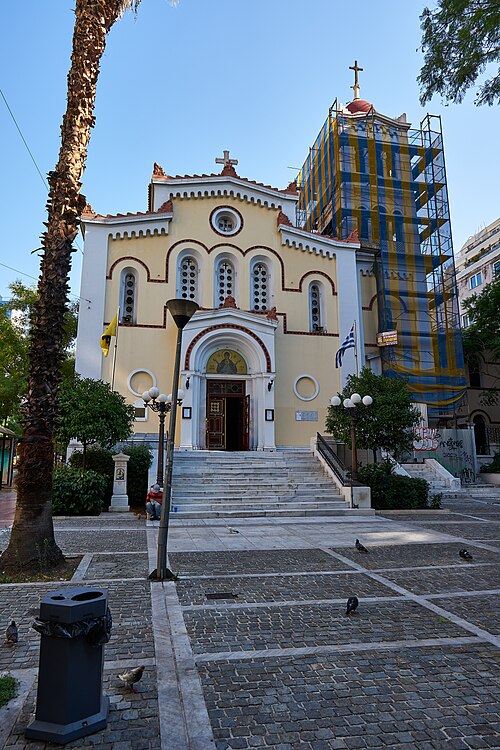 ZOODOCHOS PIGI CHURCH
The Church of Zoodochos Pigi in Athens is a significant Greek Orthodox cathedral located in the Neapoli district. Dedicated to the Virgin Mary as the "Life-Giving Spring”, the church was constructed between 1846 and 1852, following plans by architect Dimitrios Zezos. The church's exterior is adorned with decorative elements such as tiled roofs and cornices, while the interior boasts eight marble columns and murals by notable artists like Anastasios Loukidis. A mosaic of the Virgin Mary with Christ is prominently displayed at the main entrance.
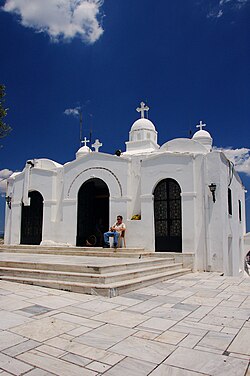 AGIOS GEORGIOS LYKAVVITOU
Agios Georgios Lykavittou (St. George Lycabettus) is a prominent church located at the summit of Lycabettus Hill in Athens. The church was built in the late 19th century, and it has become a key landmark on the hill, which is one of the highest points in Athens. Its location on Lycabettus Hill offers stunning panoramic views of Athens, including the Acropolis, the Aegean Sea, and the surrounding mountains, making it a popular destination for both locals and visitors.
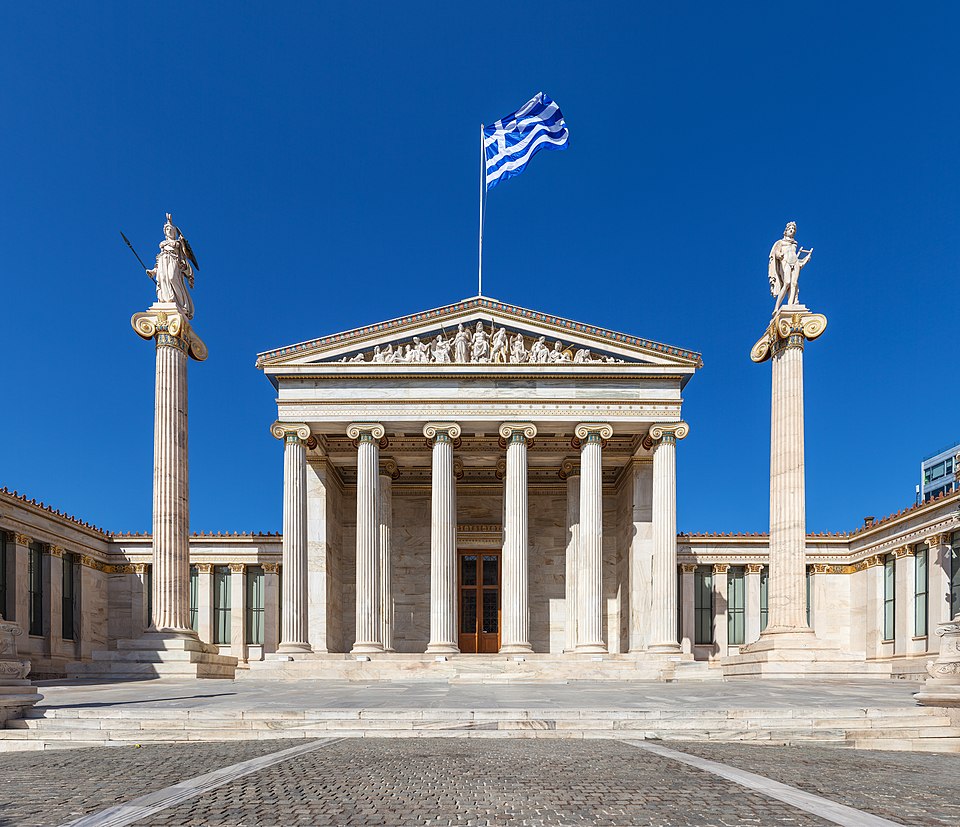 "ATHENIAN TRILOGY" Academia of Athens
The Academy of Athens is a distinguished neoclassical building situated on Panepistimiou Street, forming part of the architectural "Athenian Trilogy" alongside the University of Athens and the National Library. Designed by Danish architect Theophil Hansen in 1859, with construction completed in 1885 under the supervision of Ernst Ziller, the Academy stands as a testament to classical Greek architectural ideals.
Notable sculptures adorn the structure, including statues of Apollo and Athena on the prostyle, and seated figures of Plato and Socrates in the forecourt. These works, created by sculptor Leonidas Drosis, contribute to the building's reputation as one of the most exquisite neoclassical edifices worldwide .
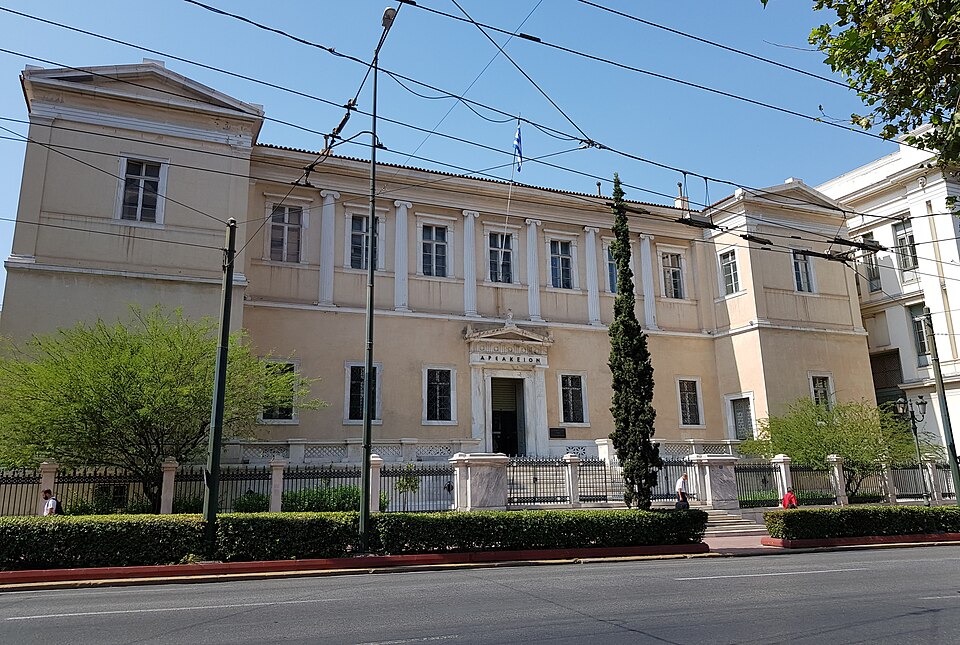 ARSAKION MEGARON
The Arsakion Megaron is a historic neoclassical building located in the heart of Athens, at the intersection of Panepistimiou and Pesmazoglou streets. It was constructed between 1846 and 1852, funded by Apostolos Arsakis, to house the Girls’ School of the Philological Society (now the Educational Society of Athens). Designed by architect Lysandros Kaftantzoglou, the building is a prime example of Hellenic Neoclassicism.
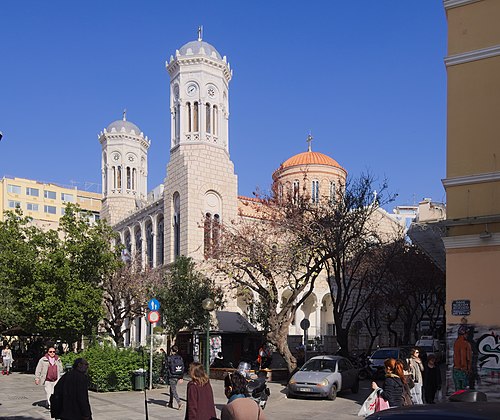 PANAGIA "CHRYSSOSPILIOTISSA"
The Kimisi Theotokou church (Dormition of the Virgin Mary) is a significant church also known as Panagia Chryssospiliotissa. Its name originates from the Monastery of Mega Spileo, which contributed to its construction, or from an icon of the Virgin Mary that was a replica of the monastery's icon. The original basilica was built in 1705 but was destroyed during the siege of the Acropolis by Kioutahi Pasha in 1826. Rebuilding commenced in 1832, and completed in 1892. The church is a three-aisled basilica, exemplifying eclecticism by combining neoclassical and Byzantine elements.
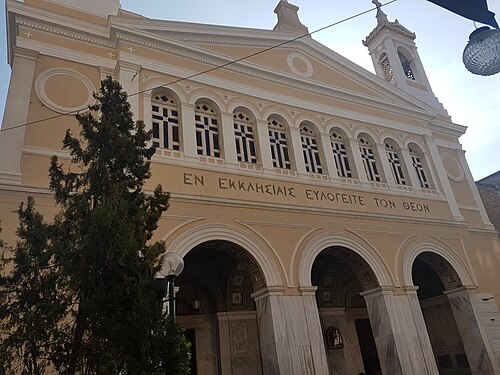 AGIA IRINI
The Church of Agia Irini on Aiolou Street is a beautiful 19th-century church in the heart of Athens, once serving as the city’s main cathedral before the construction of the modern Metropolis. Designed by architect Lysandros Kaftantzoglou, it combines neoclassical and Byzantine elements, featuring a large dome and twin bell towers. Located in the lively Agia Irini Square, surrounded by cafes and shops, it is a peaceful yet central spot that blends Athens' spiritual and urban character.
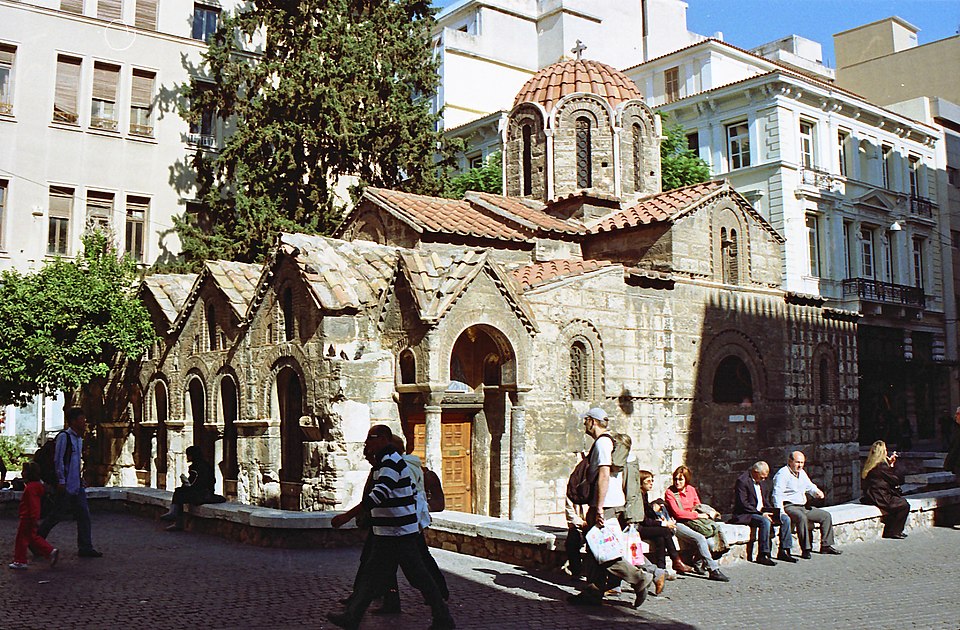 PANAGIA "KAPNIKAREA"
The Church of Panagia Kapnikarea is one of Athens' oldest and most historically significant churches, dating back to the 11th century. Located in the heart of the city on Ermou Street, it was constructed atop an ancient Greek temple, possibly dedicated to Athena or Demeter. The church's name, "Kapnikarea," is believed to derive from the Greek word "kapnismeni," meaning "smoked," referring to the soot marks on its walls.
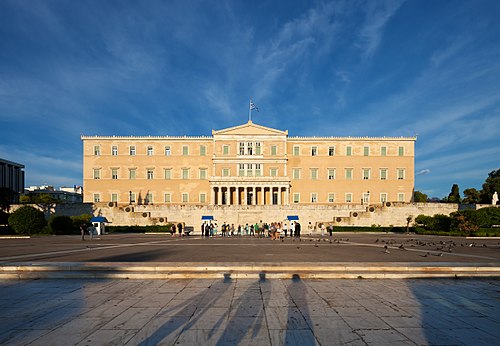 GREEK PARLIAMENT "UNKNOWN SOLDIER" TOMB
The Greek Parliament building, located on Syntagma Square in central Athens, is one of the city's most iconic landmarks. Originally built between 1836 and 1842 as the Royal Palace for King Otto of Greece, it was designed by Bavarian architect Friedrich von Gärtner in a neoclassical style. Since 1935, it has housed the Hellenic Parliament.
In front of the building lies the Tomb of the Unknown Soldier, guarded by the Evzones, the presidential guards in traditional uniform. The Parliament remains a symbol of Greece’s modern democratic life and national identity.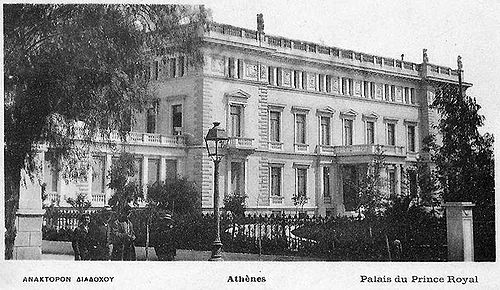 PRESIDENTIAL MANSION
The Presidential Mansion (Proedriko Megaro) is the official residence of the President of the Hellenic Republic, located on Herodou Attikou Street in central Athens. Designed by renowned architect Ernst Ziller, it was completed in 1897 to serve as the Crown Prince’s Palace. Surrounded by lush gardens and neoclassical elegance, the building reflects both grandeur and simplicity. After the monarchy was abolished in 1974, it became the residence of the Greek President.
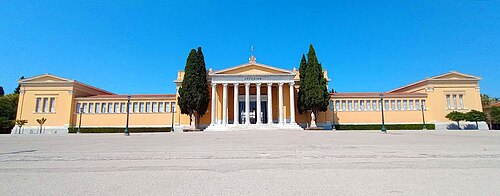 "ZAPPEION" MEGARO
The Zappeion Megaron is a historic building located in the heart of Athens, next to the National Gardens and near Syntagma Square. It was completed in 1888 and was designed by architect Theophil Hansen in a neoclassical style. Originally built to house the Greek Parliament and serve as a venue for the first modern Olympic Games in 1896, the Zappeion has since become a significant multipurpose conference and exhibition center.
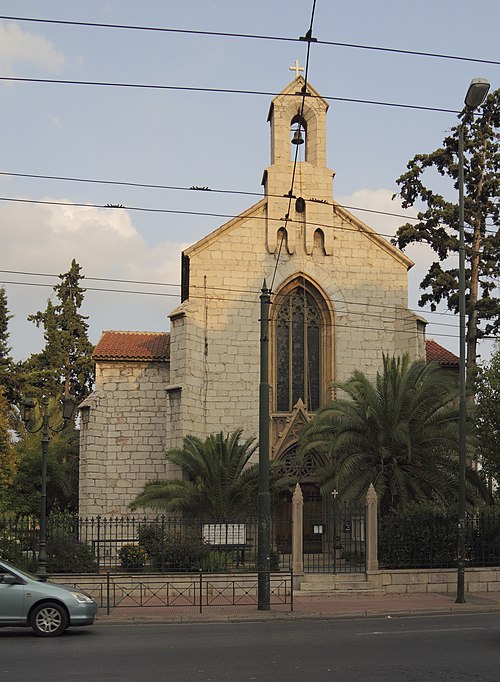 ST. PAUL'S ANGLICAN CHURCH
St. Paul's Anglican Church is the oldest foreign church in Athens, consecrated on Palm Sunday in 1843. Located near Syntagma Square, at 27 Philellinon Street, it serves as a place of worship, community, and cultural engagement for English-speaking residents and visitors. The church is renowned for its Neo-Gothic architecture, featuring a prominent bell tower and stained-glass windows depicting various saints. Its pipe organ, installed in 1897, is the oldest working organ in Greece.
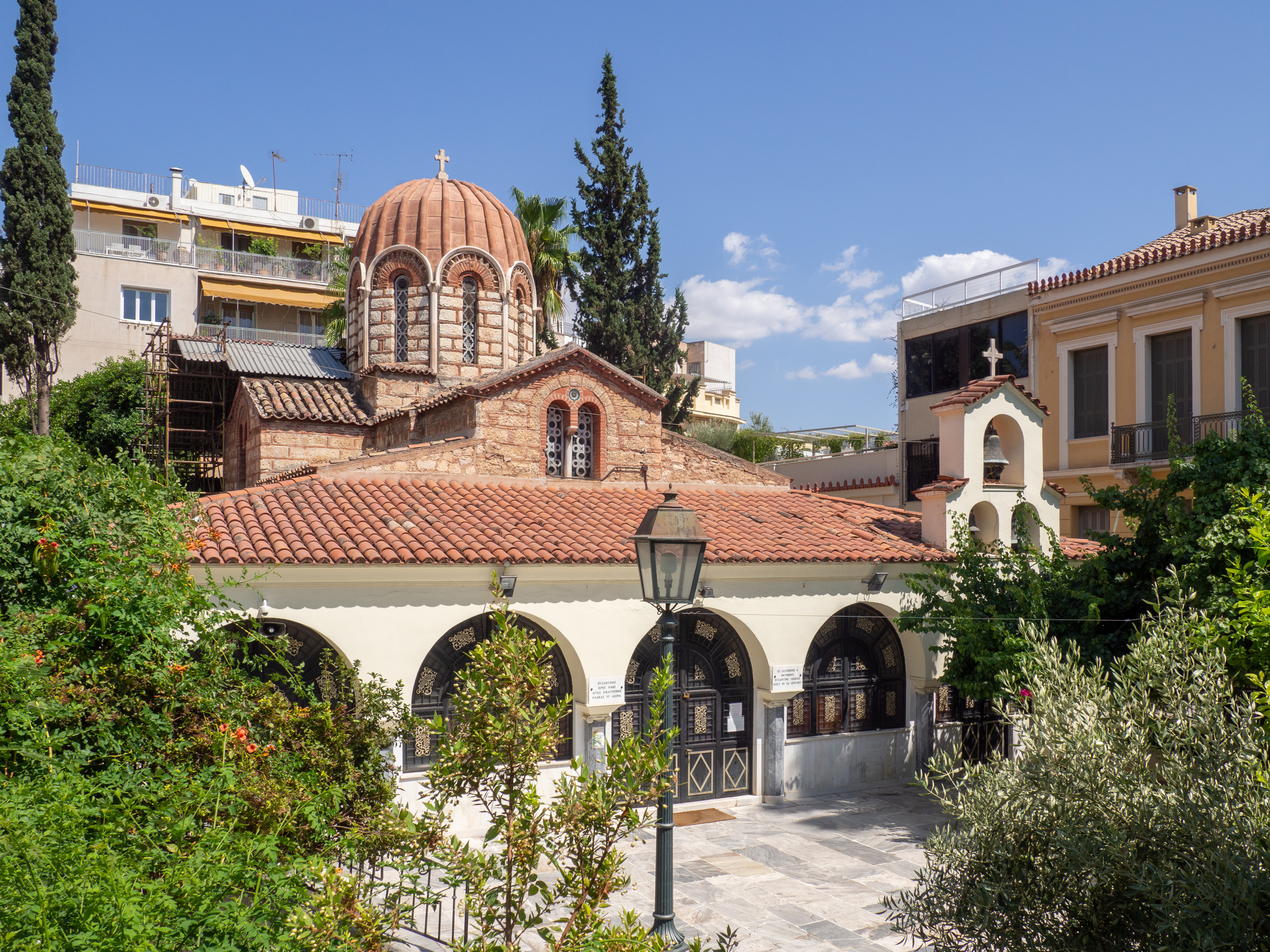 AGIA EKATERINI
The Church of Agia Ekaterini, located in the charming Plaka district of Athens, dates back to the 11th century and is dedicated to Saint Catherine. Originally built as a Christian basilica, it was rededicated in 1767 after affiliating with the Monastery of Saint Catherine in Sinai, Egypt. The church features a Byzantine cross-in-square design with a central dome, and its interior is adorned with beautiful frescoes and icons, including a notable 15th-century depiction of Saint John the Baptist.
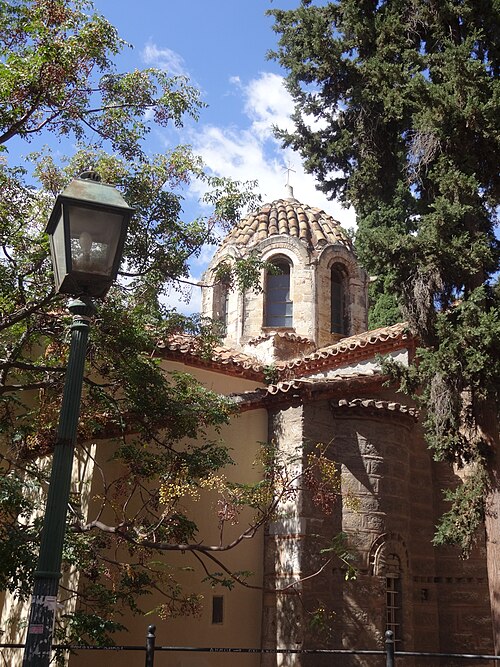 AGIA SOTIRA "KOTTAKI"
The Church of Agia Sotira Kottaki, also known as the Church of the Transfiguration of the Savior, is a historic Byzantine church located in the Plaka district of Athens. Inside, the church houses 18th and 19th-century frescoes and icons, including a notable 14th-century icon of the Virgin Mary, known as the "New Lady." The church is also historically significant as the site where Nobel laureate poet George Seferis was married in 1941 and where his funeral service was held in 1971.
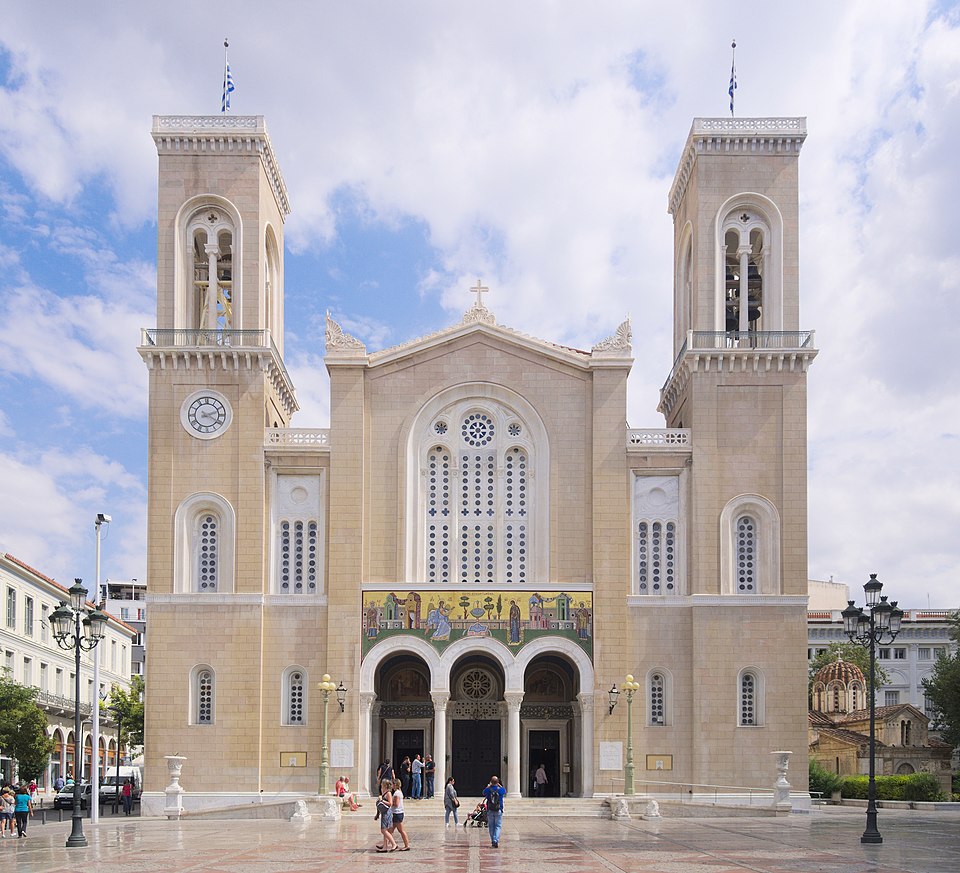 METROPOLITAN CATHEDRAL of ATHENS
The Metropolitan Cathedral of Athens, also known as the Annunciation of the Theotokos Cathedral, is the largest and most significant church in Athens. Located in the heart of the city, near Syntagma Square, it serves as the seat of the Archbishop of Athens and All Greece. Built in the 19th century on the site of an older church, the cathedral is a fine example of neoclassical architecture, with a blend of Byzantine influences. The cathedral is not only a place of worship but also an important historical and cultural landmark, housing the tombs of several prominent Greek figures, including Patriarch Gregory V and Saint Philothei.
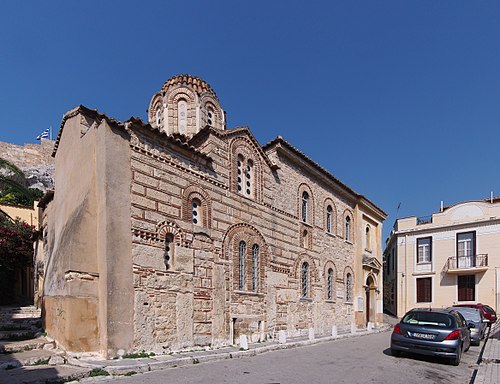 AGIOS NIKOLAOS "RAGAVAS"
The Church of Agios Nikolaos Ragavas is a historic Byzantine church located in the Plaka district of Athens, near the Acropolis. Built in the 11th century, it is dedicated to Saint Nicholas and is one of the oldest surviving churches in the city. Notably, the church's bell was the first to ring after the liberation of Athens from German occupation on October 12, 1944.
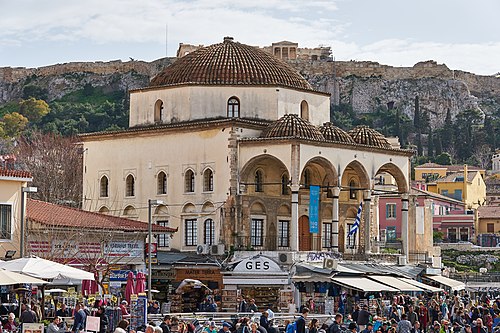 TZISDARAKIS MOSQUE
The Tzisdarakis Mosque, located in Monastiraki Square in central Athens, was constructed in 1759 by the Ottoman governor Mustafa Aga Tzisdarakis. It stands as one of the few remaining Ottoman-era structures in the city. The mosque's construction utilised materials from nearby ancient sites, including columns from Hadrian's Library, a practice that led to Tzisdarakis's temporary dismissal due to concerns over desecration. The building features a prayer hall with an elaborately decorated mihrab (prayer niche) and retains its original inscription above the entrance.
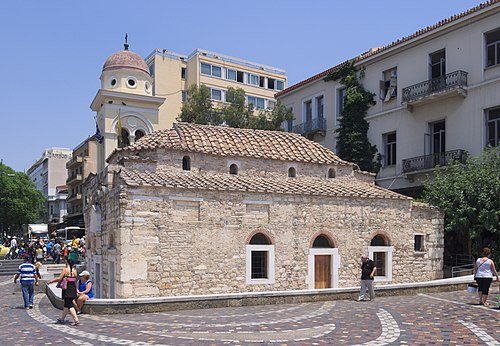 PANAGIA "PANTANASSA"
The Church of Panagia Pantanassa, situated in Monastiraki Square at the heart of Athens, is among the city's oldest and most cherished religious sites. Constructed between the 7th and 11th centuries, it has served various roles over the centuries, including a monastery and later a parish church. The church's name, "Pantanassa," meaning "Queen of All," reflects its esteemed status. It is also associated with notable figures like Saint Nektarios of Pentapolis, who served as a deacon there between 1881 and 1885.
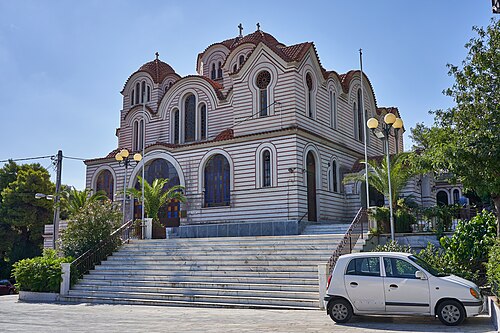 AGIA MARINA "THISIOU"
Constructed between 1924 and 1927 under the guidance of architect Achilleas Georgiadis, the church stands on the Hill of the Nymphs, adjacent to the National Observatory of Athens. Notably, the church incorporates a smaller, 11th-century cave church dedicated to Saint Marina, which has been preserved and is now part of the larger structure. This cave church was historically associated with rituals for safe childbirth and child health, highlighting its cultural significance.
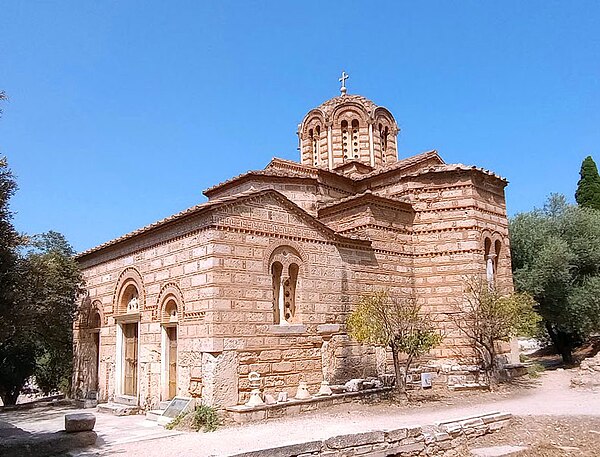 HOLY APOSTLES
The Church of the Holy Apostles, also known as Agii Apostoli or Holy Apostles of Solaki, is one of Athens' oldest surviving Christian churches. Located in the southeastern corner of the Ancient Agora, it was constructed in the late 10th century, making it over a millennium old. Remarkably, it is the only Byzantine-era structure in the Agora, apart from the Temple of Hephaestus, to have remained intact since its foundation .
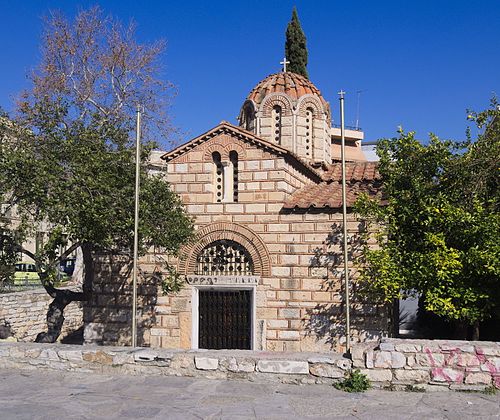 AGII ASOMATI
The Church of Agioi Asomatoi (Holy Archangels) is a Byzantine church located in the Thiseio district of Athens, dating back to the 11th century. The church’s exterior showcases finely cut stone and brickwork, with unique details like a horseshoe-shaped arch above the northern entrance, influenced by Islamic architecture. Over the centuries, the church has undergone several restorations, revealing late-Byzantine frescoes and other historical features.
Constructed between 1871 and 1905 under the direction of architect Lyssandros Kaftantzoglou, the church was originally dedicated to Prince Konstantinos, son of King George I and Queen Olga, to celebrate his birth in 1868. The interior boasts elaborate frescoes by renowned hagiographers Anastasios Loukidis and Fotis Kontoglou.
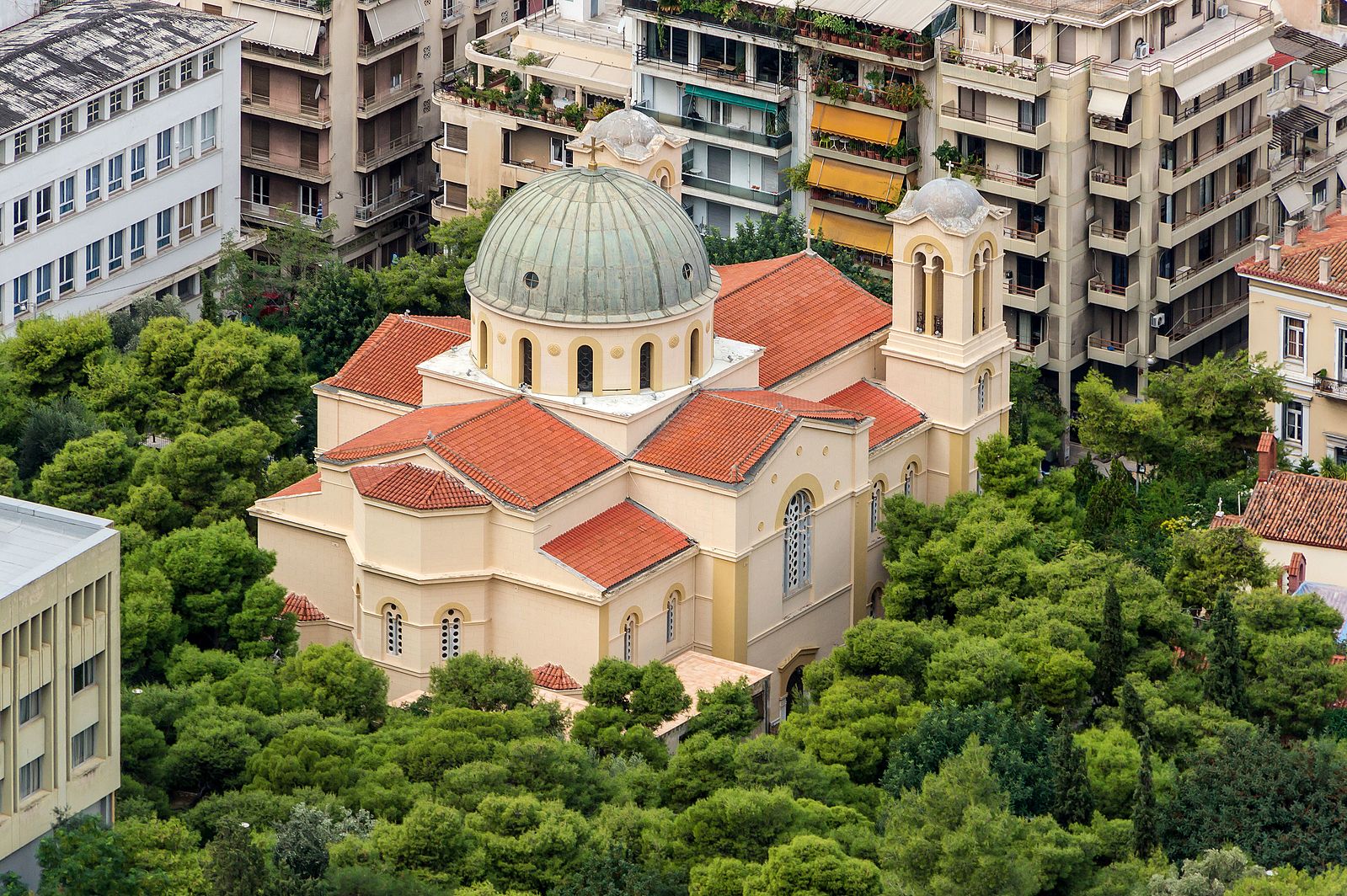
Agios Nikolaos Pefkakion Church, perched on the slopes of Lycabettus Hill in central Athens, is a charming and historic place of worship that combines spiritual tranquility with a strong sense of tradition. Dedicated to Saint Nicholas, the patron saint of sailors, the church has long been a beloved landmark for Athenians seeking a peaceful retreat amidst the city’s vibrant pace.
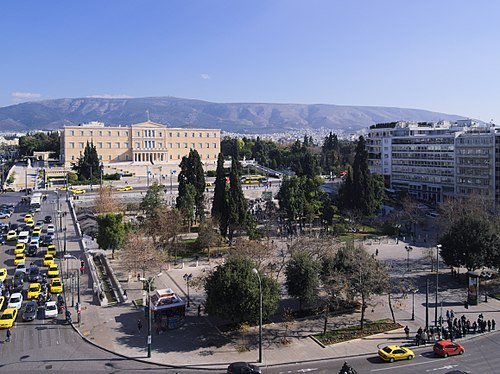
Syntagma Square is the central square of Athens and is known for being the heart of the city. It is home to the Greek Parliament (Hellenic Parliament), which sits in front of the Old Royal Palace. The square is a popular gathering place and serves as a hub for public protests, celebrations, and events. Visitors can often see the Evzones (Greek Presidential Guard) performing the changing of the guard ceremony at the Parliament building. Together with Monastiraki square, Syntagma square is ideal starting point for extended walk tours.
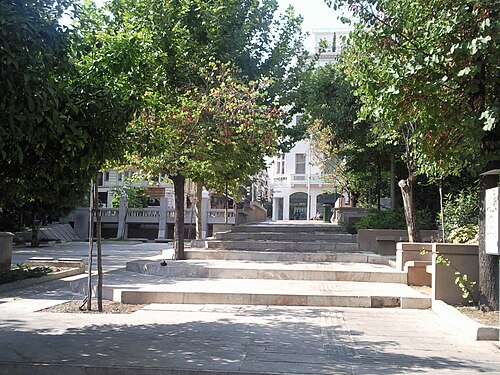
Kolonaki Square, known locally as Plateia Filikis Etaireias, is a chic and historic square nestled in the upscale Kolonaki district of central Athens. Surrounded by elegant boutiques, stylish cafés, and art galleries, it reflects the district's sophisticated atmosphere. Kolonaki Square's central location makes it an ideal starting point for exploring nearby attractions such as Mount Lycabettus, the Benaki Museum, and the Museum of Cycladic Art.
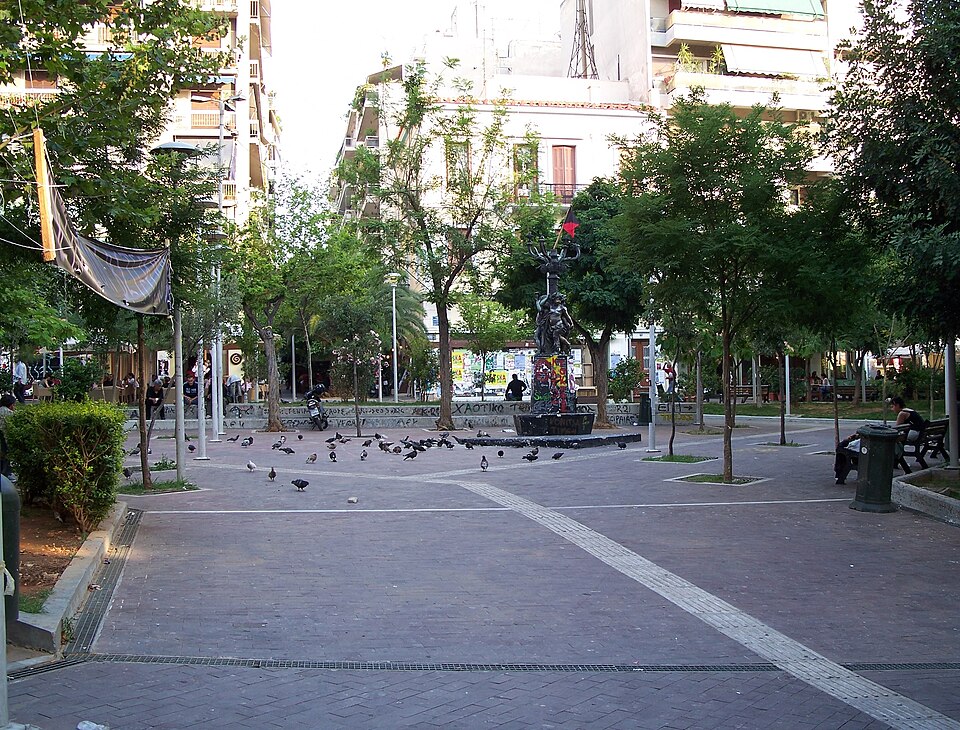
Exarchia is a vibrant and eclectic neighborhood in central Athens, known for its bohemian atmosphere, political activism, and rich cultural heritage. Historically significant for its role in the 1973 student uprising, the area is a haven for artists, students, and intellectuals, with a mix of independent bookstores, alternative cafés, and colorful street art. Exarchia's streets are filled with lively markets, unique dining spots, and a thriving music scene, making it a cultural hub for both locals and visitors.
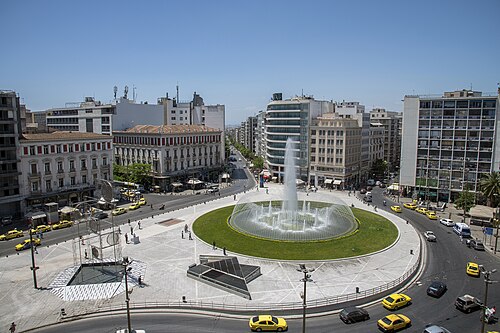
Omonia Square is another major square in Athens, known for its central location and historical significance. It is a key transportation hub, connecting various parts of the city through multiple metro lines and bus routes. Over the years, the square has seen numerous transformations and is a blend of modern and old architecture. While it used to be a symbol of grandeur, Omonia Square has recently undergone urban regeneration efforts to restore its vibrancy.
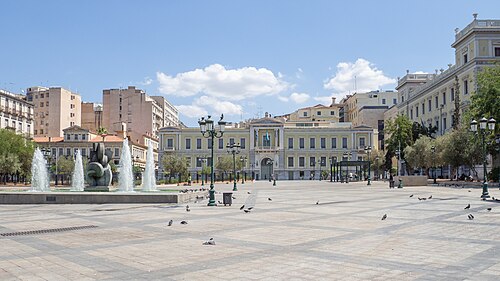
Kotzia Square is located near the City Hall of Athens and is often overlooked by tourists but is a beautiful, quiet square surrounded by neoclassical buildings. It is named after the famous politician and mayor Giannis Kotzia and features sculptures, green spaces, and a peaceful environment away from the hustle and bustle of the city. It’s a lovely spot to relax, with many cafes and shops nearby.
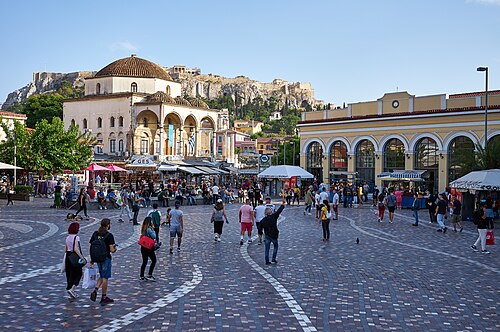
Monastiraki Square is famous for its vibrant market atmosphere and the stunning view of the Acropolis. It is a lively area filled with shops, cafés, and street vendors. The square gets its name from the Monastiraki Mosque, which still stands at the edge of the square. The area is also known for its antique market and is a popular starting point for tourists exploring Athens' ancient sites, including the Ancient Agora.
Psiri Square, or Iroon Square, is a vibrant and historically rich public space nestled in the heart of Athens, Greece. Once known for its artisan workshops and working-class roots, Psiri has transformed into a lively neighborhood renowned for its eclectic mix of traditional tavernas, contemporary bars, live music venues, and boutique shops. The area is adorned with murals and graffiti, adding a contemporary flair to its historic charm. In addition to its artistic appeal, Psiri offers a diverse culinary scene. Visitors can enjoy traditional Greek dishes in rustic tavernas or explore modern eateries offering international cuisine.
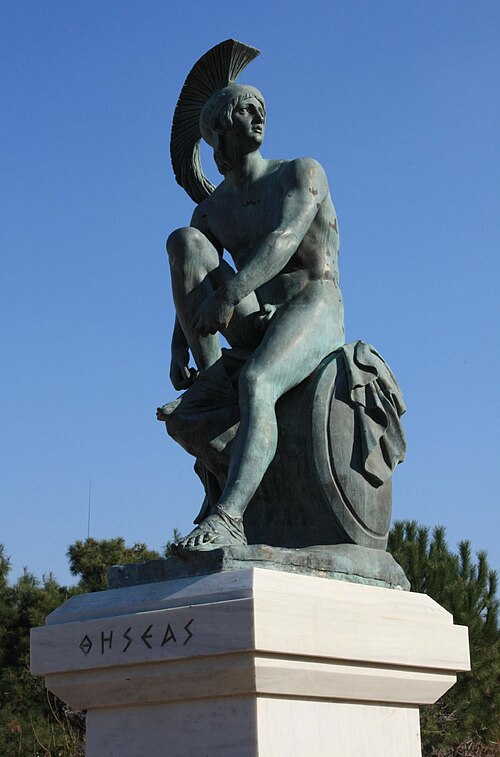
The square is named after the Temple of Hephaestus, which was believed to be the burial site of the mythical king Theseus. Over time, the name "Thissio" became associated with the surrounding neighborhood, and it remains in popular use today. In recent years, Thissio Square has undergone a revitalization, transforming into a vibrant urban space. The pedestrianisation of Apostolou Pavlou Street has enhanced the area's charm, with cafés, restaurants, and bars lining the square. Visitors can enjoy leisurely walks along the wide, stone-paved streets, often accompanied by street musicians and local vendors .
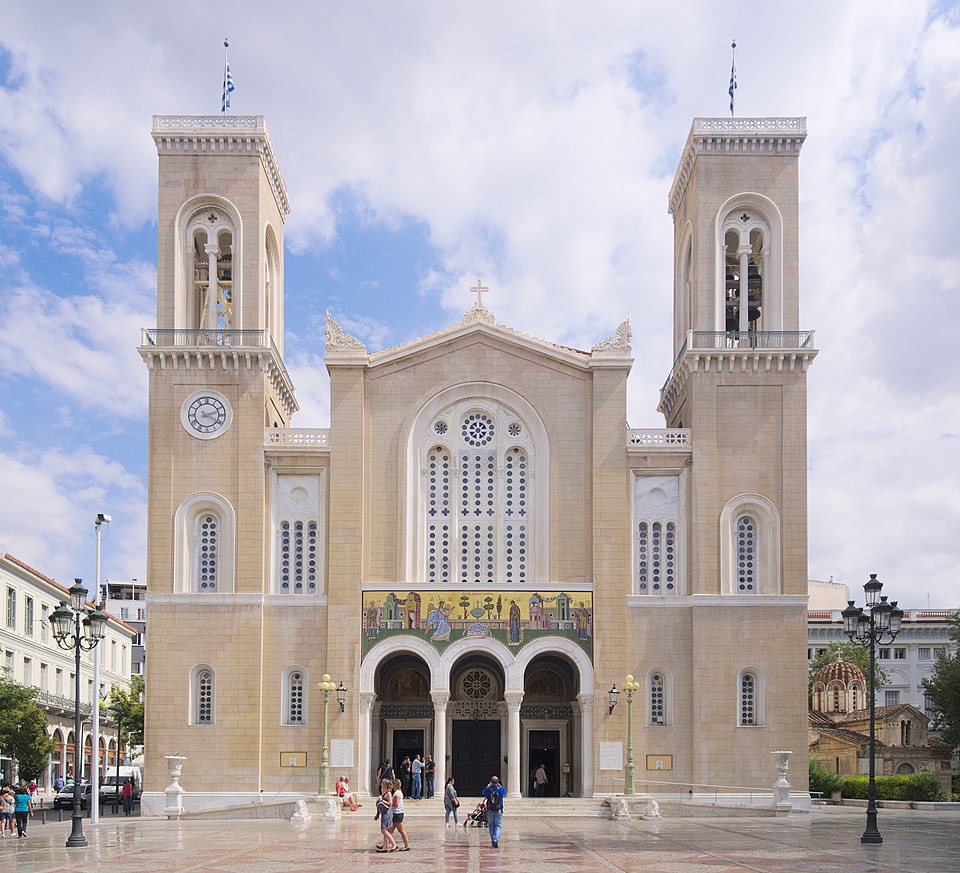
Mitropoleos Square is a central square in Athens, named after the Metropolitan Cathedral of Athens (Mitropolis). Located between Syntagma and Monastiraki, it is a lively area surrounded by historical landmarks, including the Panagia Gorgoepikoos Church and statues commemorating historical figures like Constantine Palaiologos. The square is known for its ecclesiastical shops selling religious artefacts and icons. It also offers a range of dining options, making it a vibrant spot to experience Athens’ rich culture and history.
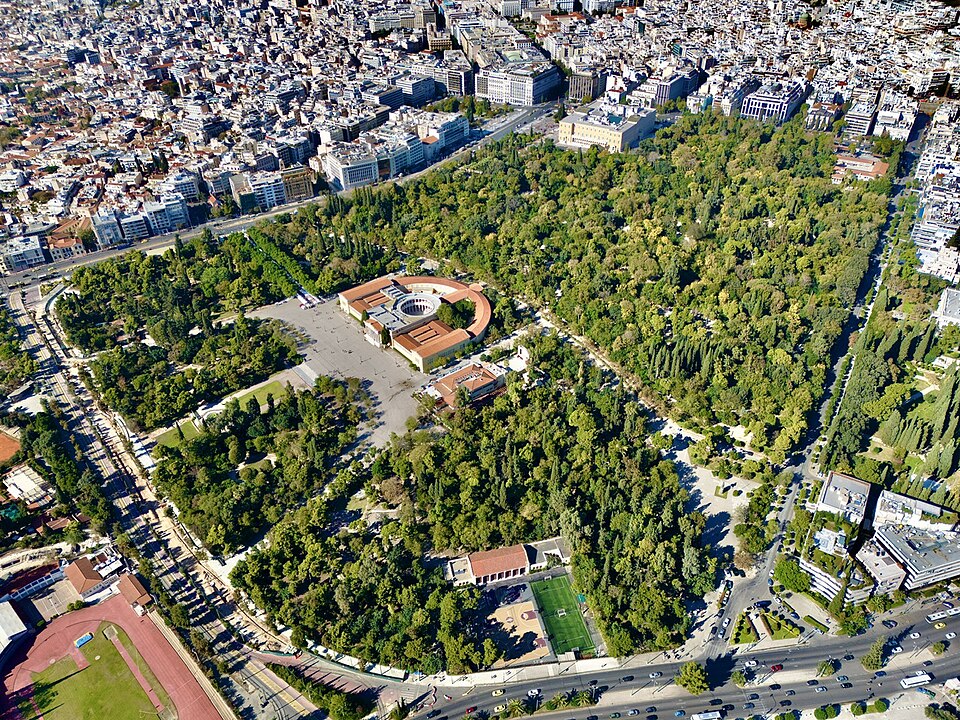
The National Garden of Athens is a serene 15.5-hectare park nestled in the heart of Athens, Greece. Originally commissioned by Queen Amalia in 1838 and completed by 1840, the garden was designed by German agronomist Friedrich Schmidt in an English-style "picturesque" manner. It was initially a private royal garden and was opened to the public in the afternoons. In 1927, it was officially declared a public space and renamed the National Garden. Today, it remains a tranquil oasis amidst the city's hustle and bustle .The garden boasts over 7,000 trees and 40,000 shrubs, representing 519 plant species from around the world.
Ardittos Hill is a serene, pine-clad hill situated just west of the Panathenaic Stadium in central Athens. Standing at 235 meters, it offers some of the most picturesque and less crowded views in the city, including sweeping panoramas of the Acropolis, Lycabettus Hill, and the marble Panathenaic Stadium below . Historically, Ardittos Hill was a significant site in ancient Athens. It was named after the mythical hero Ardittis, who, according to legend, reconciled the city's factions through his eloquent speeches. In antiquity, the hill served as the location where representatives of Athens' ten tribes swore an oath to uphold justice, a practice associated with the supreme court, the Heliaia.
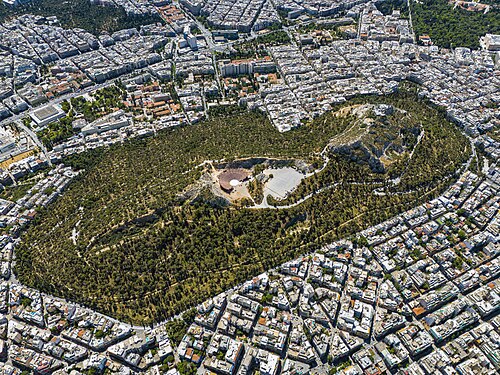
Likavittos Hill is the highest point in central Athens, standing at 277 meters (908 feet) above sea level. Offering panoramic views of the city, the Acropolis, and the Saronic Gulf, it's a must-visit for both locals and tourists. Visitors can reach the summit via a funicular railway from Ploutarchou and Aristippou streets or by hiking up through scenic paths. At the top, you'll find the whitewashed Chapel of St. George, a popular spot for both tourists and locals. Nearby, the Lycabettus Theater, an open-air amphitheater with a seating capacity of 3,000, has hosted numerous concerts and performances over the years .
Filopappou Hill, also known as the Hill of the Muses, is a tranquil green space located southwest of the Acropolis in Athens. Rising 147 meters above sea level, it offers some of the most picturesque and less crowded views in the city, including sweeping panoramas of the Acropolis, Lycabettus Hill, and the marble Panathenaic Stadium below. In ancient times, the hill was known as Mousion Hill, named after the poet Musaeus, who was believed to have been buried there. The hill is also home to the Prison of Socrates, a cave where the philosopher is said to have been held before his trial .
Renowned as the city's antique hub, it has been hosting a bustling flea market since the late 19th century. Every Sunday, vendors set up stalls offering a diverse array of items, including vintage furniture, old books, musical instruments, and unique bric-a-brac, attracting both locals and tourists alike .
Koumoundourou Square, also known as Eleftherias Square, is a historically rich public space located in central Athens, Greece. The square was originally named after King Ludwig I of Bavaria, Otto’s father, and later renamed in honor of Alexandros Koumoundouros, a prominent 19th-century Greek politician who served as Prime Minister multiple times. His residence once faced the square, contributing to its current name. In the late 19th century, the Municipal Nursery was established at the northern end of the square, designed by architect Panagis Kalkos.
Filomousou Etaireias Square, also known as Plaka Square, is a charming and historic square located in the heart of Athens' Plaka district. Named after the Philomousos Society, founded in 1813 to promote education during the Ottoman era, the square now serves as a lively hub surrounded by cafés, restaurants, and traditional tavernas.
Named after Theodoros Kolokotronis, a revered hero of the Greek War of Independence, the square is situated in front of the National Historical Museum, housed in the former Old Parliament building. The centrepiece of the square is a bronze equestrian statue of Kolokotronis, symbolising his pivotal role in Greece's fight for independence. Historically, the site was the location of the first Greek Parliament, established in 1843. Kolokotroni Square is also the starting point of Kolokotroni Street, a vibrant thoroughfare known for its neoclassical architecture, boutique shops, and eateries.
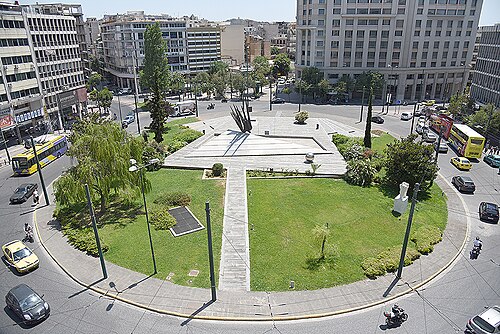
Karaiskaki Square, located near the historic Metaxourgeio district of Athens, is a bustling urban hub that blends history with modern city life. Named after the Greek War of Independence hero Georgios Karaiskakis, the square has long been a meeting point where tradition and contemporary culture intersect. Surrounded by neoclassical buildings, theaters, and hotels, it reflects both the grandeur of 19th-century Athens and the dynamic energy of the present day.
Klafthmonos Square is a central public square in Athens, situated along Stadiou Street between Syntagma and Omonia Squares. Its name, meaning "Weeping Square," was coined in 1878 by Greek writer Dimitrios Kambouroglou. This name reflects the historical practice where, after each election, newly elected governments would dismiss civil servants appointed by the previous administration. These dismissed employees would gather in the square to protest their unemployment, often lamenting their fate.
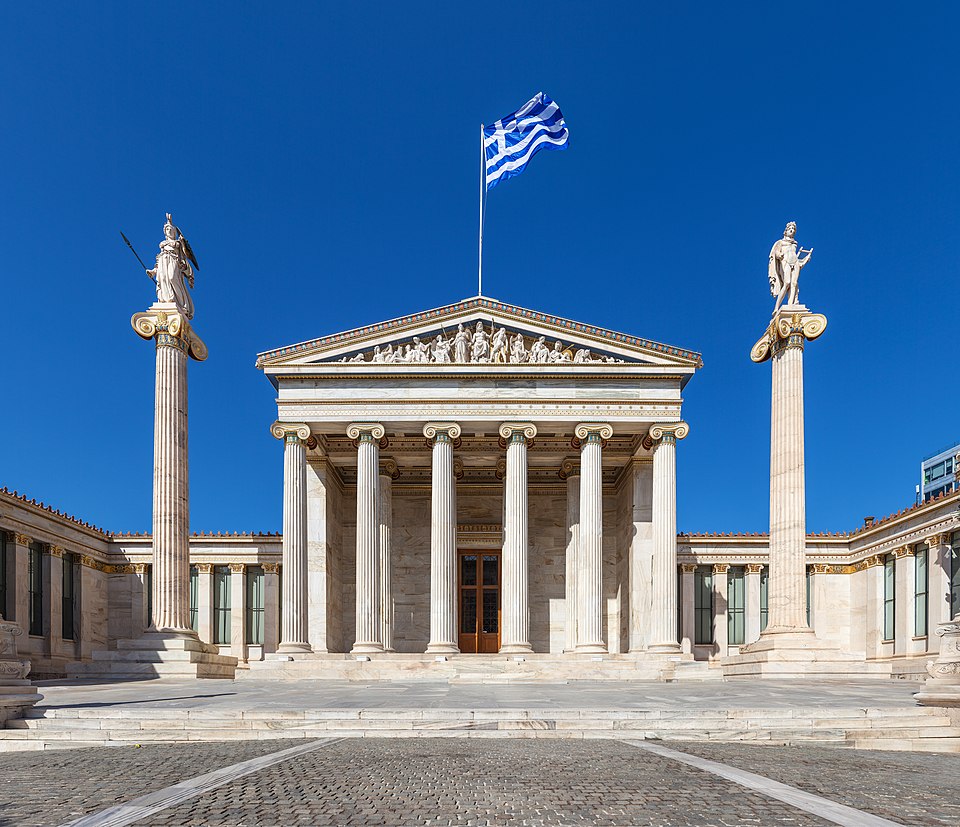
Korai Square is a bustling urban space in central Athens, named after the 19th-century Greek scholar Adamantios Korais. The square is characterised by its modern design, featuring a glass pyramid skylight that leads to the metro station below. Surrounding Korai Square are several notable buildings, including the university's main building and various commercial establishments. The area is a hub for students, professionals, and tourists, offering a range of cafés, shops, and eateries.
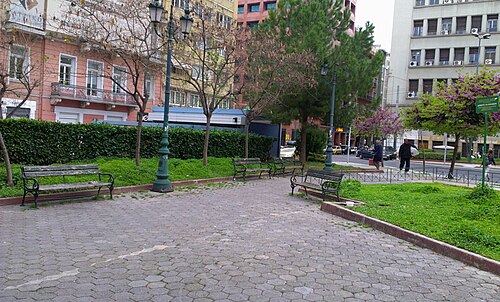
Kaniggos Square is a bustling urban square located in central Athens, named after George Canning, the 19th-century British Prime Minister and philhellene who supported Greece's independence movement. The square is distinguished by a statue of Canning, which remains a prominent feature today.
The square is named after the Church of Agia Irini, a significant Greek Orthodox church that once served as Athens' main cathedral before the construction of the current Metropolitan Cathedral. In recent years, Agia Irini Square has transformed into a lively urban hub, attracting both locals and visitors. The area is now a hotspot for dining and nightlife, featuring a variety of establishments ranging from traditional tavernas to trendy cocktail bars.
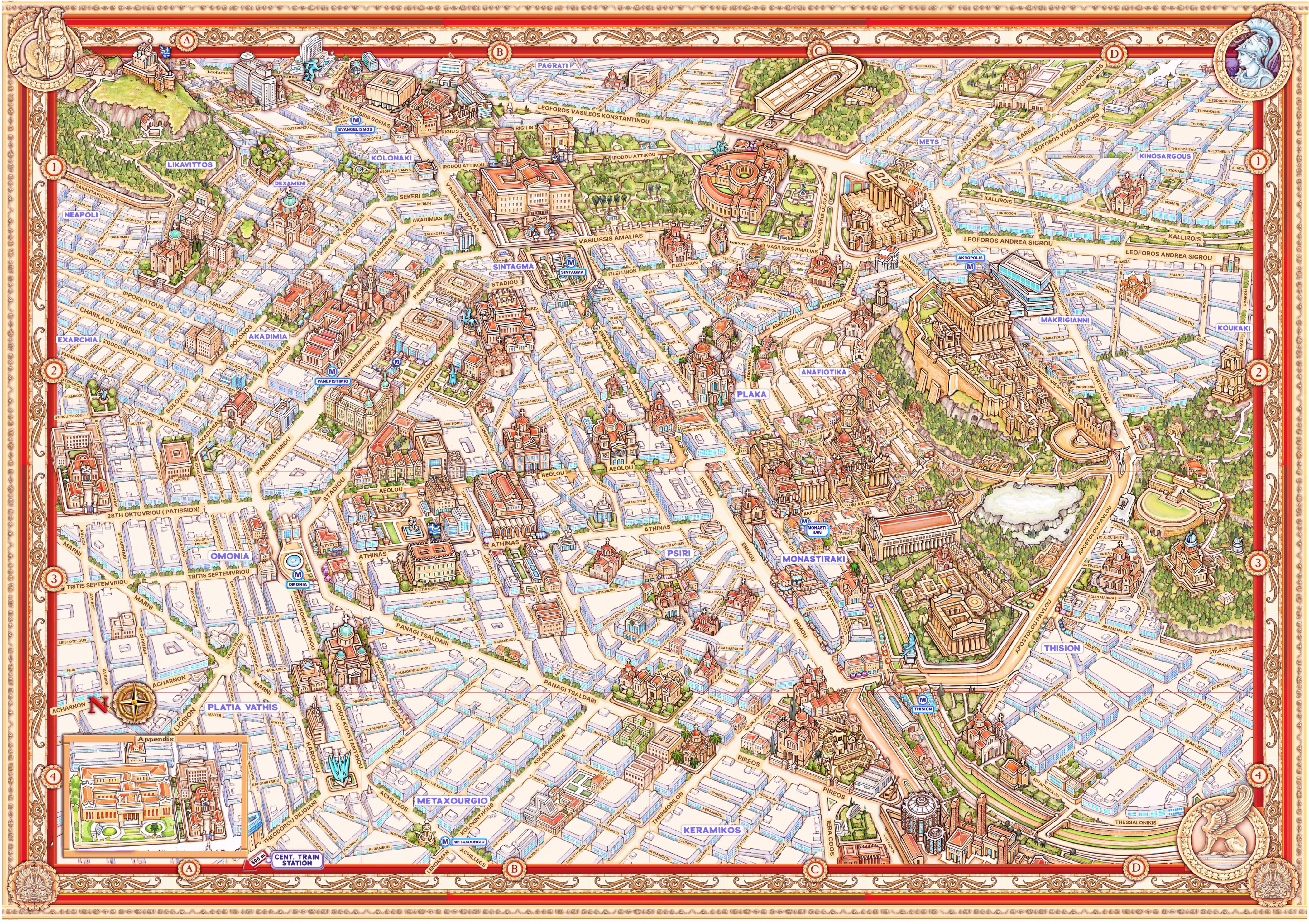
This digital interactive tool combines visual charm with practicality, allows you to quickly understand the city’s layout and history while planning your sightseeing at your own pace. Its easy navigation and engaging design make discovering Athens both fast and delightful — like having a friendly local guide at your fingertips.
Discover all cultural aspects Athens offers, in an enjoyable and intuitive way and explore the city’s ancient and modern treasures.
How to?
SELECT CATEGORY MENU TO VIEW SIGHTSEEING OPTIONS
SCROLL THE MAP IN ALL DIRECTIONS
PRESS BUTTONS FOR EVERY SIGHTSEEING MUSEUM AND MONUMENTS TO REVEAL INFO AND LINK TO OFFICIAL SITES AND TRUSTED DATABASES.

Please be aware that Athens metro operates only during daytime and early night, between 05:00 and 00:30 including the trains going to Airport.
However, there is an exception for Saturday night in which trains will run also during the night, in a frequency 10-15 minutes, from 22:00 til 10:00 of Sunday morning. Please notice that night trains will not reach Airport, as they end up at “Doukissis Plakendias station”.
CLICK THE BUTTON BELLOW TO OFFICIAL INFO FOR NIGHT SCHEDULE

 Maps © 2026 TerraNaviga.com
 Development © 2026 imb.gr